
Truck Accidents | Winchester, Harrisonburg and the Shenandoah Valley
Asked for a Recorded Statement After a Truck Crash?
Plain-language guidance on how to handle a call from a trucking company's insurer, from a firm that focuses on truck and commercial vehicle crash claims.
Published November 17, 2026
After a truck crash, the phone can ring sooner than you expect. The caller may be an adjuster for the trucking company’s insurer, asking to record a statement about what happened.
In short, you may wish to pause before agreeing. A recorded statement becomes part of the claim file, and what you say early can be used later. Many people feel pressure to answer right away because the call sounds routine. Taking a breath first is a reasonable choice. This guide explains what to ask, what to watch for and which Virginia rules matter most.
What a Recorded Statement Is and Who Is Asking
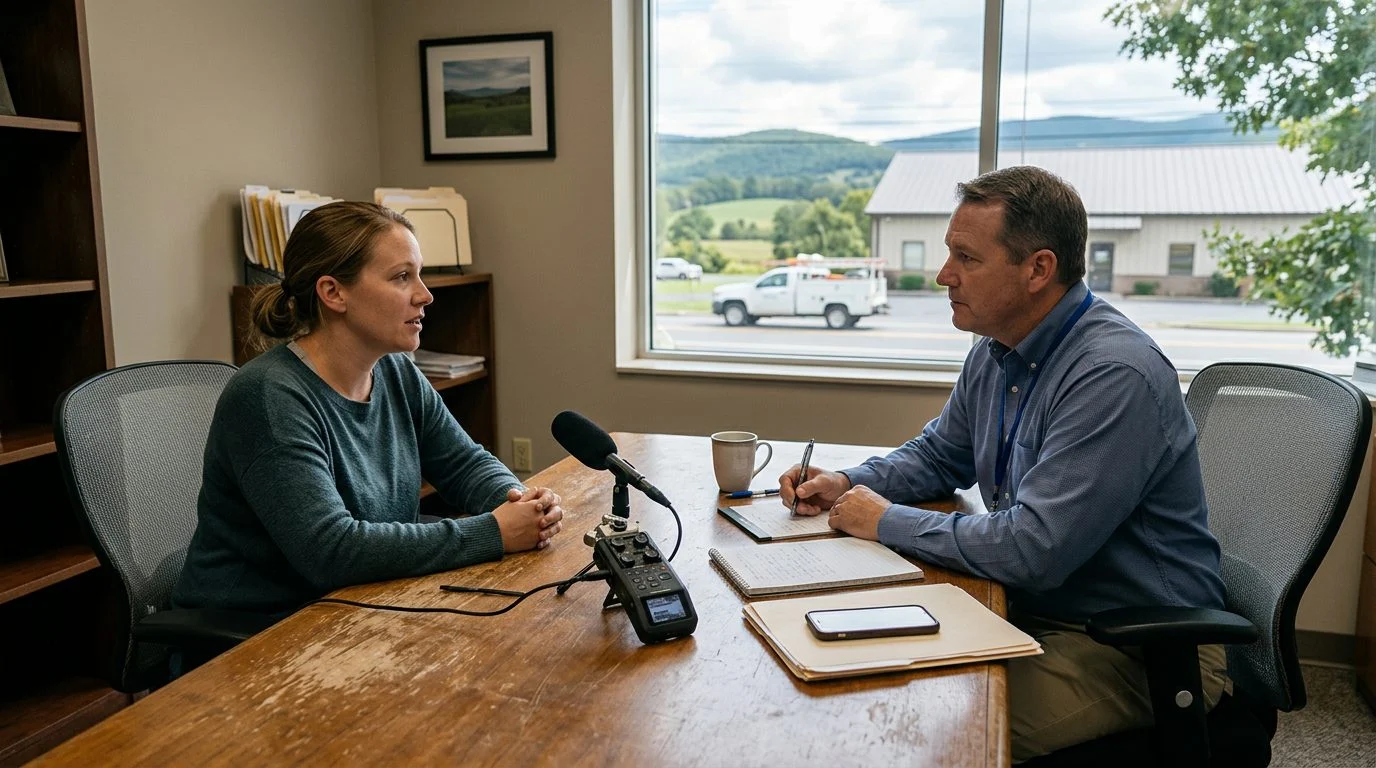
A recorded statement is a question-and-answer session, captured on audio, about how a crash happened. The adjuster asks questions, and you answer while the call is recorded.
The request may come from the trucking company’s insurer or from a third-party claims representative working for that insurer. It often arrives days after the crash, while the injured person is still recovering and the facts are still settling. Some people receive a text, email or voicemail first asking for a convenient time to record. Confirm who is contacting you before you respond.
The tone is often friendly and informal. That does not make the call casual. An adjuster’s job is to gather facts for the claim, and everything said on the recording goes into that file. Treat the call as a formal step, even when it feels like small talk.
Not sure what your next step is?
Talk it through with Correll Law Firm — we can walk you through how a situation like yours is usually handled and what your options are.
Why Trucking Insurers Ask for Recorded Statements
Insurers ask for recorded statements to capture one person’s account while memories are fresh. The goal is to learn how the crash happened, what was seen and when each thing took place.
The recording becomes a fixed record. Later, it can be compared with police reports, photographs, medical records and witness accounts. If your account differs from one of those sources, the difference can be raised in the claim. Because the recording is fixed, a short answer can carry more weight than it seems to at the time.
The carrier’s side of the story is different. A trucking company may keep its own records, such as dispatch messages, driver schedules, inspection and maintenance files, and electronic data from the truck. You will not see most of that on the call.
Federal law directs the Secretary of Transportation to set minimum levels of financial responsibility for certain motor carriers and motor private carriers that transport property from a place in one State to a place in another State, or on certain other routes that cross a State or national border (49 U.S.C. § 31139). For the carriers that section covers, the amounts are set by the Secretary of Transportation and cover public liability, property damage and environmental restoration (49 U.S.C. § 31139).
Questions to Ask Before Agreeing to Any Statement
Before you answer any question, ask who is calling and what the statement is for. Ask for the caller’s name, the company they represent and the claim number.
Also ask whether the call will be recorded and how you can get a copy. Making these requests in writing gives you a clear record of what was asked and what you agreed to. When you can, write your questions down before you answer the phone. Having them in front of you keeps the call on your terms.
You may ask to reschedule. Saying you need time to review the facts, your medical situation and any papers you received is a reasonable answer. You may decline to give a statement on that first call.
You may also decline particular questions and still talk about the claim in general terms. If you do not know the exact speed of a vehicle, you can say so. A clear “I don’t know” is more accurate than a guess.
Why Early Statements Can Be Used Later in a Claim
A statement given early can be compared with records and testimony that come later. Small differences in details can then be raised in the claim. Medical records made later can also add detail that the first call did not cover.
Guessing at speed, distance or timing is a common trap. The question can feel simple, so people answer quickly. A guess can later be quoted back as if it were a firm fact.
Early statements also carry a timing problem. An injured person may not yet know the full extent of their injuries. A first answer such as “I’m okay” may later be read as a complete description, even if symptoms show up or worsen in the following days.
Describe what you feel now, and say that your condition may change as you recover. Adjusters may also ask about prior health or past injuries. Answer only what you know, and say when you are unsure.
How a Statement Can Be Misunderstood or Misrepresented
A written summary of a recording can shorten or reword what you said. The summary may become the version people read later, not the audio itself. A transcript can also drop pauses, tone and corrections.
Some phrases are easy to misread. “I’m fine” may be written as “no injuries.” “I think I had the green light” may become “I had the green light.” The word that made the statement accurate can drop out.
Listen for these shifts when you can get a copy of the recording. If a summary you receive says something you did not say, write down the difference as soon as you notice it.
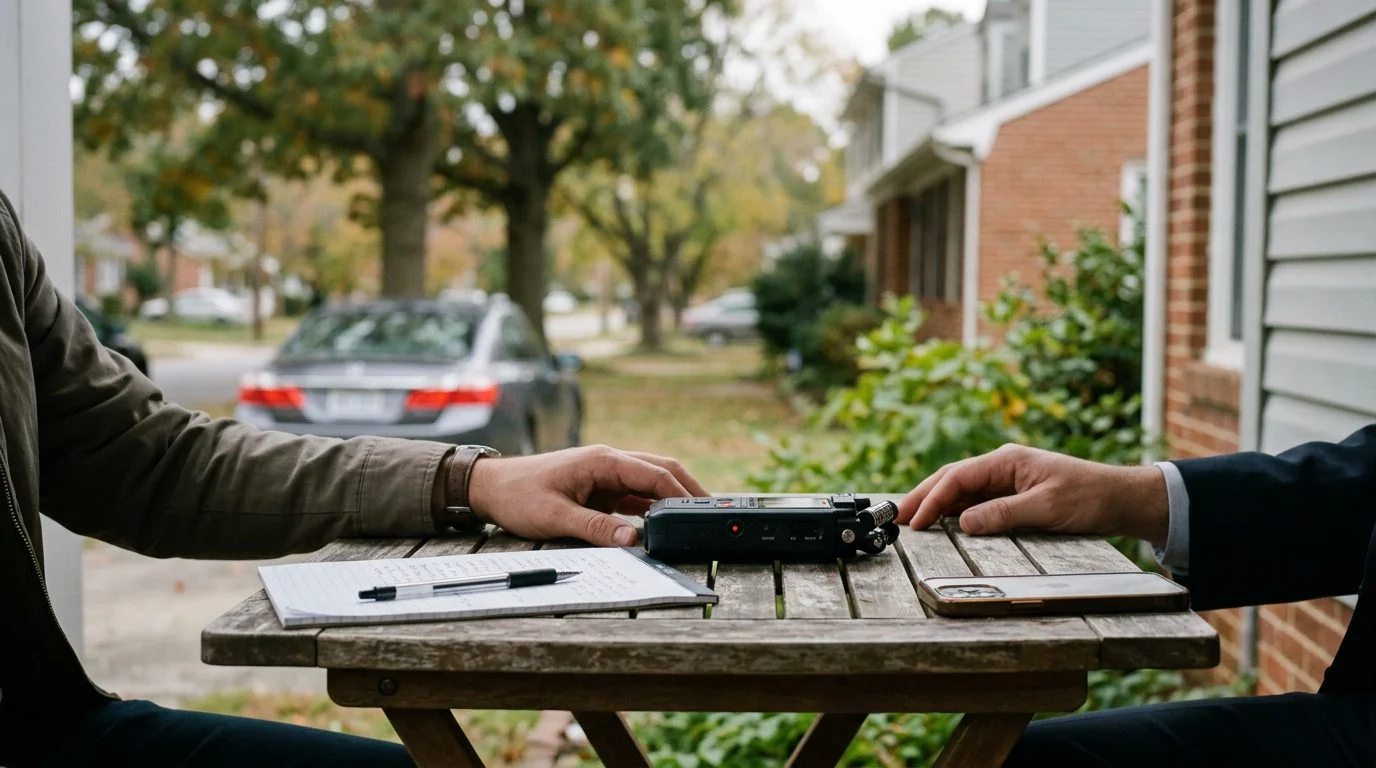
Right after the call ends, write down the date, the time, the caller’s name, the company they represent and the topics discussed. Note which questions you answered and which you asked to think about. A short note made at the time is more reliable than memory weeks later.
Fault Questions and Reporting the Crash in Virginia
Fault is often the center of a recorded statement. Answers about who had the right of way or who braked first can shape how the claim is judged. Those answers often turn on small details, such as signals, lane position and timing.
Take time with those answers. Do not agree with a description of events you did not see, and do not fill gaps with a guess. A short, accurate answer works better than a long story built from memory.
Virginia follows contributory negligence: if you are found even partly at fault, you may be barred from recovering, with limited exceptions. Talk to a lawyer about your facts.
Virginia requires a driver involved in a crash with injury or death to stop and report it to police immediately (Va. Code §§ 46.2-371, 46.2-894).
Reporting to police is a separate step from any call with an insurer.
Not sure what your next step is?
Talk it through with Correll Law Firm — we can walk you through how a situation like yours is usually handled and what your options are.
Time Limits and Claims That Can Run Out Sooner
The deadline to file most injury lawsuits in Virginia comes from statute. An insurer’s request for a statement is not the filing deadline.
Virginia generally allows two years from the date of injury to file a personal injury lawsuit (Va. Code § 8.01-243(A)); the clock runs from the date of injury, not the date of discovery, with narrow exceptions.
One narrow example involves a criminal case. A wrongful death action under § 8.01-50 must be brought within the time limits specified in § 8.01-244, and a criminal prosecution arising out of the same facts can affect that period under a separate rule (Va. Code § 8.01-229).
Some claims carry notice requirements that run out sooner than the two-year filing period. Do not assume you have the full two years for every step.
Talks with an adjuster are not a lawsuit. Keep the filing date in mind while claim discussions continue, and do not let a slow review push it out of view. Plan the timeline around that date from the start.
Keeping Records While the Claim Is Open
Keep a dated record of your injuries, medical visits and missed work while the claim is open. Notes made close to the events are easier to check against medical records.
A simple symptom journal can help. Write down what hurts, which daily tasks are hard, and each appointment. The firm’s symptom journal guide explains how to set one up.
Keep medical bills, insurer letters and claim paperwork together in one folder. That way you can answer questions about them accurately. Keep copies of anything you sign or receive from the insurer, and note the date each item came in. The guide to medical bills after a truck crash covers the topic in more detail.
Families facing a fatal crash face a different set of questions. A Virginia wrongful death action is filed by the decedent’s personal representative within two years of the death (Va. Code §§ 8.01-50(C), 8.01-244(B)), on behalf of the family members the statute protects.
The wrongful death damages guide explains the damages framework in more detail.
When You May Wish to Speak With a Lawyer Before Answering
You may wish to speak with a lawyer before giving a recorded statement. That is especially true when injuries are serious, fault is disputed or the caller asks about your own account of the crash.
A lawyer can explain what a particular question may mean for your claim. The commercial vehicle accident guide gives the wider picture of how these claims work in Virginia, step by step. Bringing your notes, the adjuster’s name and the claim number to that conversation can help.
The firm represents people seriously hurt in car and commercial truck crashes, and families in wrongful death cases, from the Shenandoah Valley to Richmond and Henrico County. Its offices are in Winchester and Harrisonburg.
Whether and how you answer depends on the facts of your own crash. Answer carefully, take the time you need, and keep your notes.