
Truck Accidents | Winchester, Harrisonburg and the Shenandoah Valley
When a Semi Strikes From Behind: Rear Underride Guards and Your Injury Claim
How a trailer's rear guard works, where it can fail, and what injured drivers and families in Virginia should understand after a crash.
Published November 17, 2026
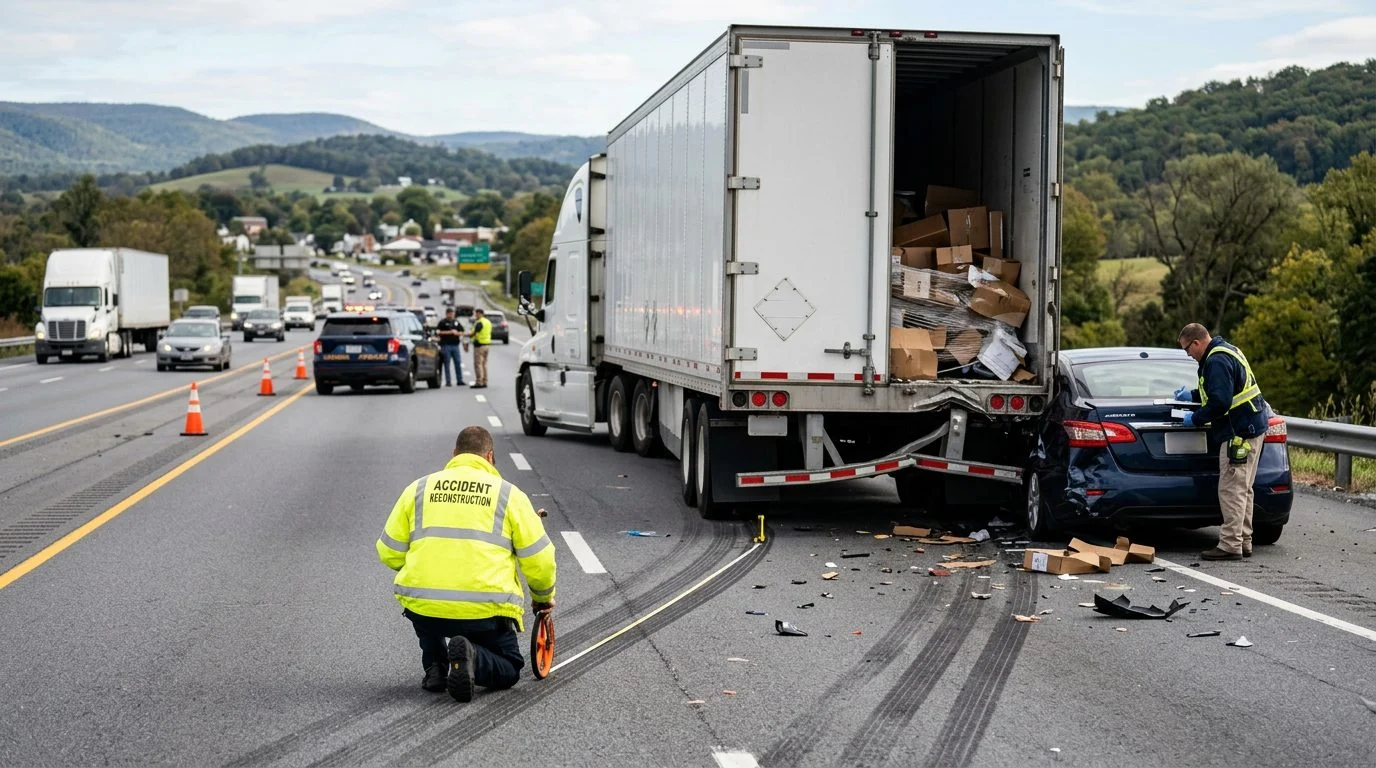
A car hits the back of a semi truck on a Virginia highway and ends up under the trailer. People caught in this kind of crash often have many questions about how it happened and what comes next.
In a rear end crash with a semi truck, an underride crash happens when the car slides partly or fully beneath the trailer. A rear underride guard is the bar at the back of the trailer meant to limit how far that slide goes. This page explains how these crashes happen, what the guards do, and which Virginia rules on crash reporting, deadlines and wrongful death may matter. It is general information, not advice about any one crash.
What an Underride Crash Is
An underride crash is a crash in which a passenger vehicle, usually a car or small SUV, slides partly or fully under a truck or trailer. The car’s front end or windshield area is often the part that meets the trailer first.
A semi trailer sits much higher than a car’s bumper. Cars are designed to absorb crash energy through their front structures. When the front of a car meets the open underside of a trailer, those structures may not work as designed, and the windshield and roof area can take the force instead.
Underride can also happen from the side. When a truck changes lanes or turns into a car’s path, the same geometry can form along the side of the trailer. That is why side impacts belong in the discussion. Many Virginia highways, from the Shenandoah Valley to the Richmond area, carry semi trucks. For the wider framework of these crashes in Virginia, read the commercial vehicle accidents guide.
If a crash with a semi truck has left you or someone you love facing hard questions, you do not have to work through them alone. Talk it through with Correll Law Firm — we can walk you through how a situation like yours is usually handled and what your options are.
Rear Underride Guards and Side Underride Guards
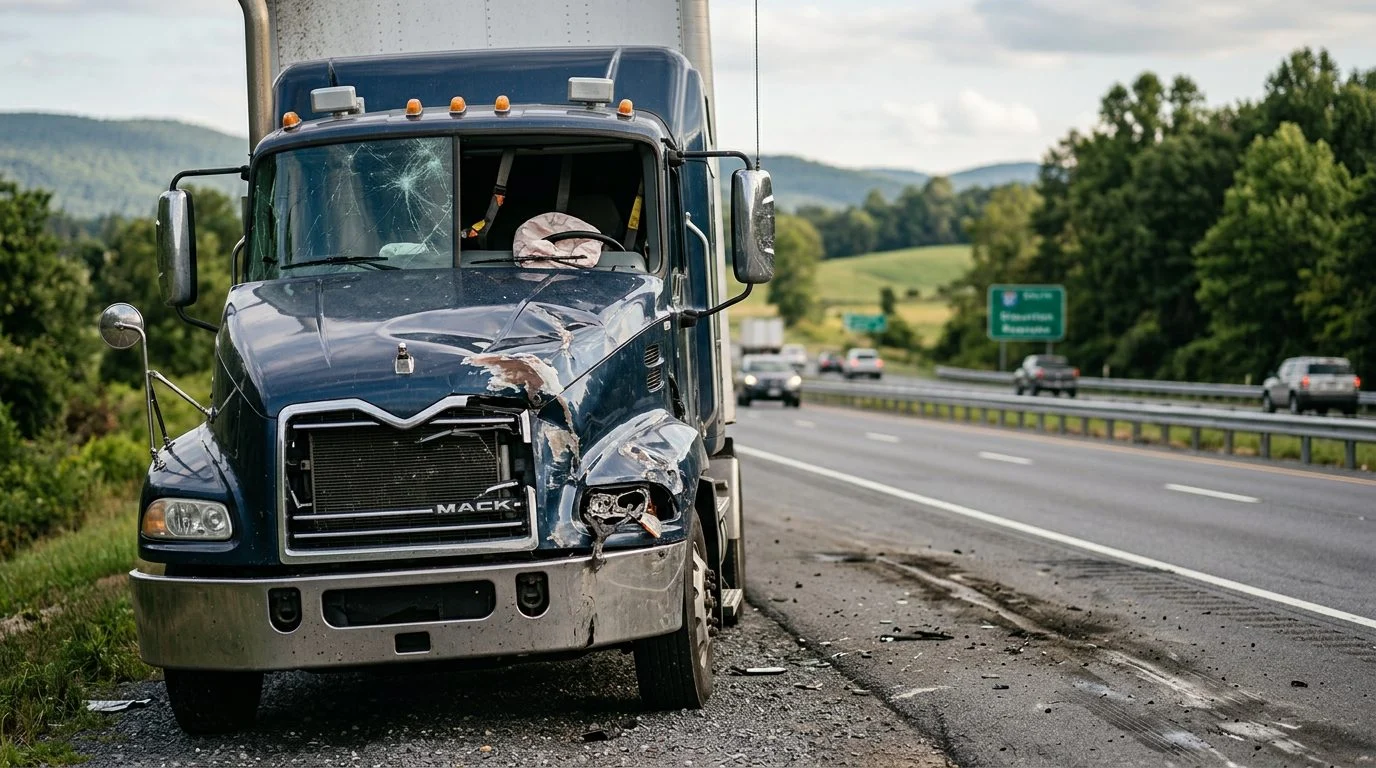
A rear underride guard is a device at the back of a trailer that limits how far a following car can slide underneath. The federal definition describes it as a device that limits the distance the striking vehicle’s front end slides under the rear end of the impacted vehicle (49 C.F.R. § 571.223).
Federal rules require rear guards on many trailers. Under 49 C.F.R. § 393.86, a trailer or semitrailer with a gross vehicle weight rating of 10,000 pounds or more, made on or after January 26, 1998, must have a rear impact guard that meets FMVSS No. 223, except pole trailers, pulpwood trailers, low chassis vehicles, special purpose vehicles, wheels back vehicles, road construction controlled horizontal discharge trailers, and trailers towed in driveaway-towaway operations.
Rulemaking on rear impact guards is also published in the Federal Register.
Side underride guards are a separate subject. Advocates have pushed for devices that close the gap along the side of a trailer. The debate centers on how that gap should be closed.
Why the Gap Under a Semi Trailer Makes These Crashes Dangerous
The gap under a trailer is dangerous because a car may meet the trailer’s underside instead of the parts built to absorb a crash. Once the car slides under, the occupant area can reach the trailer’s frame.
The sequence happens quickly. The car’s front end moves under the rear of the trailer. The windshield and roof area then strike the underside, and the car’s crash structures may not do their job. The farther a car slides under, the less room there is between the people inside and the trailer.
Height matters too. The height of the car’s body and the trailer’s bottom edge help decide where the windshield and roof land. A guard set too high or too far back may leave that area exposed. That is one reason federal guard specifications focus on position and height.
The federal standard for rear guards exists to reduce deaths and serious injuries when light-duty vehicles collide with the rear end of trailers and semitrailers (49 C.F.R. § 571.223).
Who May Be Involved in a Semi Truck Rear-End Crash
The driver of the semi truck is one party to consider. A motor carrier that controls the truck may also be involved, along with others.
Under 49 C.F.R. § 396.3, every motor carrier must systematically inspect, repair and maintain the vehicles it controls. Parts that affect safe operation must be kept in safe and proper condition at all times, including parts specified in part 393. A missing, damaged or improperly installed guard can become a question in a claim.
A guard’s design is a separate question from driver conduct. Whether a guard performed as intended in a crash is one issue. How the truck driver acted is another.
Which parties and theories apply turns on each crash’s details.
Evidence and Records That May Matter After an Underride Crash
Evidence that often matters includes the police report, photos of the car, trailer and guard, and the trailer’s maintenance records. Witness names and contact details can also help.
Virginia requires a driver involved in a crash with injury or death to stop and report it to police immediately (Va. Code §§ 46.2-371, 46.2-894). The statutes are Va. Code § 46.2-371 and Va. Code § 46.2-894. The two-year period discussed below is the deadline to file a lawsuit, not the deadline to report a crash.
Records have their own clocks. Under 49 C.F.R. § 396.3, a motor carrier must keep maintenance records where the vehicle is housed or maintained for 1 year, and for 6 months after the vehicle leaves its control. Under 49 C.F.R. § 379.3, after the required retention periods, records of companies subject to that part may be destroyed at management’s discretion, but this does not excuse compliance with the longer retention periods of any other governmental body.
Because these periods run out, early attention to records and the trailer’s condition can matter. Records made before a crash can help show what the guard looked like at the time.
Time Limits and Fault Rules in Virginia
Virginia generally allows two years from the date of injury to file a personal injury lawsuit (Va. Code § 8.01-243(A)); the clock runs from the date of injury, not the date of discovery, with narrow exceptions.
Virginia follows contributory negligence: if you are found even partly at fault, you may be barred from recovering, with limited exceptions. Talk to a lawyer about your facts.
The limitations statute is Va. Code § 8.01-243. Some claims carry notice requirements that run out sooner. Claims against a county, city or town for negligence require a written statement filed within six months after the claim accrues (Va. Code § 15.2-209), though a late statement does not bar the claim if the locality’s attorney, chief executive, mayor or insurer had actual knowledge of the claim within that period; if the claimant was under a disability when the claim accrued, the tolling provisions of § 8.01-229 apply. Va. Code § 15.2-209 reads: “Failure to provide such statement shall not bar a claim against any county, city, or town, provided that the attorney, chief executive, or mayor of such locality, or any insurer or entity providing coverage or indemnification of the claim, had actual knowledge of the claim, which includes the nature of the claim and the time and place at which the injury is alleged to have occurred, within six months after such cause of action accrued.”
Not sure what your next step is?
Talk it through with Correll Law Firm — we can walk you through how a situation like yours is usually handled and what your options are.
When a Rear-End Crash With a Semi Trailer Is Fatal
A Virginia wrongful death action is filed by the decedent’s personal representative within two years of the death (Va. Code §§ 8.01-50(C), 8.01-244(B)), on behalf of the family members the statute protects. Family members generally do not file the case themselves, but in a fetal death action the natural mother brings it; if she dies or becomes under a disability, the administrator of her estate, her guardian, or her personal representative qualified to bring such action may initiate or maintain it (Va. Code § 8.01-50). They share in any recovery.
The filing rule and time limit appear in Va. Code § 8.01-50 and Va. Code § 8.01-244.
Virginia wrongful death damages cover the family’s sorrow, mental anguish and loss of the decedent’s companionship, guidance and care; lost income and services; medical expenses from the injury; funeral expenses; and, for willful or wanton conduct, punitive damages (Va. Code § 8.01-52).
Virginia allows punitive damages for actual malice, or for willful or wanton conduct or recklessness showing a conscious disregard for the safety of others, capped at $350,000 (Va. Code § 8.01-38.1). The cap is set out in Va. Code § 8.01-38.1.
Related Injuries and Further Reading
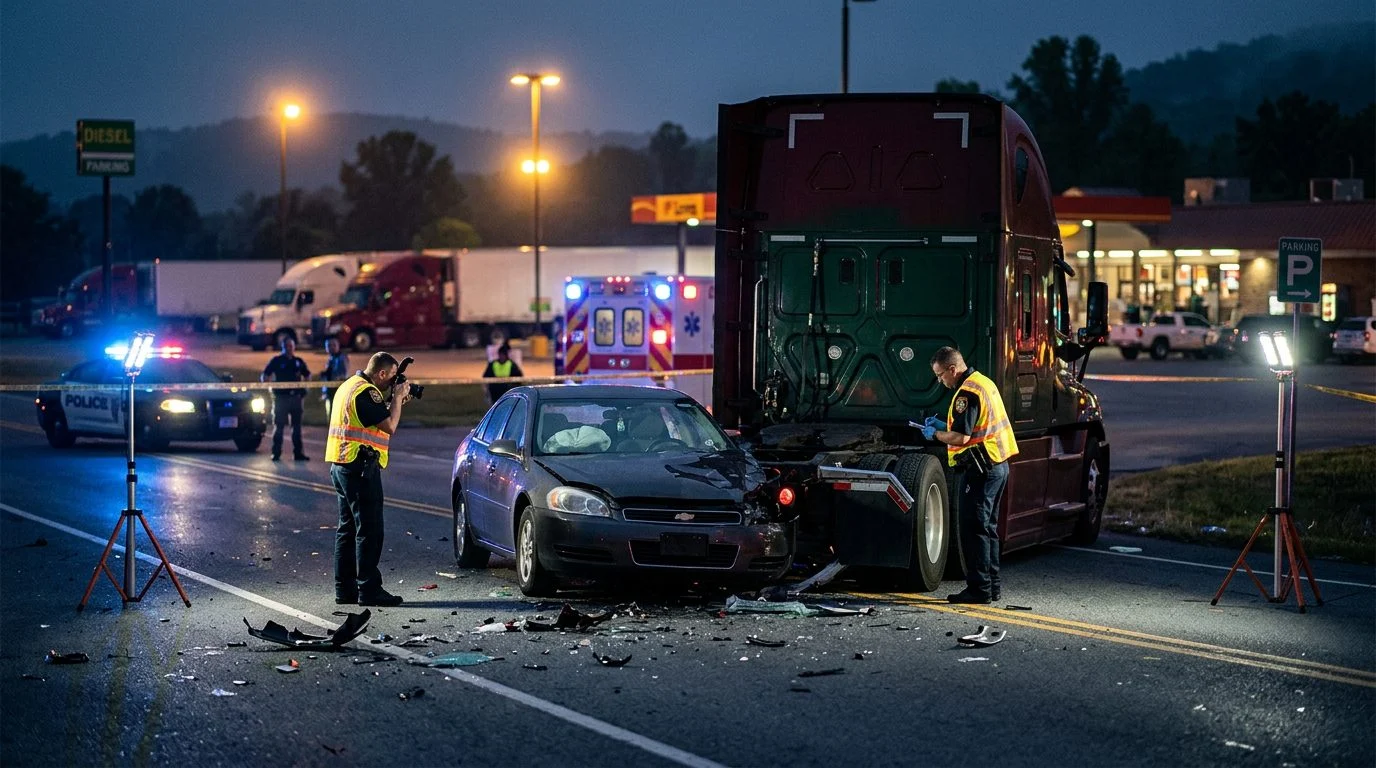
Large truck crashes can cause catastrophic injuries, and some families face questions after a fatal crash. The firm handles catastrophic injury, traumatic brain injury and spinal cord injury matters, along with car accident, truck accident, commercial vehicle and wrongful death cases.
For related reading, see the amputation injuries after commercial vehicle crashes page and the questions families raise after a fatal commercial vehicle crash page.
Common Questions
Is a side underride guard the same as a rear guard?
No. A rear guard sits at the back of the trailer and limits how far a car slides under it. Side guards address the gap along the trailer’s side and are a separate subject.
Does federal law cover rear guards on every trailer?
No. The rule in 49 C.F.R. § 393.86 covers trailers of 10,000 pounds or more made on or after January 26, 1998, with some exceptions.