
Traumatic Brain Injury · Virginia
Who Is Liable for a Company Vehicle Brain Injury in Virginia
A brain injury after a crash with a company vehicle can raise hard questions about who answers for the harm. Here is how those questions are usually framed.
What shapes these claims
Crash and vehicle records
Police reports, photos, and vehicle data can show what happened and whose equipment was involved.
Who was driving and for whom
The driver's role, schedule, and work assignment often matter when a company vehicle is involved.
Medical evidence of the injury
Imaging, neurological testing, and treatment records help show how a brain injury affects daily life.
Long-term effects
Brain injuries can change memory, mood, and work ability over time, so the full picture may take months to develop.
Published November 22, 2026
A crash with a company van, fleet car or commercial truck can cause a brain injury, and many families ask who can be sued. If a crash has hurt you, the at-fault driver is one possible party to a claim. Depending on how the crash happened, the driver’s employer, the owner of the vehicle, a contractor or the maker of a vehicle part could share legal responsibility for your injuries.
This page explains how each party may connect to a crash, what evidence matters, and which deadlines apply.
What Is a Brain Injury Claim From a Company Vehicle Crash?
A brain injury claim is a personal injury case for harm to the brain caused by another party’s negligence. Negligence means a failure to use reasonable care.
Traumatic brain injury means damage or changes in brain function caused by an outside force. Brain Injury Services in Virginia notes that motor vehicle accidents can cause it, and a doctor must make the diagnosis. The Virginia Department of Health also lists motor vehicle crashes among common causes.
Brain injuries range from mild to severe. Some people develop headaches, memory trouble, mood changes or sleep problems days or weeks after a crash. That delay is one reason early medical care and careful records matter.
Common mechanisms in company vehicle crashes include a head striking a steering wheel, window or windshield. Rollovers and sudden stops can also cause head injuries.
If a company vehicle crash left you or someone you love with a brain injury, the firm is glad to talk through who may be responsible and what options may be available. Talk it through with Correll Law Firm — we can walk you through how a situation like yours is usually handled and what your options are.
Who May Be Responsible When a Company Vehicle Causes a Crash?
Several parties may be responsible, and the crash facts decide which ones. Each party’s role should be looked at on its own.
- The driver. The driver who caused the crash may be a party to a claim.
- The employer. An employer may face claims tied to a driver’s work, depending on the facts.
- The vehicle owner. A fleet operator or owner who is not the driver’s employer may also be connected to the vehicle.
- Contractors. A maintenance, repair, inspection or loading contractor may have contributed to the crash.
- Parts or equipment makers. A defect in a part may have played a role. The evidence must answer that question.
Contractors have a specific rule. Under Va. Code § 8.01-39, in a civil action alleging personal injury, death or property damage resulting from the negligence of or breach of warranty by an independent contractor, the contractor cannot defend by saying the work was completed or accepted as satisfactory by the property owner or the person who hired the contractor.
Here is a hypothetical. A delivery van driver runs a stop sign. A loading contractor had left cargo poorly secured, and it shifts into the cab during the impact. Both parties’ conduct could be examined, and neither one’s role is assumed in advance.
How Is Responsibility Shown in a Commercial Crash Case?
Responsibility is shown by proving that the other party’s conduct caused the injury.
Virginia requires a driver involved in a crash with injury or death to stop and report it to police immediately (Va. Code §§ 46.2-371, 46.2-894). The reporting statute requires the driver, or someone acting for the driver, to immediately notify a law-enforcement officer of a crash causing injury or death. The two-year period discussed below is the deadline to file a lawsuit, not to report a crash.
Evidence that often matters includes:
- The police crash report
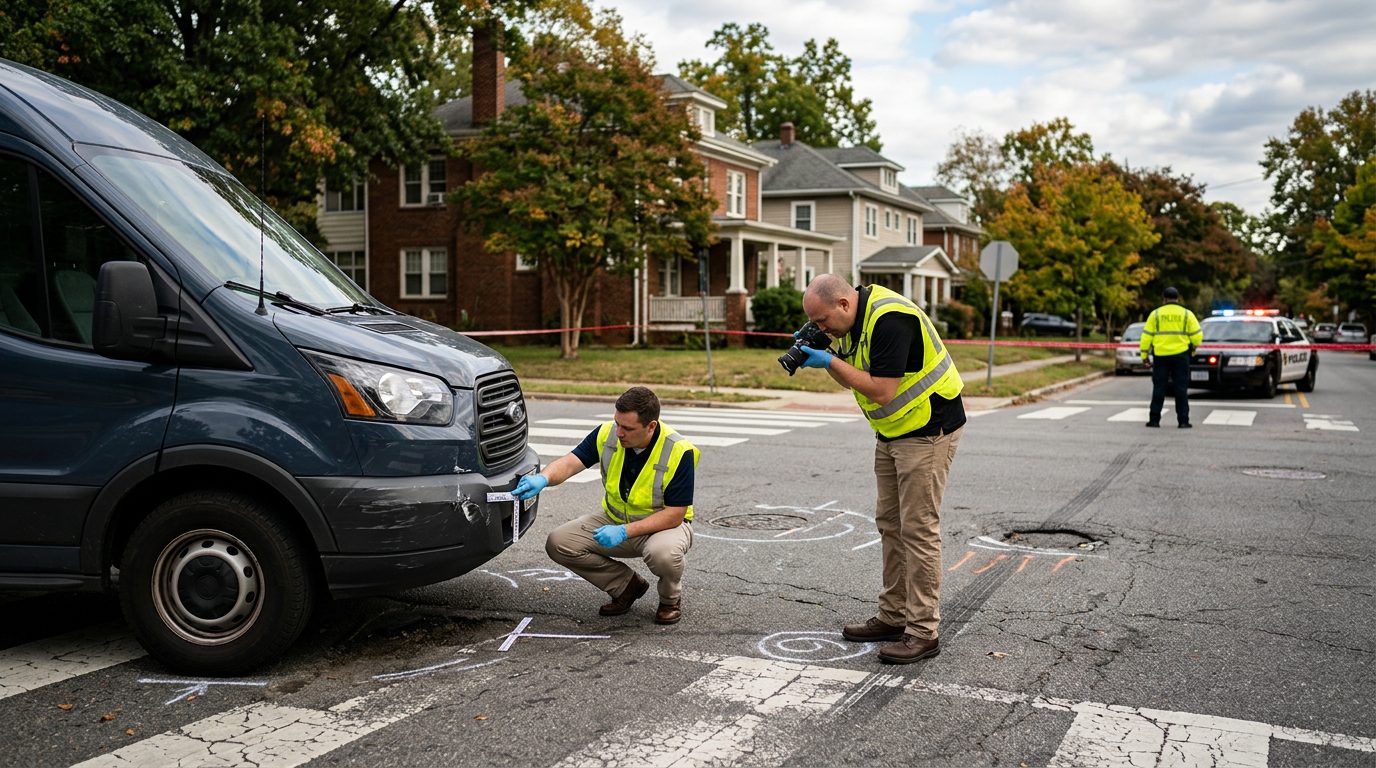
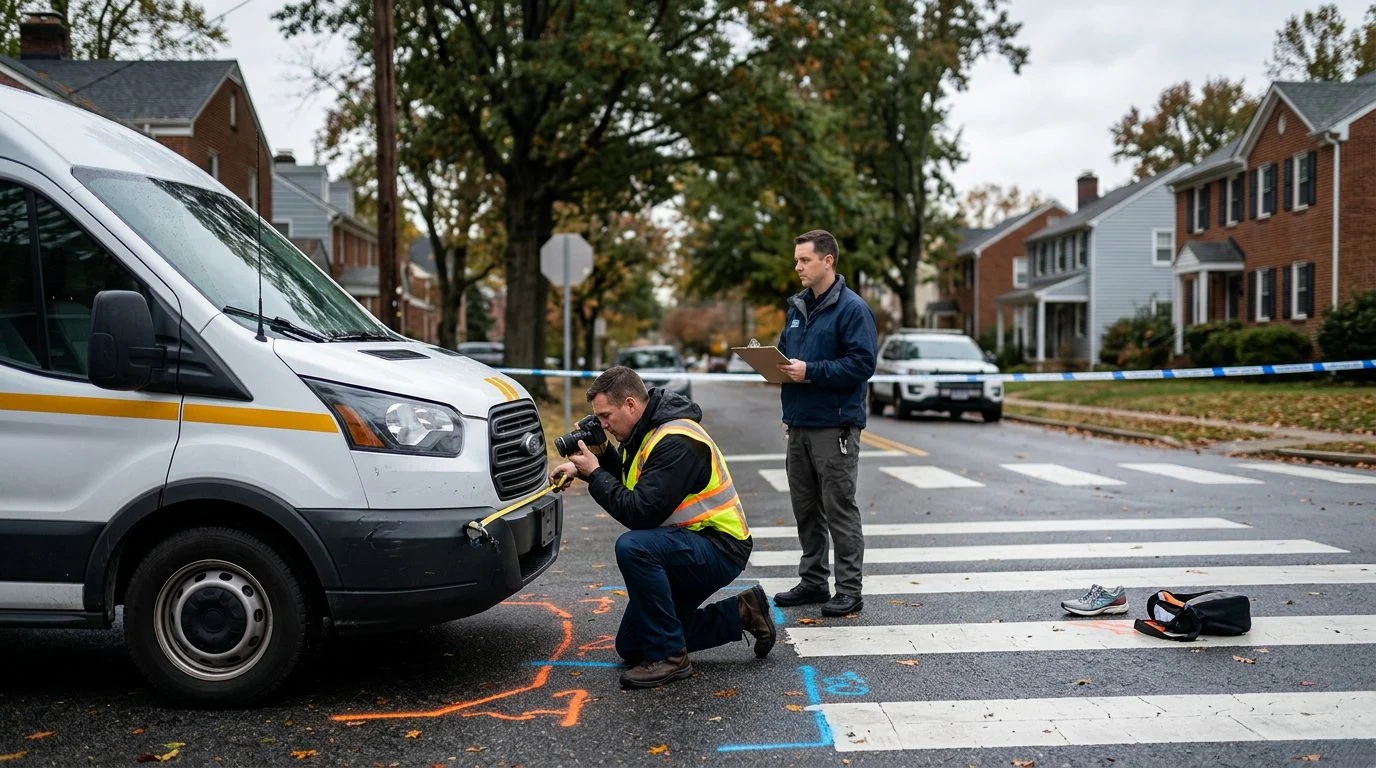
- Photos of the scene and vehicle damage
- Names and contact details for witnesses
- Dash camera footage, if it exists
- Medical records from the first visit onward
Company-side records may also matter. These can include driver work schedules, logs, maintenance and inspection history, training records and cargo paperwork. These records may be requested as part of a claim.
Brain injuries are documented through medical testing, imaging and neurological follow-up. Consistent records help connect the crash to the injury.
Can You Seek Punitive Damages in a Company Vehicle Crash?
Punitive damages may be possible only when the conduct meets a higher standard than ordinary negligence.
Virginia allows punitive damages for actual malice, or for willful or wanton conduct or recklessness showing a conscious disregard for the safety of others, capped at $350,000 (Va. Code § 8.01-38.1).
Punitive damages are a separate question from compensation for injuries. The facts of each crash decide whether it might.
What Happens in a Wrongful Death Claim After a Crash?
A Virginia wrongful death action is filed by the decedent’s personal representative within two years of the death (Va. Code §§ 8.01-50(C), 8.01-244(B)), on behalf of the family members the statute protects.
Virginia wrongful death damages cover the family’s sorrow, mental anguish and loss of the decedent’s companionship, guidance and care; lost income and services; medical expenses from the injury; funeral expenses; and, for willful or wanton conduct, punitive damages (Va. Code § 8.01-52).
The same parties discussed above, including the driver, employer and any contractor, may be connected to a fatal company vehicle crash.
How Long Do You Have to File, and Does Partial Fault Matter?
Virginia generally requires a personal injury lawsuit to be brought within two years after the cause of action accrues. The Virginia Code section on personal injury actions sets this two-year period.
Virginia generally allows two years from the date of injury to file a personal injury lawsuit (Va. Code § 8.01-243(A)); the clock runs from the date of injury, not the date of discovery, with narrow exceptions.
Some claims carry notice requirements that run out sooner.
Talk to a lawyer about your facts.
Not sure what your next step is?
Talk it through with Correll Law Firm — we can walk you through how a situation like yours is usually handled and what your options are.
How the Firm Handles Brain Injury Cases From Company Vehicle Crashes
Correll Law Firm is a Virginia personal injury firm based in Winchester, with a Harrisonburg office. The firm serves people from the Shenandoah Valley, Richmond and Henrico County.
The firm handles car accidents, truck accidents, commercial vehicle accidents, catastrophic injuries, traumatic brain injury, spinal cord injury and wrongful death.
A brain injury case usually moves through a few steps:
- Crash facts. The firm reviews how the crash happened and who was involved.
- Records. The firm gathers crash reports, company records and vehicle information.
- Medical documentation. The firm tracks treatment and follow-up care, since symptoms may change over time.
- Responsible parties. The firm reviews which parties may be connected to the crash.
- Updates. The firm keeps the client informed about where the claim stands.
A brain injury case may take time to develop. The full course of symptoms is not always clear early on.
Frequently Asked Questions
Can you sue the person who hit your car?
The at-fault driver may be a party to a claim. Who is responsible depends on the facts of the crash.
How much can you sue for brain damage?
The damages in a claim depend on the injury and its effects. Virginia law lists the categories that may apply in a wrongful death claim.
Can the company be responsible if the driver was working?
It may be, depending on the facts of the crash and the driver’s role.
How long do you have to file a lawsuit?
Generally, two years from the date of injury (Va. Code § 8.01-243). Some claims have shorter notice requirements.
Can you still have a claim if you were partly at fault?
Partial fault can limit recovery under the rule described above, so the facts matter.