

Wrongful Death | Virginia
When a Brain Injury Turns Fatal Months After a Crash
Families in Winchester, Harrisonburg, Richmond and across the Shenandoah Valley often wonder whether a death that comes long after a crash can still be pursued. Here is how the questions usually unfold.
Published November 19, 2026
A family may watch a loved one decline for months after a crash. They may wonder whether that death can still lead to a legal claim.
Yes, a death that follows a crash-related brain injury may support a wrongful death claim in Virginia. The key question is whether the crash caused the injury that led to the death.
Why a Brain Injury Can Lead to Death Months After a Crash
A brain injury from a crash can lead to death weeks or months later, because problems can appear or worsen over time. The Administration for Community Living reports that automobile crashes can cause traumatic brain injuries, which involve severe brain damage.
Complications after a serious head injury can include infection, seizures, blood clots, brain swelling, and problems tied to long hospital stays or surgery. Treating providers can explain which of these, if any, applied to a given patient.
Hypothetical timeline, for illustration only: A driver leaves the hospital after a head injury and seems to improve. Over the next several months, the family notices seizures and growing confusion. The person returns to the hospital and later dies of complications. The months between the crash and the death do not decide the legal question. The medical link between the crash and the death does.
Not sure what your next step is?
Talk it through with Correll Law Firm — we can walk you through how a situation like yours is usually handled and what your options are.
Delayed Brain Injury Symptoms and Why Families Miss Them
Delayed brain injury symptoms often appear days or weeks after a crash, and they can change over time. Common signs include headaches, trouble with memory or concentration, mood changes, sleep changes, and balance problems.
Families often attribute these signs to stress, exhaustion, or a slow recovery from the crash. That can push a medical look at the head injury further down the list.
A person who seemed fine at discharge may still have a brain injury. Healing from other injuries does not show whether the brain has recovered.
A dated journal helps. Write down each change, the date it started, and any medical visit. Keep it simple; a few lines a day is enough. Bring the journal to appointments, and ask treating providers to note any head-injury history in the medical chart. That record can later show when symptoms began and how they changed.
Who Can Bring a Wrongful Death Claim in Virginia
A personal representative files a Virginia wrongful death claim, not the family members themselves. A Virginia wrongful death action is filed by the decedent’s personal representative within two years of the death (Va. Code §§ 8.01-50(C), 8.01-244(B)), on behalf of the family members the statute protects.
Virginia allows this action when the wrongful act would have let the injured person sue had death not followed (Va. Code § 8.01-50). A personal representative is the person legally appointed to act for the deceased person’s estate. Families often ask who that will be, and it is worth raising early.
Family members share in any recovery rather than filing. The law sets an order for who shares, starting with a surviving spouse and children (Va. Code § 8.01-53).
The Two-Year Deadline: Death Date Versus Crash Date
The wrongful death clock runs from the date of death, not the date of the crash. Va. Code § 8.01-244 requires the action within two years after the death of the injured person.
Families often anchor on the crash date because that is when the injury happened. Virginia generally allows two years from the date of injury to file a personal injury lawsuit (Va. Code § 8.01-243(A)); the clock runs from the date of injury, not the date of discovery, with narrow exceptions.
Some claims carry notice requirements that run out sooner. A negligence claim against a county, city or town is barred unless a written statement of the nature of the claim, including the time and place of the injury, is filed within six months after the claim arose (Va. Code § 15.2-209); failure to provide it does not bar the claim if the locality’s attorney, chief executive, or mayor, or any insurer or entity providing coverage or indemnification of the claim, had actual knowledge of the claim, including its nature, time and place, within that same six months, and if the claimant was under a disability when the claim arose, the tolling provisions of § 8.01-229 apply. Families should raise timing questions early so nothing is missed.
What Can Be Recovered in a Virginia Wrongful Death Case
A Virginia wrongful death claim can seek the losses the law lists, and the list is specific. Virginia wrongful death damages cover the family’s sorrow, mental anguish and loss of the decedent’s companionship, guidance and care; lost income and services; medical expenses from the injury; funeral expenses; and, for willful or wanton conduct, punitive damages (Va. Code § 8.01-52). Under Va. Code § 8.01-52, the jury, or the court when a case is tried without a jury, may award such damages as seem fair and just, and any award for the decedent’s care, treatment and hospitalization, for reasonable funeral expenses, or for punitive damages must be specifically stated.
Virginia treats a cause of action the person had before death as surviving under Va. Code § 8.01-25, which is a separate matter.
Punitive damages are a different question. They turn on the defendant’s conduct, not on the family’s loss. Virginia allows punitive damages for actual malice, or for willful or wanton conduct or recklessness showing a conscious disregard for the safety of others, capped at $350,000 (Va. Code § 8.01-38.1). The cap appears in Va. Code § 8.01-38.1.
Linking a Later Death Back to the Crash
The main question is causation: did the crash-related brain injury lead to the death?
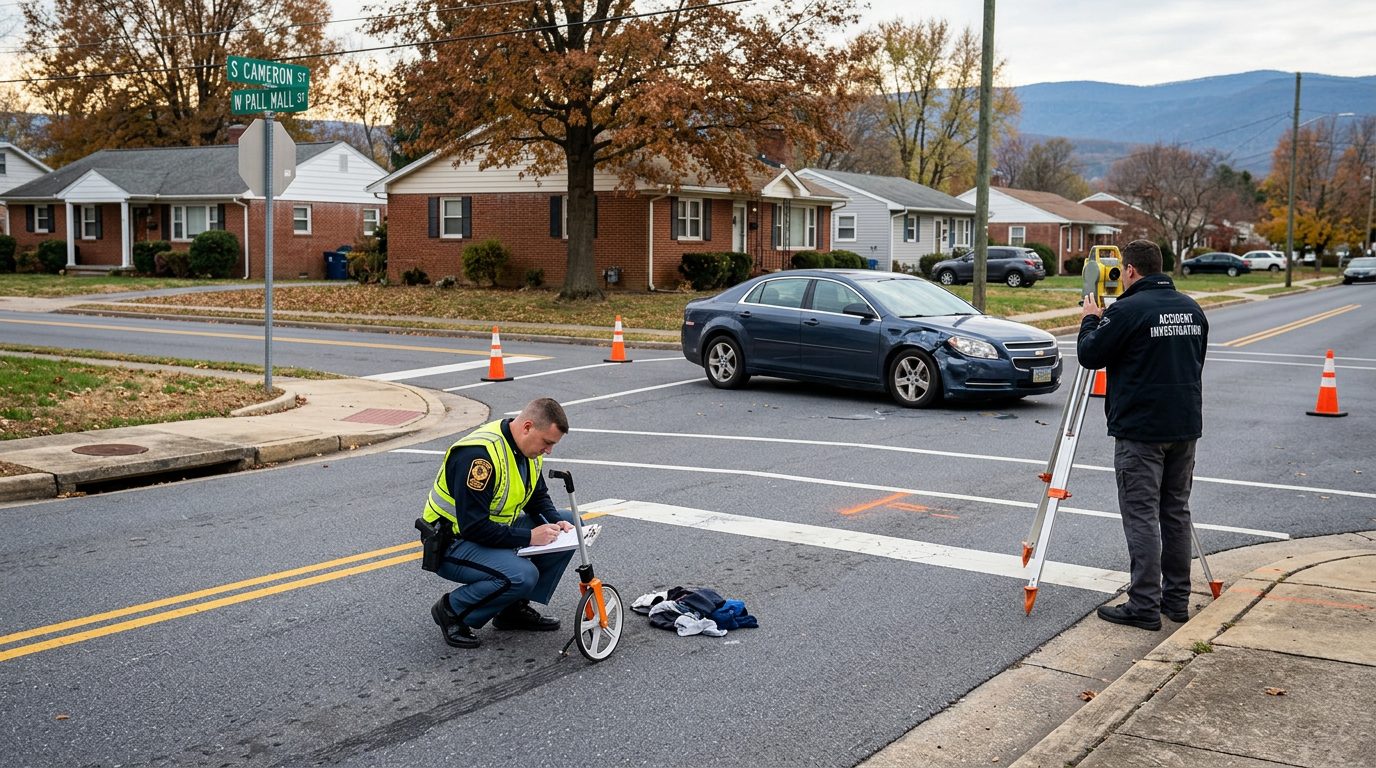
Proof usually comes from medical records. A complete chart, from the scene through emergency care, hospital stays, rehabilitation, and follow-up visits, matters. So do the death certificate and any medical examiner findings, where they exist.
Crash reports and other records show how the crash happened. Some cases also use outside medical reviewers or accident reconstruction professionals. Gaps in the chart can make the link harder to show, so gather what exists early. Not every death after a head injury has the same proof.
Not sure what your next step is?
Talk it through with Correll Law Firm — we can walk you through how a situation like yours is usually handled and what your options are.
Crash Reporting and Early Records for Families
Virginia requires a driver involved in a crash with injury or death to stop and report it to police immediately (Va. Code §§ 46.2-371, 46.2-894). The two-year period in the earlier section is the deadline to file a lawsuit, not the deadline to report a crash (Va. Code § 8.01-243).
Families can start gathering a few records early:
- The crash report number
- Photos of the scene and vehicles
- The names of each hospital, clinic, and rehab facility
- Discharge papers
- A list of medical visits after discharge
Keep originals in one folder and build a simple timeline of the crash, the hospital stays, and each visit after discharge. Write dates down as you learn them. A timeline helps whoever handles the claim later.
Truck Crashes and Brain Injury Wrongful Death Claims in Virginia
Truck crashes can add records that a car crash may not have. Federal rules require a motor carrier to keep driver records of duty status and supporting documents for at least six months from the date of receipt (49 C.F.R. § 395.8).
Because six months is a minimum period, families should raise records questions early. A trucking case may turn on duty-status logs and related paperwork, so early requests matter.
More than one party can be involved, such as a driver and a company. Who is named affects which records matter.
Fault Rules and Why Early Questions Matter
Fault rules can decide whether a claim goes forward, so early questions matter. Virginia follows contributory negligence: if you are found even partly at fault, you may be barred from recovering, with limited exceptions. Talk to a lawyer about your facts.
A family does not have to sort out fault questions alone. Early statements, insurance adjuster contacts, and records can shape how the crash is described later. Families may wish to be careful about what they post or say about the crash in public, since those words can be read later.
Gathering the crash report and medical records early can help any later review of fault questions.

Where to Learn More in This Resource Series
The firm’s offices are in Winchester and Harrisonburg, and it serves people from the Shenandoah Valley to Richmond and Henrico County.
Can a death months after a crash still lead to a claim?
It may, if the crash caused the brain injury that led to the death.
Who files a wrongful death claim in Virginia?
The decedent’s personal representative files it, on behalf of the family members the law protects.
Does the wrongful death clock start at the crash?
For a broader view, read the guide to brain injuries from car and truck crashes. Readers in the Richmond area can start with the Richmond page, and readers in Henrico County can see the Henrico County page. Readers near Winchester can read the Winchester page.