
Car Accidents | Virginia
How to Get a Police Report After a Virginia Car Accident
A short guide to finding the official crash record, what it contains, and why it can help you keep track of your claim.
Published November 18, 2026
After a car crash, it’s easy to feel overwhelmed. You may be hurt, your car may be damaged, and the other driver may tell a different story.
The short answer is that a police crash report is the official record of the crash, and you request it from the agency that investigated. This page explains the importance of obtaining a police report after a car accident in Virginia, how to ask for a copy, and how the report fits with the deadlines.
The short answer: Virginia requires reporting right away
Virginia requires a driver involved in a crash with injury or death to stop and report it to police immediately (Va. Code §§ 46.2-371, 46.2-894). That duty starts at the scene, before anyone thinks about insurance or records.
Many people mix this up with the lawsuit clock. It is not the deadline to report a crash. Those are two separate steps with two separate timelines.
The rest of this page covers why the report matters, how to request a copy, and how it fits with the filing rules.
Not sure what your next step is?
Talk it through with Correll Law Firm — we can walk you through how a situation like yours is usually handled and what your options are.
Why the police report matters after a car accident
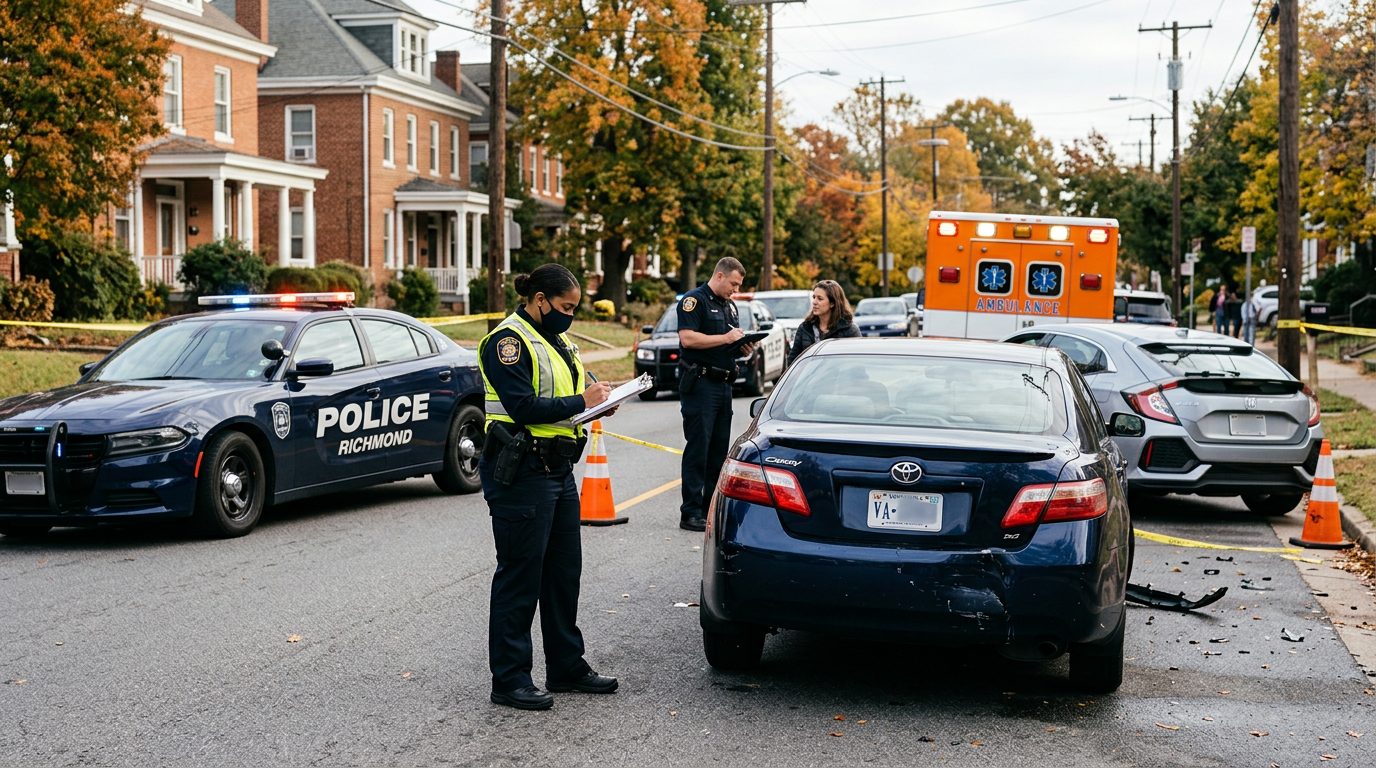
The police report is the official written record of the crash. The investigating officer’s report generally lists the date, time and location, the vehicles involved, and what the officer observed at the scene. It can also list drivers, passengers and witnesses.
That matters because memories fade fast. Weeks later, people often can’t recall which lane each car was in, what each driver said, or what the officer noted. The report keeps those basics in one dated place.
The report is one piece of evidence, not the whole story. It works alongside photos of the vehicles and scene, medical records and witness statements. Each piece helps show what happened.
The practical point is simple. An early, official record gives you a starting point that other evidence can be matched against.
Virginia’s duty to stop and report a crash
The driver’s duties start at the scene. Under Va. Code § 46.2-894, a driver in a crash that kills or injures a person, or that damages an attended vehicle or other attended property, must immediately stop as close to the scene as possible without blocking traffic; a violation is a Class 5 felony if the crash injures or kills anyone or causes more than $1000 of property damage, and a Class 1 misdemeanor if the property damage is $1000 or less.
The driver must then give their name, address, driver’s license number and vehicle registration number. That information goes to the State Police or local law enforcement. Or the driver may give it to the person struck and injured, if that person appears able to understand and retain it, or to the other driver or an occupant of the vehicle collided with, or to the custodian of other damaged property.
The driver must also give reasonable help to an injured person. That includes taking the person to a physician, surgeon or hospital when treatment looks necessary or the injured person asks for it.
If injuries keep the driver from following these steps, the driver must make the report as soon as reasonably possible. The driver must also make a reasonable effort to find the people involved. Va. Code § 46.2-371 adds that the driver of a vehicle involved in an accident resulting in injury or death, or someone acting for them, must immediately give notice of the accident to a law-enforcement officer; a willful failure to make that report is a Class 4 misdemeanor.
Timing matters because a report made at the scene captures details while they are still fresh.
How to get a copy of a police crash report in Virginia
Request a copy from the law enforcement agency that investigated the crash. The statute requires the driver to give notice of the accident to a law-enforcement officer, and Va. Code § 46.2-894 says the driver must report to the State Police or local law-enforcement agency, or to the other people it lists, so the investigating agency is usually one of those. The Virginia State Police publishes guidance on obtaining crash reports, including current request steps.
Knowing which agency responded to the crash makes the request faster. Start by checking the crash scene details you remember, such as the location and the time of day.
When you ask, have the basics ready. These include the date, the place where the crash happened, and the names of the drivers involved. These details help the agency find the right file. Request methods and wait times can vary, so ask about the current options when you make the request.
Keep the copy with your other records. Medical records, photos, insurance letters and the crash report belong together. That habit makes a later claim easier to organize.
Police report deadline versus the lawsuit deadline
The report deadline and the lawsuit deadline answer different questions. One is about reporting the crash. The other is about filing a court case.
Virginia generally allows two years from the date of injury to file a personal injury lawsuit (Va. Code § 8.01-243(A)); the clock runs from the date of injury, not the date of discovery, with narrow exceptions.
Some claims carry shorter notice rules. A negligence claim against a county, city or town requires a written statement filed within six months after the claim accrued, under Va. Code § 15.2-209. Failure to file it does not bar the claim if the locality’s attorney, chief executive or mayor, or its insurer or other entity providing coverage or indemnification, had actual knowledge of the claim, including its nature and the time and place at which the injury is alleged to have occurred, within that same six months. The statute is strictly construed, so timing matters.
Because those windows can run out sooner than people expect, requesting the crash report early is wise. A report in hand makes it easier to state the time and place of the crash accurately.
Commercial truck and commercial vehicle crashes
A crash with a commercial truck can produce more records than a police report alone. Federal rules require motor carriers to keep driver records. Under 49 C.F.R. § 395.8, a motor carrier must keep each driver’s records of duty status and supporting documents for not less than 6 months from the date of receipt.
Those company records are separate from the police report. They are held by the carrier, not the police, so they may need a separate request. Because the minimum keep period is six months, asking for them early matters.
These records are worth preserving from the start.
The firm serves people in Richmond and Henrico County, as well as Winchester, Harrisonburg and the Shenandoah Valley. Its offices are in Winchester and Harrisonburg.
For a side-by-side view, read police report versus accident report in Virginia.
Not sure what your next step is?
Talk it through with Correll Law Firm — we can walk you through how a situation like yours is usually handled and what your options are.
When a crash causes injury or death: the wrongful death question
When a crash causes a death, a different process applies. A Virginia wrongful death action is filed by the decedent’s personal representative within two years of the death (Va. Code §§ 8.01-50(C), 8.01-244(B)), on behalf of the family members the statute protects.
Family members other than the personal representative do not file a wrongful death action, but an action for fetal death is brought by and in the name of the natural mother; if the natural mother dies or is or becomes a person under a disability, the action may be initiated or maintained by the administrator of her estate, her guardian, or her personal representative qualified to bring it.
Va. Code § 8.01-53 lists who counts as a beneficiary. That includes a surviving spouse, the children of the deceased and, in some cases, parents.
That is why a family should still request and keep the police report. It documents how the crash happened.
Serious brain or spinal cord injuries from a crash raise the same record questions. Keep the crash report, medical records and treatment notes together from the start.
Practical steps after a crash to protect your records
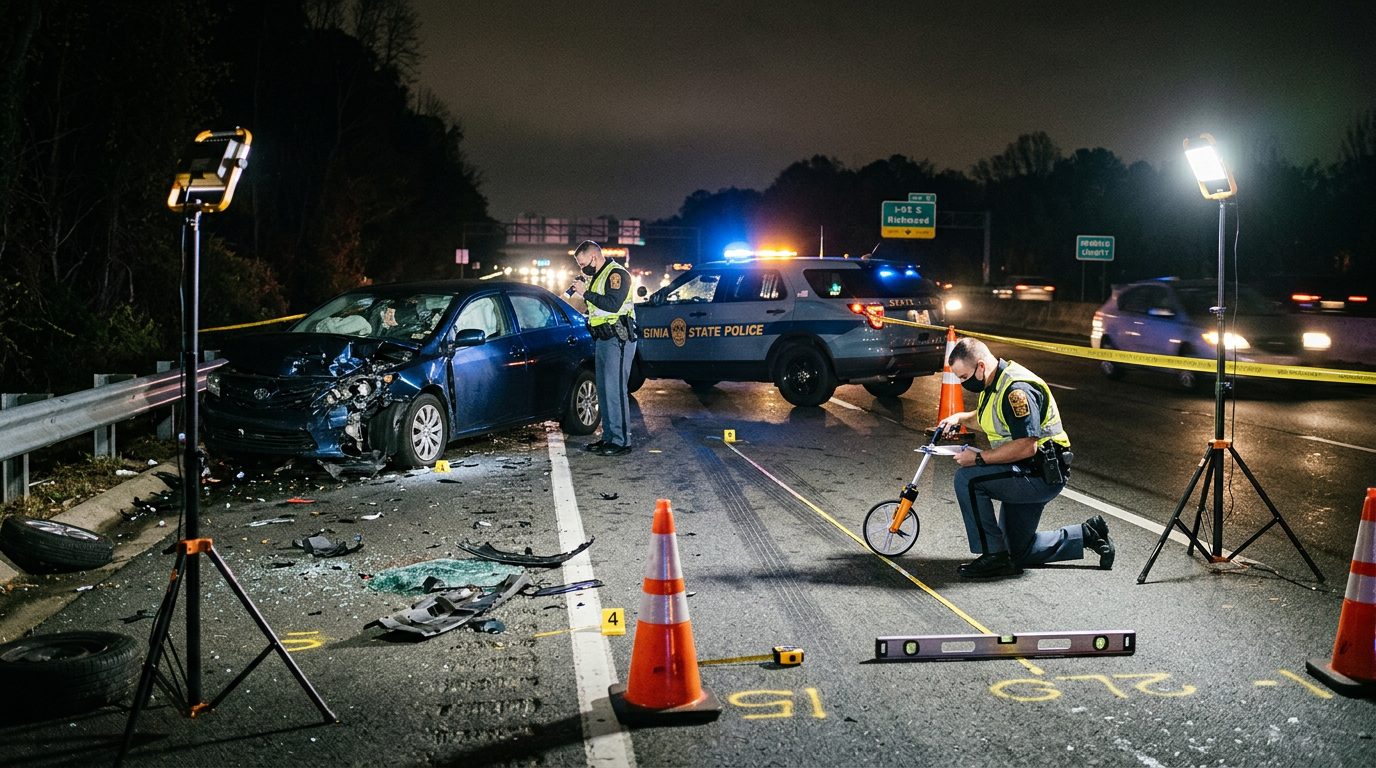
Medical attention comes first. Getting checked promptly protects your health and creates medical records that match the crash timeline.
Keep these items together:
- Photos of the scene and the vehicles
- Names and how to reach any witnesses
- Insurance information for everyone involved
- Notes written while your memory is fresh
Virginia follows contributory negligence: if you are found even partly at fault, you may be barred from recovering, with limited exceptions. Talk to a lawyer about your facts.
Frequently asked questions
Who do I ask for a police crash report?
Ask the law enforcement agency that investigated the crash.