
Truck Accidents | Brain Injury | I-64 Corridor
Serious Brain Injuries From a Truck Crash on I-64 Near Richmond
Correll Law Firm represents people hurt in commercial truck crashes and their families, serving the Shenandoah Valley, Richmond and Henrico County from our Winchester and Harrisonburg offices.
Published November 4, 2026
A brain injury from a truck crash can be serious even when a person feels fine at the scene. This guide explains a truck accident brain injury I-64 Richmond case in plain terms. It covers how these injuries happen, which medical records matter, what Virginia requires after a crash, and which deadlines may apply.
What a Brain Injury From a Truck Crash Involves
A brain injury from a truck crash is a traumatic brain injury (TBI) caused by a sudden blow, jolt or penetrating force to the head. The Administration for Community Living notes that automobile crashes can cause traumatic brain injuries.
A concussion is a mild form of TBI. More severe brain injuries can cause lasting changes in thinking, memory, mood and behavior.
A brain injury may not be obvious at the scene. Headaches, memory problems, dizziness, mood changes and sleep changes can appear days or weeks after a crash.
This page is written for drivers, passengers, pedestrians and motorcyclists hurt in a truck or commercial vehicle crash. It is also for family members of someone with a serious brain injury. The firm handles car accidents, truck accidents, commercial vehicle accidents, catastrophic injuries, traumatic brain injury and wrongful death matters.
If you or a family member was hurt in a truck crash, you may have a claim, and the firm is glad to talk through the facts with you. Talk it through with Correll Law Firm — we can walk you through how a situation like yours is usually handled and what your options are.

Why Truck Crashes on I-64 Can Cause Serious Brain Injuries
Large trucks can cause serious head injuries because of their size, weight and momentum. In a crash, the head can move hard forward, backward or sideways. It can strike a window, the steering wheel, the dashboard or the cab interior.
A loaded truck carries far more momentum than a passenger car. That momentum is one reason a truck accident brain injury I-64 Richmond crash can be serious even at moderate speeds.
Heavy-vehicle crashes on interstates often follow a few patterns:
- Rear-end impacts, when a fast-moving truck hits slowed or stopped traffic
- Sudden lane changes that push a car off the road or into another lane
- Jackknifing, when the trailer swings out of line with the cab
- Rollovers, which can throw occupants or crush the cab
- Debris strikes from cargo or road objects
Interstate traffic mixes heavy trucks with cars moving at high speed. Each crash depends on its own facts, including speed, weather and how the crash began.
Medical Care and Symptoms That May Appear Later
Get a medical evaluation after any blow to the head, even if the injury seems minor. Early care protects health and starts the medical record that later shows the injury.
Seek emergency care right away if you notice any of these signs:
- Loss of consciousness
- A headache that keeps getting worse
- Repeated vomiting
- Confusion or unusual drowsiness
- Slurred speech
- Weakness, numbness or seizures
Imaging, neurological exams and follow-up visits all add to that record. Keep every appointment, and ask the provider to note new or changing symptoms.
A daily symptom journal can help too. Write down headaches, memory lapses, dizziness, mood or sleep changes, and any trouble at work, while driving or while reading. Date each entry. The journal does not replace medical records, but it shows how the injury affects everyday life.
Crash Reporting, Scene Documentation and Evidence
Virginia requires a driver involved in a crash with injury or death to stop and report it to police immediately (Va. Code §§ 46.2-371, 46.2-894). You can read the duty in Va. Code § 46.2-371 and Va. Code § 46.2-894. This reporting duty is separate from the deadline to file a lawsuit.
If it is safe to do so, document the scene:
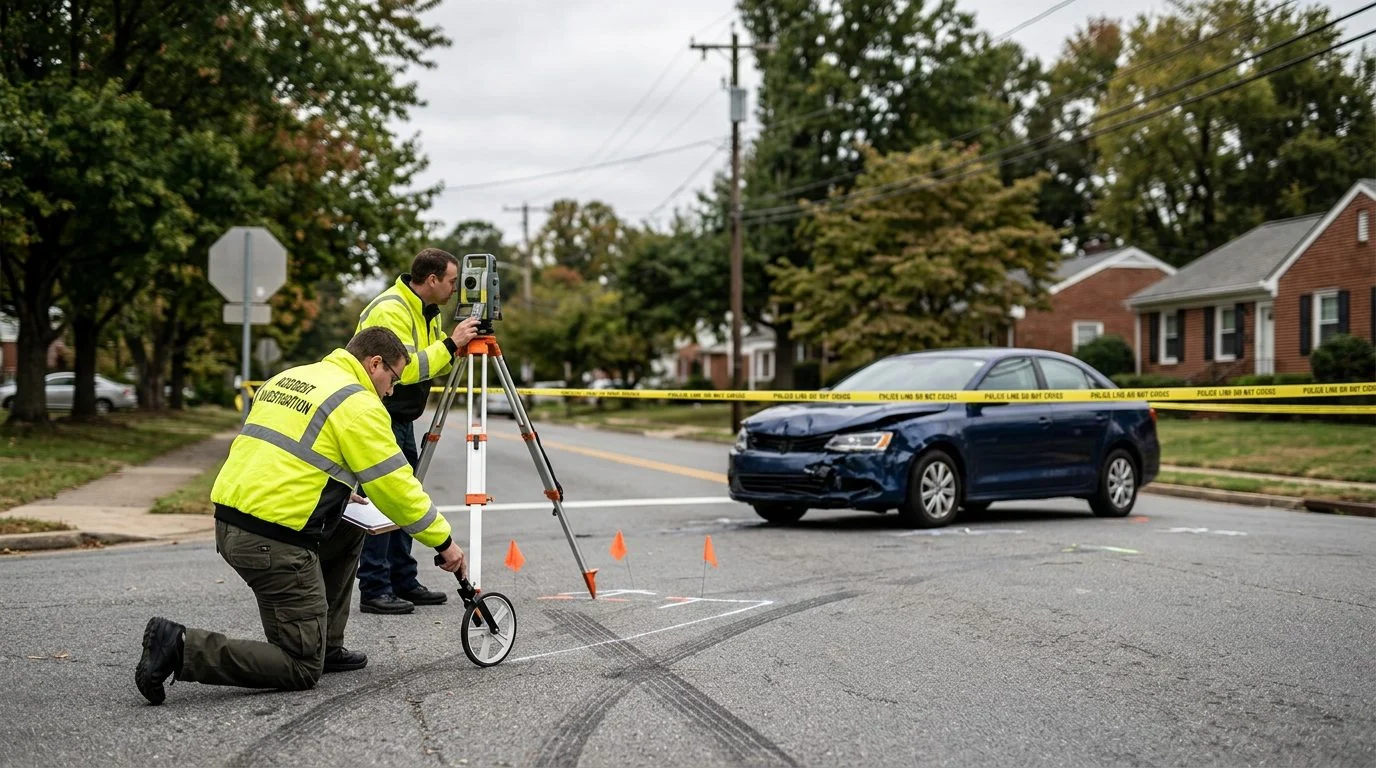
- Photos of both vehicles, the truck’s markings and trailer number
- Road conditions, skid marks and traffic signs
- Names and details of witnesses
- The police report number and the responding officer’s information
Evidence can disappear quickly. Electronic logging device data, dash camera video and driver records are common examples. 49 C.F.R. § 395.8 sets rules for how motor carriers record driver duty status, with listed exceptions. Under 49 C.F.R. § 396.11, a motor carrier keeps driver vehicle inspection reports for three months from the date they were prepared, except that these rules do not apply to a private motor carrier of passengers (nonbusiness), a driveaway-towaway operation, or a motor carrier operating only one commercial motor vehicle. Because some records are kept for a limited time, early written requests to preserve evidence matter. Keep receipts for medical care, prescriptions, mileage to appointments and time missed from work.
Who May Be Responsible When a Commercial Truck Is Involved
More than one party may be responsible after a commercial truck crash. The driver, the motor carrier, the employer, a maintenance provider, a cargo loader or a trailer owner may each play a role. Responsibility depends on the facts of each crash.
Federal rules limit how long a commercial driver may drive. Under 49 C.F.R. § 395.3, a driver of a property-carrying commercial motor vehicle may not drive without first taking 10 consecutive hours off duty, except as otherwise provided in § 395.1. The driver may drive a total of 11 hours within the 14-hour period that follows. Records of these hours may matter in a claim.
After some crashes, federal rules also require testing. Under 49 C.F.R. § 382.303, employers test surviving drivers for alcohol and drugs as soon as practicable in listed situations. That rule also says it does not delay necessary medical attention.
Punitive damages are a separate question.
What a Brain Injury Claim Covers and How It Is Proven
A brain injury claim may address past and future medical care, rehabilitation, lost income and the injury’s effect on daily life. A brain injury is shown through medical testing, treating provider opinions and everyday records.
In a suit for personal injury or death, provable lost income is not reduced by reimbursement from another source, and the fact of any such reimbursement shall not be admitted into evidence. See Va. Code § 8.01-35. See Va. Code § 8.01-35.
Proof usually includes imaging results, neurological and neuropsychological testing, and opinions from treating providers. Records from employers or family members can show changes in work, memory or behavior. Outside medical reviewers may study imaging and explain long-term effects.
If you may share some blame for a crash, Virginia’s fault rule can decide whether recovery is possible. Virginia follows contributory negligence: if you are found even partly at fault, you may be barred from recovering, with limited exceptions. Talk to a lawyer about your facts.
Not sure what your next step is?
Talk it through with Correll Law Firm — we can walk you through how a situation like yours is usually handled and what your options are.
Deadlines, Timelines and How the Firm Serves Richmond and Henrico County
Virginia sets a filing deadline for personal injury lawsuits. Virginia generally allows two years from the date of injury to file a personal injury lawsuit (Va. Code § 8.01-243(A)); the clock runs from the date of injury, not the date of discovery, with narrow exceptions. Under Va. Code § 8.01-243, subsection A provides that, unless otherwise provided in this section or by other statute, every action for personal injuries, whatever the theory of recovery, shall be brought within two years after the cause of action accrues.
Some claims carry notice requirements that run out sooner. A claim against a county, city or town, for example, may require a written statement within six months under Va. Code § 15.2-209. Va. Code § 15.2-209 reads: “Failure to provide such statement shall not bar a claim against any county, city, or town, provided that the attorney, chief executive, or mayor of such locality, or any insurer or entity providing coverage or indemnification of the claim, had actual knowledge of the claim, which includes the nature of the claim and the time and place at which the injury is alleged to have occurred, within six months after such cause of action accrued.” Va. Code § 15.2-209 reads: “Every claim cognizable against any county, city, or town for negligence shall be forever barred unless the claimant or his agent, attorney, or representative has filed a written statement of the nature of the claim, which includes the time and place at which the injury is alleged to have occurred, within six months after such cause of action accrued.”
Fatal crashes follow a different rule. A Virginia wrongful death action is filed by the decedent’s personal representative within two years of the death (Va. Code §§ 8.01-50(C), 8.01-244(B)), on behalf of the family members the statute protects. See Va. Code § 8.01-244. Family members do not file the case themselves. They share in the recovery.
A typical sequence looks like this:
- Medical evaluation and ongoing treatment
- Review of the crash, the police report and the medical records
- Written requests to preserve evidence and obtain records
- Medical documentation as recovery continues
- Negotiation, or a lawsuit if needed
The steps often overlap. Brain injury cases can take longer than other injury cases, because the full effects may not be clear until treatment has progressed.
The firm’s offices are in Winchester and Harrisonburg, and it serves people in Richmond and Henrico County.

Frequently Asked Questions
Can symptoms that start days after a truck accident brain injury I-64 Richmond crash still matter?
Symptoms can appear days or weeks later. Medical records and the timing of treatment help connect them to the crash.
Can a family pursue a claim after a fatal truck crash?
Yes, Virginia allows a wrongful death action on behalf of certain family members. The decedent’s personal representative files it, and family members share in any recovery.
Does a truck from another state change the rules?
Interstate carriers may be subject to federal rules. The facts of the crash decide which rules apply.
Do I need to hire a lawyer?
You may wish to talk with a lawyer about your facts. The choice is yours.