
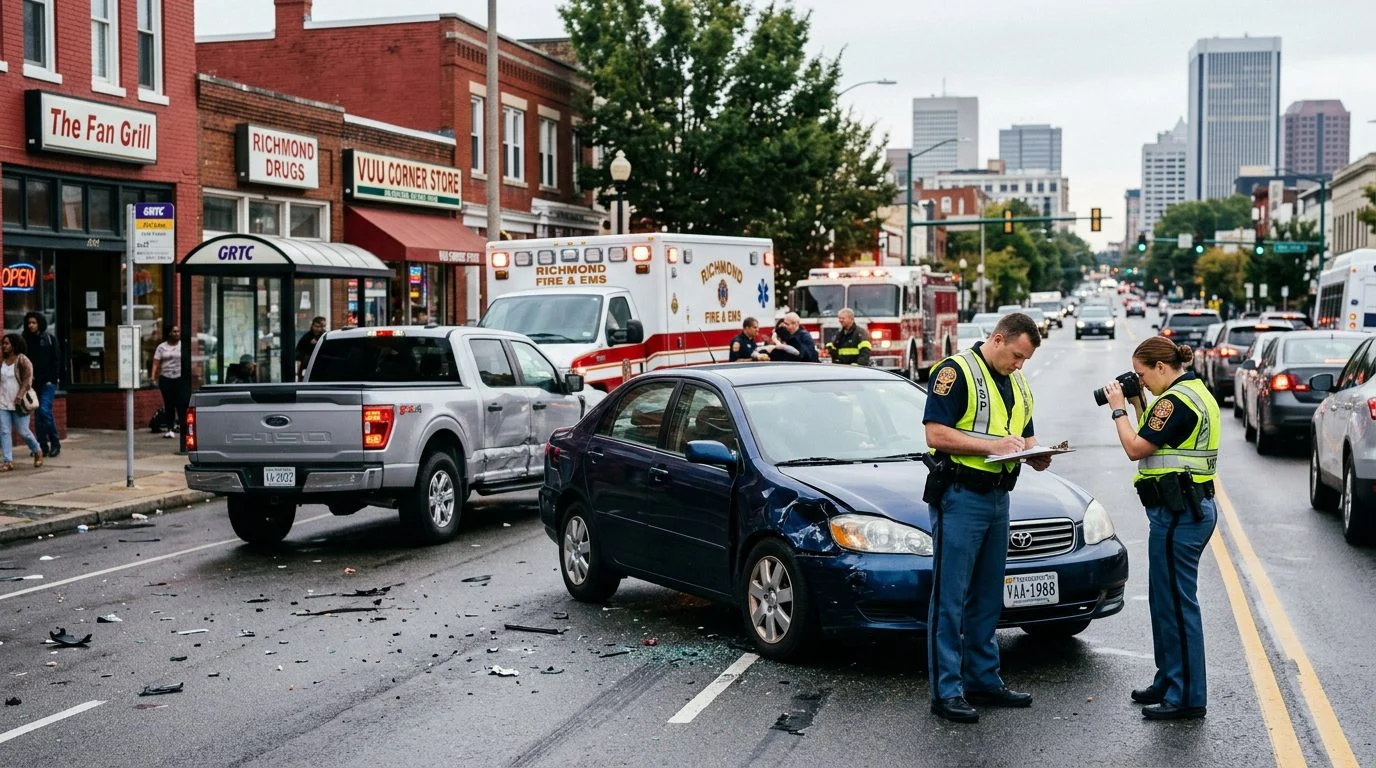
Car Accidents | Virginia
After a Crash, a Clear Record Matters
Small details gathered at the scene can help you, your doctors and your family later, when memories fade and questions come up.
Where the Firm Works
2
Offices, in Winchester and Harrisonburg
Virginia
Serving the Shenandoah Valley, Richmond and Henrico County
Published November 18, 2026
Being in a crash is stressful, and paperwork can feel like the last thing on your mind. Many people wonder whether they need to report an accident in Virginia, especially when they feel fine.
In short, when a crash causes injury or death, Virginia law requires the driver to report it to police right away. This page explains that duty, why timing matters, and how reporting differs from the deadline to file a lawsuit.
What Virginia law requires after a crash with injury or death
Virginia requires a driver involved in a crash with injury or death to stop and report it to police immediately (Va. Code §§ 46.2-371, 46.2-894). The duty comes from Va. Code § 46.2-371 and Va. Code § 46.2-894.
The second statute, Va. Code § 46.2-894, requires the driver of any vehicle involved in an accident in which a person is killed or injured, or in which an attended vehicle or other attended property is damaged, to immediately stop and report forthwith to the State Police or local law-enforcement agency.
The second statute adds detail. The driver must stop as close to the scene as possible without blocking traffic. The driver must also give their name, address, driver’s license number, and vehicle registration number to State Police or local police, and to the injured person or other affected party when that person can understand it.
The driver must also give reasonable help to anyone hurt. That includes taking the person to a doctor or hospital when treatment is apparent or the injured person asks for it.
Penalties depend on what happened. Under Va. Code § 46.2-894, a violation is a Class 5 felony if the crash causes injury or death, or more than $1,000 of property damage. It is a Class 1 misdemeanor when only property damage of $1,000 or less occurs.
If a crash left you or someone you love hurt, you do not have to work out the next steps alone. Talk it through with Correll Law Firm — we can walk you through how a situation like yours is usually handled and what your options are.
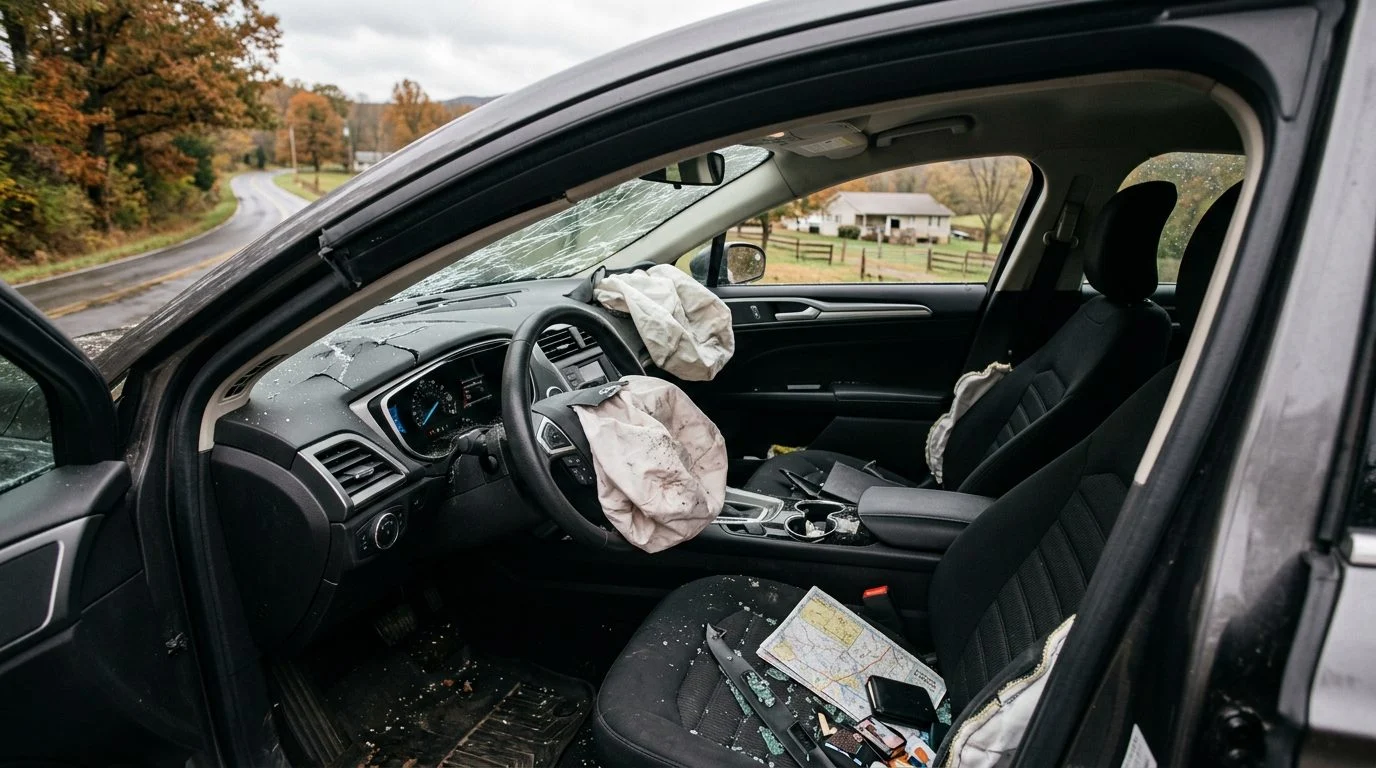
How quickly a crash should be reported
The statute says immediately, so reporting belongs at the scene or as soon as the driver can reach police. Waiting until later is not the plan the law sets out.
The law also covers cases where injuries stop a driver from reporting right away. In that case, the driver must report as soon as reasonably possible and make a reasonable effort to find the people involved.
Stopping is part of the same duty. Leaving the scene does not remove the requirement, and the statute’s penalties apply to any driver who violates it. Anyone hit by a driver who left can read the hit-and-run car accident guide.
A common mistake is waiting to see how hurt you feel before calling police. Some injuries are not obvious right away. Waiting can leave gaps in the early record of what happened.
What a police report records and why it matters later
A police report gives a dated, written record of when and where the crash happened and who was involved. It typically lists the vehicles, drivers, passengers, and any witnesses.
That fixed record matters because memories fade and details get mixed up over time. The Virginia DMV’s police crash report page explains who may obtain a report and how to request one.
A report is one source of evidence, not the whole story. Photos, medical records, repair estimates, and the injured person’s own notes can also show what happened.
Reports can also contain errors or gaps. Read yours carefully and note anything that does not match your memory.
Reporting a crash is not the same as filing a lawsuit
Reporting a crash and filing a lawsuit are separate steps with separate timing. The two do not share a clock.
Virginia generally allows two years from the date of injury to file a personal injury lawsuit (Va. Code § 8.01-243(A)); the clock runs from the date of injury, not the date of discovery, with narrow exceptions. Va. Code § 8.01-243(A) provides that, unless otherwise provided in this section or by other statute, every action for personal injuries, whatever the theory of recovery, shall be brought within two years after the cause of action accrues.
It is not the deadline to report a crash to police. Police reporting happens right away, under the statutes above.
Some claims carry notice requirements that run out sooner. Readers weighing timing can review timing for a Virginia personal injury lawsuit.
Statements at the scene and questions of partial fault
What a driver says at the scene can become part of the record. Keep statements short and factual.
Virginia follows contributory negligence: if you are found even partly at fault, you may be barred from recovering, with limited exceptions. Talk to a lawyer about your facts.
Stick to what you saw, heard, and did. Avoid guessing about speed, distance, or who had the right of way.
Soon after the crash, write your own account while details are fresh. Date it, sign it, and keep it with the police report number. The goal is accuracy, not blame.
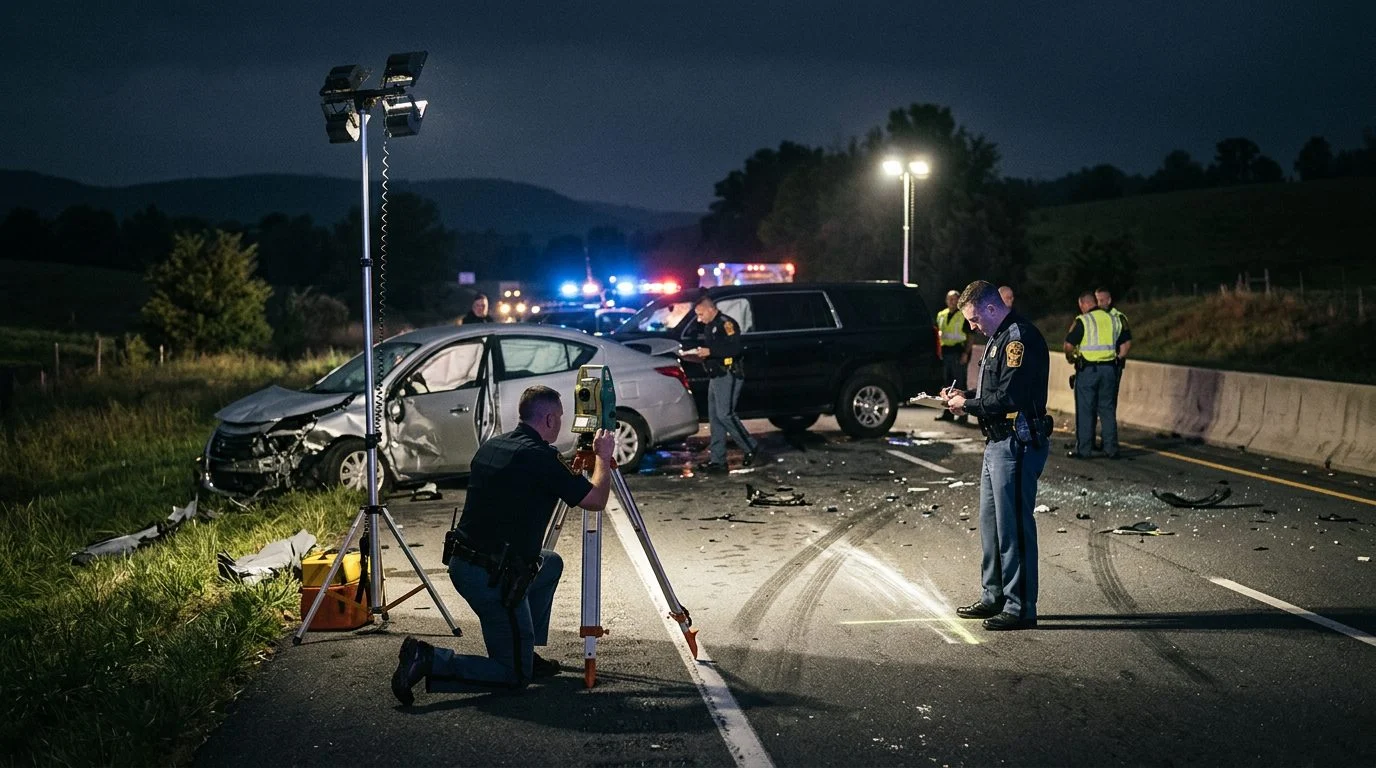
Keeping records after a crash and reading further
Keep the police report number, photos, medical visit dates, and a symptom log. Write down what you feel each day, even small changes.
Some injuries, including brain injuries, can cause symptoms that appear or change after a crash. A written log helps show that timeline clearly.
Readers with neck or back pain after a rear-end or side-impact crash can read how to claim for whiplash.
For broader background, see the Virginia car accident guide. Prompt reporting, accurate records, and attention to deadlines help an injured person document what happened. Each step serves a different purpose.
Frequently asked questions
Is a police report the only evidence after a crash?
No. Photos, medical records, and written notes can also show what happened.
What if I was too hurt to report the crash right away?
The statute asks you to report as soon as reasonably possible once you are able to do so.