
Wrongful Death | Virginia
When a Fatal Crash Takes a Loved One, Your Family Needs Clear Answers
Plain-language information for Virginia families facing the legal questions that follow a death on the road.
Where the firm works
2
Offices, in Winchester and Harrisonburg
Virginia
From the Shenandoah Valley to Richmond and Henrico County
Published November 19, 2026
Wrongful Death Attorney for a Northern Virginia Fatal Crash
Losing your wife in a crash is devastating, and the questions can pile up fast. A Virginia wrongful death action is filed by the decedent’s personal representative within two years of the death (Va. Code §§ 8.01-50(C), 8.01-244(B)), on behalf of the family members the statute protects.
Not sure what your next step is?
Talk it through with Correll Law Firm — we can walk you through how a situation like yours is usually handled and what your options are.

My wife was killed in a car accident in Northern Virginia caused by a distracted driver. I need a wrongful death attorney.
A family in this situation may wish to speak with a lawyer about whether a wrongful death claim exists and who may bring it. The firm handles wrongful death matters in Virginia. Its offices are in Winchester and Harrisonburg, and it represents families in wrongful death cases from the Shenandoah Valley to Richmond and Henrico County.
Where the crash happened and where the at-fault driver lives can affect how a case is filed and which facts are reviewed first. Families should share those details early, along with the date, the time and the road where the crash occurred.
A sudden death leaves a family with many decisions at once. Writing down the timeline while memories are fresh can help. Note the other driver’s details and any witnesses who came forward. More on the firm’s wrongful death work is available on that page.
What is the statute of limitations for filing a wrongful death claim in Virginia?
The two years run from the death. A personal injury lawsuit follows a different deadline rule, so the two should not be mixed up.
Some claims carry notice requirements that run out sooner. Va. Code § 15.2-209 reads: “Every claim cognizable against any county, city, or town for negligence shall be forever barred unless the claimant or his agent, attorney, or representative has filed a written statement of the nature of the claim, which includes the time and place at which the injury is alleged to have occurred, within six months after such cause of action accrued.” Under Va. Code § 15.2-209, “Failure to provide such statement shall not bar a claim against any county, city, or town, provided that the attorney, chief executive, or mayor of such locality, or any insurer or entity providing coverage or indemnification of the claim, had actual knowledge of the claim, which includes the nature of the claim and the time and place at which the injury is alleged to have occurred, within six months after such cause of action accrued.” Families should not wait to learn their deadlines.
Who shares in a wrongful death recovery?
Family members do not file the claim themselves.
Under Va. Code § 8.01-53, the surviving spouse, children and children of any deceased child come first among those who share in an award. If there is no surviving spouse, and no children or children of any deceased child of the deceased, the statute sets an order for parents, brothers and sisters, and other relatives who are primarily dependent on the decedent and in the same household, but no parent whose parental rights and responsibilities have been terminated by a court of competent jurisdiction or pursuant to a permanent entrustment agreement with a child welfare agency shall be eligible as a beneficiary under this section.
What damages can you claim in a Virginia wrongful death case?
Virginia wrongful death damages cover the family’s sorrow, mental anguish and loss of the decedent’s companionship, guidance and care; lost income and services; medical expenses from the injury; funeral expenses; and, for willful or wanton conduct, punitive damages (Va. Code § 8.01-52).
The jury or the court decides the award. Medical, funeral and punitive amounts must be specifically stated in the verdict or judgment.
Punitive damages are not available for ordinary carelessness. The jury, or the court if the case is tried without a jury, must find that the conduct met that standard. Virginia allows punitive damages for actual malice, or for willful or wanton conduct or recklessness showing a conscious disregard for the safety of others, capped at $350,000 (Va. Code § 8.01-38.1).
Can I sue for emotional distress in Virginia?
In Virginia, grief and mental anguish over the loss are part of the wrongful death claim, not a separate lawsuit. This part of the claim belongs to the family members, and it is recovered within the one action.
The statute also covers the loss of guidance, advice and companionship the person who died provided. Those losses are a core part of what families describe after a death.
Each family’s loss is different. Families can keep notes on how daily routines, parenting and household work have changed. Those details help show the real effect of the loss.
Not sure what your next step is?
Talk it through with Correll Law Firm — we can walk you through how a situation like yours is usually handled and what your options are.
How is fault proven when a distracted driver causes a fatal crash?
Virginia requires a driver involved in a crash with injury or death to stop and report it to police immediately (Va. Code §§ 46.2-371, 46.2-894). The two-year period is the deadline to file a lawsuit, not to report a crash (Va. Code § 8.01-243).
Virginia follows contributory negligence: if you are found even partly at fault, you may be barred from recovering, with limited exceptions. Talk to a lawyer about your facts.
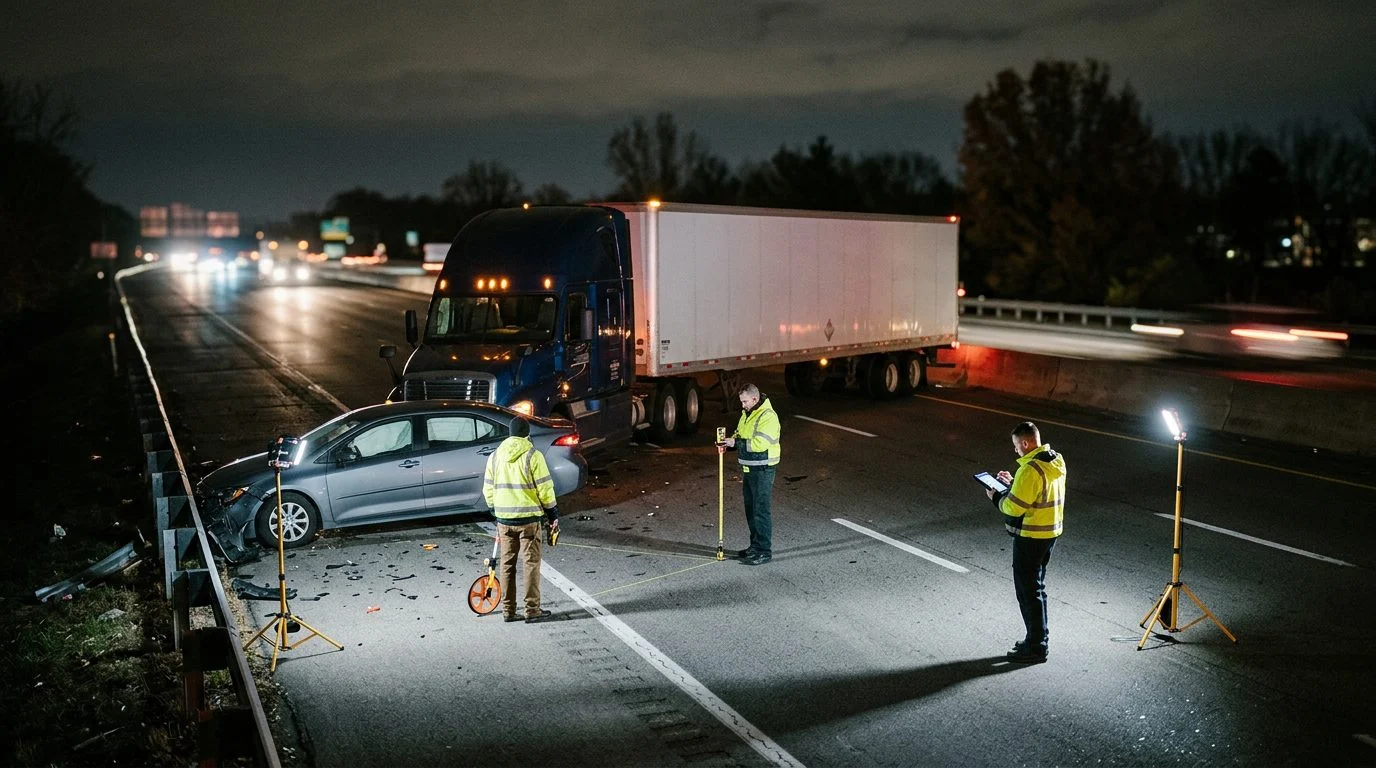
A review of a fatal crash typically looks at the police crash report, witness information, photographs, and medical and autopsy records. Proof of distraction often comes from phone records, vehicle data and witness statements gathered during the investigation.
What not to tell the attorney?
Tell the firm the full and accurate story, including facts that may seem unhelpful. Share prior injuries, health conditions, and the decedent’s work and family situation, since these details shape the claim.
Avoid guessing about fault. Stick to what you saw, heard and learned from records.
Avoid posting about the crash, the other driver or your loss on social media while the matter is open. Posts can be read out of context.
Bring the crash report, insurance letters and medical records early, so the review can start sooner.