
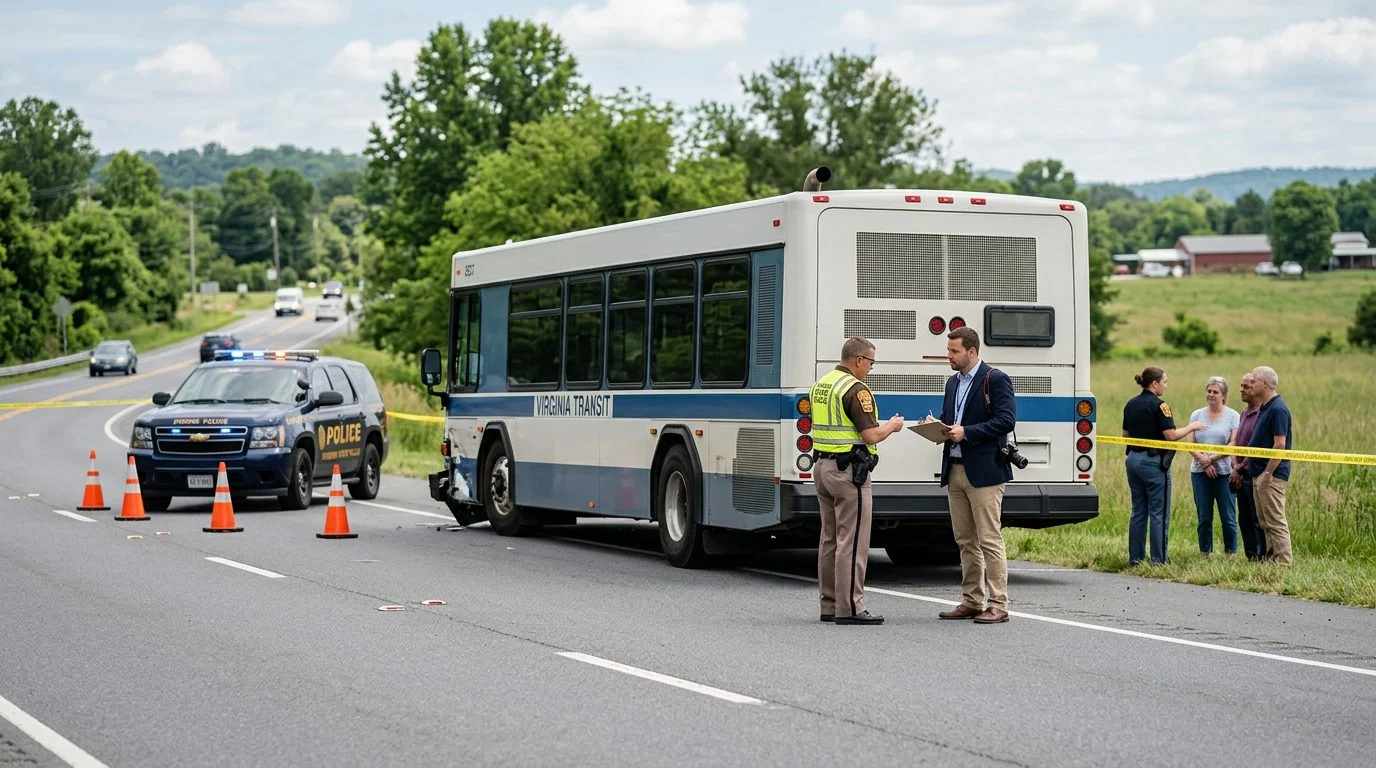
Commercial Vehicle Accidents | Virginia
Bus Crash Claims in Virginia: The Stages From the Crash to a Lawsuit
A plain-language map of what usually happens after a bus crash, from the first days to the decision about filing suit, written for families in the Shenandoah Valley, Richmond and Henrico County.
Published November 9, 2026
Being hurt in a bus crash, or losing someone in one, can leave you with many questions at once. This page explains the bus crash claims process in Virginia, one stage at a time.
In short, a bus accident claim in Virginia usually moves from a first case evaluation to evidence gathering, insurance negotiations, discovery if needed, and a lawsuit if the claim does not resolve. Timing varies with each claim, and the stages often overlap.
What does the bus crash claims process look like from the first case evaluation through insurance negotiations, discovery, and filing suit?
The bus crash claims process usually follows a set order, though the stages can overlap. It begins with a first case evaluation, a first look at the crash, the injuries and the people who may be responsible.
Next comes investigation and preservation of evidence. The claim is then presented to the bus operator’s insurer, followed by negotiations.
If the claim does not resolve, discovery may begin and a lawsuit may be filed. Not every claim reaches discovery or a lawsuit, since many end during negotiations. A claim may also move back and forth between stages as new facts come to light.
The firm handles commercial vehicle accidents for people in the Shenandoah Valley, Richmond and Henrico County. Its offices are in Winchester and Harrisonburg. For the wider commercial vehicle context, see the firm’s truck accident lawyer page.
If a bus crash has hurt you or someone in your family, you may have a claim, and the firm is glad to talk through your facts. Talk it through with Correll Law Firm — we can walk you through how a situation like yours is usually handled and what your options are.

Who May Be Responsible in a Bus Crash Claim?
More than one party may be responsible in a bus crash claim. The bus driver, the company that runs the bus, and others such as a maintenance contractor may each play a role.
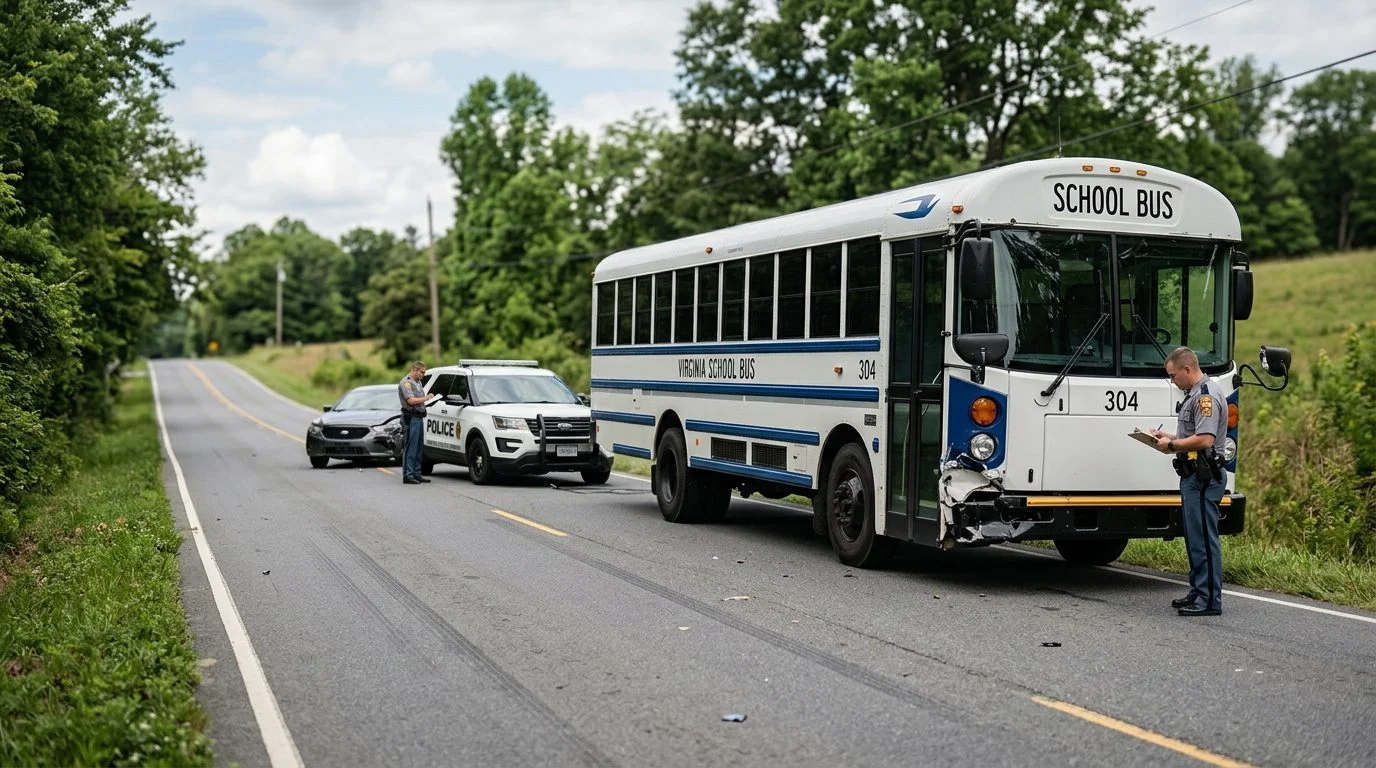
A school bus, a transit bus and a motorcoach can involve different operators and insurers. Identifying the right party early shapes how a school bus crash claim is presented.
Passengers, drivers of other vehicles and pedestrians may each have a claim from the same crash.
Public operators can have shorter notice rules. Virginia requires a written statement of a claim against a county, city or town within six months after the cause of action accrues, but failure to provide it does not bar the claim if the attorney, chief executive, or mayor, or an insurer or entity covering the claim, had actual knowledge of the claim, including its nature and the time and place of the injury, within that period (Va. Code § 15.2-209). Claims against the Commonwealth or a transportation district need a written statement within one year (Va. Code § 8.01-195.6).
Federal law can also make a carrier or broker that provides transportation subject to federal jurisdiction under chapter 135 liable for damages from its violation of that part of federal transportation law (49 U.S.C. § 14704).
What Evidence Should Be Preserved After a Bus Crash?
Evidence should be preserved early, because it can be lost or changed over time. Useful evidence usually includes photos of the scene and the vehicles, witnesses’ names and phone numbers, medical records, and a written account of the crash made while memory is fresh.
Virginia requires a driver involved in a crash with injury or death to stop and report it to police immediately (Va. Code §§ 46.2-371, 46.2-894). The two-year period is the deadline to file a lawsuit, not to report a crash. The reporting duty is set out in Va. Code § 46.2-371.
Records held by the bus operator, such as driver logs and maintenance records, can matter. If they are not provided in negotiations, a claim may seek them through discovery.
How Do Insurance Negotiations Work in a Bus Crash Claim?
Negotiations begin once the insurer has notice of the claim and the information it needs to assess liability and injuries. Each side then exchanges medical and liability information.
The insurer may dispute the injuries, the facts or who is at fault. Virginia follows contributory negligence: if you are found even partly at fault, you may be barred from recovering, with limited exceptions. Talk to a lawyer about your facts.
A claim may settle, be disputed, or move toward a lawsuit.
What Happens During Discovery and When a Bus Crash Claim Is Filed as a Lawsuit?
If negotiations do not resolve the claim, a lawsuit may be filed, and discovery usually follows. Discovery is the exchange of information between the parties before trial. It can include written questions, requests for documents and depositions, which are sworn interviews held outside court.
Virginia generally allows two years from the date of injury to file a personal injury lawsuit (Va. Code § 8.01-243(A)); the clock runs from the date of injury, not the date of discovery, with narrow exceptions. The personal injury time limit is in Va. Code § 8.01-243.
Some claims carry notice requirements that run out sooner, so timing needs early review.
A Virginia wrongful death action is filed by the decedent’s personal representative within two years of the death (Va. Code §§ 8.01-50(C), 8.01-244(B)), on behalf of the family members the statute protects. The time limit is in Va. Code § 8.01-244.
What Compensation Can Be Recovered in a Bus Crash Claim?
Compensation follows the losses a claim can support, such as medical expenses, lost income and other harms tied to the crash.
In a personal injury or death suit, provable loss of income is not reduced by reimbursement from another source, and that reimbursement may not be admitted into evidence (Va. Code § 8.01-35).
Virginia wrongful death damages cover the family’s sorrow, mental anguish and loss of the decedent’s companionship, guidance and care; lost income and services; medical expenses from the injury; funeral expenses; and, for willful or wanton conduct, punitive damages (Va. Code § 8.01-52).
Virginia allows punitive damages for actual malice, or for willful or wanton conduct or recklessness showing a conscious disregard for the safety of others, capped at $350,000 (Va. Code § 8.01-38.1). The $350,000 cap comes from Va. Code § 8.01-38.1.
Not sure what your next step is?
Talk it through with Correll Law Firm — we can walk you through how a situation like yours is usually handled and what your options are.
Frequently Asked Questions
Does a bus crash claim differ from a car accident claim?
In some ways, yes. Bus claims can involve more parties and extra notice steps when a public operator is involved, while the core steps look much the same.
How long does the bus crash claims process take?
There is no set timeline. A claim that reaches a lawsuit usually takes longer than one that resolves in negotiations.