
Car Accidents | Virginia
Car Accident Footage in Virginia: Where to Look
Dashcams, business cameras and traffic cameras can record a crash in seconds. Here is how to find what may exist and keep it safe.
Published November 26, 2026
If you were hurt in a crash, you may wonder whether any video of it still exists. Footage of a car accident can come from five places: your own dash cam or phone, nearby businesses and homes, traffic cameras, police recordings, and commercial vehicle cameras. Each source has its own owner and its own rules, so ask early and ask in writing.
Why Crash Video Matters After a Virginia Collision
Video can show what a written report often cannot. It can show where each vehicle was, when it moved, what the traffic signal displayed, which lane each driver used, and how the weather and light looked at the scene.
Memory changes over time, but a recording does not. That is why footage is often sought early, before a camera overwrites its files or a business clears its system.
Footage is one piece of the picture. It works alongside the police crash report, photos of the scene, and information from witnesses. The firm is based in Winchester, with an office in Harrisonburg. It represents people hurt in crashes from the Shenandoah Valley to Richmond and Henrico County.
Not sure what your next step is?
Talk it through with Correll Law Firm — we can walk you through how a situation like yours is usually handled and what your options are.
Start With Footage You May Already Have
The fastest source is often a device you already own. Check your vehicle and your phone before you ask anyone else.
A dash cam may have recorded the crash. If a camera was running in your vehicle or a passenger’s vehicle, remove the memory card or save the file right away. Many units record over older files in a loop, so a card left in place can be overwritten.
Photos and videos taken on a phone at the scene may carry a time stamp and location data. Those details can help show when and where the footage was made. Ask passengers to check their phones too, since each device may hold a different copy.
Keep the original file exactly as it was recorded. Make a separate copy to share, and do not edit, trim, or add text to the video. A cut version can raise questions about what was left out.
Canvass Nearby Businesses and Homes for Video
Nearby businesses are a common place to find footage of a car accident. Surveillance cameras at gas stations, stores, restaurants, banks, and parking lots may cover the intersection or the road.
Apartment buildings and some homes have doorbell or driveway cameras that may face the street. Walk the area while the scene is still fresh in your mind, and look for cameras on walls, awnings, and poles.
Write down the business name, the address, and the time of the crash. Then ask the owner or manager three things: whether the system records, how far back it keeps video, and whether the window around the crash can be saved. Ask in writing when you can, and keep a copy of your note.
Ask even if a camera seems to point elsewhere. A camera’s view can be wider than it looks from the sidewalk.
Traffic Camera Footage and Who May Hold It
Traffic camera footage exists only where a camera covered the road. The agency that runs the camera decides what it can release. Some roads and intersections have traffic cameras, but not all do.
Operators differ. A camera may not record, may record only part of the time, or may not keep recordings long. The public agency that operates the camera or manages the roadway is the first place to ask.
When you write to that agency, include the camera location and the exact time of the crash. Name the road, the nearest cross street, and any landmark you can describe. Clear details help the agency locate the right records quickly.
If a county, city, or town runs the camera, a separate notice step may apply to a negligence claim against it. That step is covered below.
Police Recordings and the Crash Report
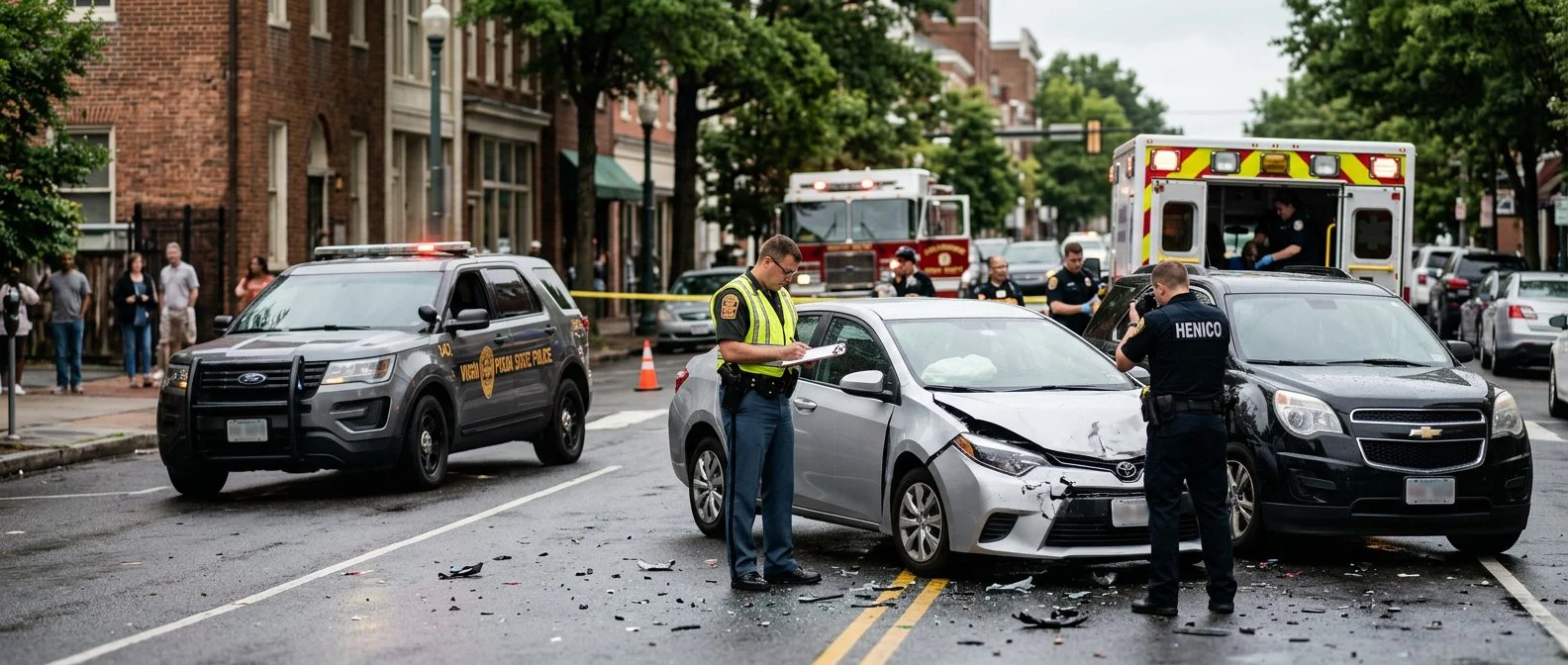
The responding police agency may hold body-worn camera or in-car camera recordings. The crash report is usually the place to start. It identifies the agency and gives a report number you can use in a request.
Virginia requires a driver involved in a crash with injury or death to stop and report it to police immediately (Va. Code §§ 46.2-371, 46.2-894). Reporting is a separate duty from filing a lawsuit. The two-year period discussed below is the deadline to file a lawsuit, not the deadline to report a crash (Va. Code § 8.01-243).
Ask the agency which request process applies to its body-worn and in-car recordings. Include the report number, date, time, and location. Access depends on the agency and the type of record involved.
Recordings may be incomplete or may not exist at all. The agency will answer the request based on what it holds. Ask for a written reply, even if the answer is that nothing was found.
Footage From Commercial Trucks, Buses, and Work Vehicles
Some commercial vehicles carry onboard or forward-facing cameras. The company that owns or runs the vehicle may keep what those cameras record. Buses and work vans may have similar systems.
Because the company controls that footage, the request goes to the company as well as to any agency. Send a written request asking the company to keep any video from the vehicle, along with its trip and maintenance records. Include the date, time, location, and vehicle number. Then keep a copy of the letter.
A written preservation request to the employer can help make sure relevant records are kept.
Federal rules for motor carriers set minimum periods for keeping certain records. After those periods, a company may destroy them at its discretion (federal motor carrier record rule). The rule sets minimums and does not override longer periods that other government bodies set. A written request to keep video is still worth making.
Not sure what your next step is?
Talk it through with Correll Law Firm — we can walk you through how a situation like yours is usually handled and what your options are.
Why Timing Matters When Asking for Footage
Many recording systems overwrite older files on a schedule. The sooner a written request goes out, the better.
Virginia generally allows two years from the date of injury to file a personal injury lawsuit (Va. Code § 8.01-243(A)); the clock runs from the date of injury, not the date of discovery, with narrow exceptions. Some claims carry notice requirements that run out sooner.
For a negligence claim against a county, city, or town, Va. Code § 15.2-209 bars the claim forever unless a written statement of the claim, including the time and place of the injury, is filed within six months after the cause of action accrued; a missing statement does not bar the claim if the locality’s attorney, chief executive, or mayor, or its insurer, had actual knowledge of the claim, including its nature and the time and place of the injury, within that period, and if the claimant was under a disability when the cause of action accrued, the tolling provisions of § 8.01-229 apply.
Requesting footage promptly can help make sure it is kept.
Keep a dated log of every request. Record who received it, how you sent it, and any reply. A log shows what was asked and when.
Frequently Asked Questions About Crash Footage
Can insurance request video footage?
An insurer may ask for footage during a claim. Share copies you have, and keep the original file yourself.
Are accident reports public record in Virginia?
Access depends on which agency holds the report and the rules that apply to that record. Start by asking the investigating agency for the crash report and its report number.
Can I ask for footage myself?
Yes, you can ask the holder directly in writing. The holder decides what it can release, so keep its reply.
What if the footage has already been deleted?
Ask the holder in writing for what you need, and keep the reply. Your request and the reply become part of your record of what you asked for.