
Virginia car accident guidance
Reading a Virginia Crash Report: What It Shows and What It Doesn't
A plain-language guide to the boxes, codes and diagrams on the form, and where the report fits among the other evidence after a crash.
Published November 14, 2026
After a crash, one of the first questions is what the police report says about who caused it. If you want to know who is at fault in a car accident police report, start with this: the report records what the officer saw, heard and wrote down, but it does not settle legal fault on its own.
Fault is decided through the insurance claim or, if a case goes to court, by the court. This guide explains the main parts of a Virginia crash report, what its labels mean, and which dates to keep in mind.
What a Police Crash Report Can and Cannot Tell You About Fault
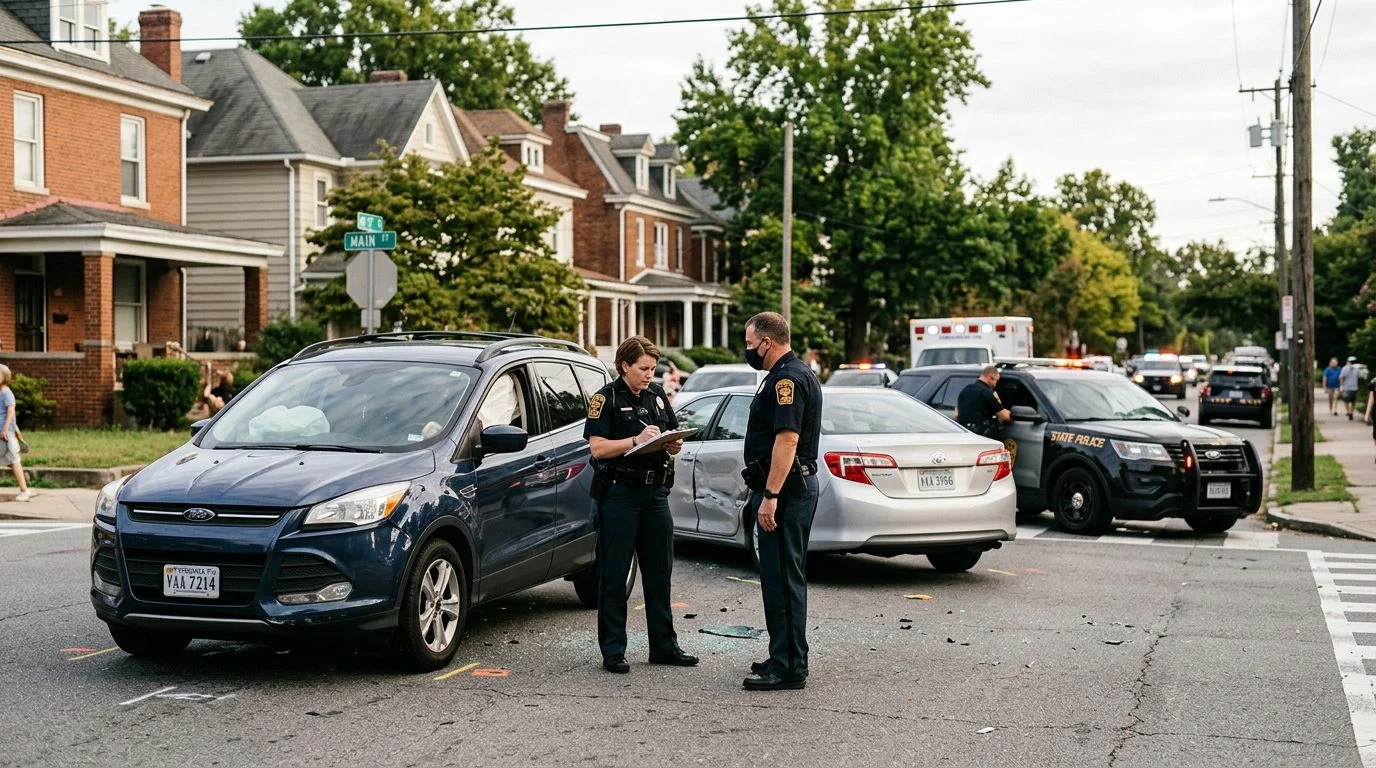
A police crash report is a written record of what the responding officer saw and was told at the scene. It can show where vehicles ended up, what damage was visible, and whether an officer cited a driver. Those details can point toward fault. They do not answer the legal question by themselves.
Think of the report as one source among several. Photos, witness accounts and vehicle damage can all shape how fault is understood. Reading the report carefully helps you spot the facts that matter most, but no single section answers the question alone.
If your crash left you hurt, you may have a claim, and the firm is available to talk through what the report means for your situation. Talk it through with Correll Law Firm — we can walk you through how a situation like yours is usually handled and what your options are.
The Main Parts of a Virginia Crash Report
Most crash reports share a set of core parts. These usually include the date, time and location, the drivers and vehicles involved, insurance and license details, any reported injuries, and the officer’s written narrative.
The exact form varies by reporting agency. A State Police report and a local police report may use different layouts and headings, so match each section to what your own report shows. Start with the basic facts, since every other section depends on them.
Other parts work together with the narrative. The diagram shows lanes and vehicle positions. The damage list describes which parts of each vehicle were hit. The witness section lists people who saw the crash, if any were identified.
Some reports also include codes for factors the officer observed at the scene. Those entries are the officer’s coding of what was seen. They are not a court’s finding about who was responsible, so read them as observations.
What the Unit 1 and Unit 2 Labels Mean
Unit 1 and Unit 2 are labels the report uses to tell the vehicles apart. They are identification tags, not a conclusion about who caused the crash.
Being listed as Unit 1 does not, on its own, mean that driver caused the collision. The same is true for Unit 2. The label only shows which vehicle is which.
To follow the sequence of events, match each unit number to the diagram, the damage descriptions and the driver statements. Start with the diagram, since it places each vehicle on the road. If the diagram shows Unit 2 in one lane and the narrative places it in another, that conflict deserves a closer look.
Check the driver names, addresses and plate numbers against your own records as well. A mismatch can cause confusion later, so note it early and write it down with the section where it appears.
Reading the Officer’s Narrative, Diagram and Citations
The narrative tells the crash story in the officer’s own words. Read it from start to finish, and pay attention to how each statement is introduced.
Words such as “observed” often signal something the officer saw. Words such as “stated” or “believed” often signal a driver’s account or the officer’s opinion. That difference matters when you judge how much weight a line deserves.
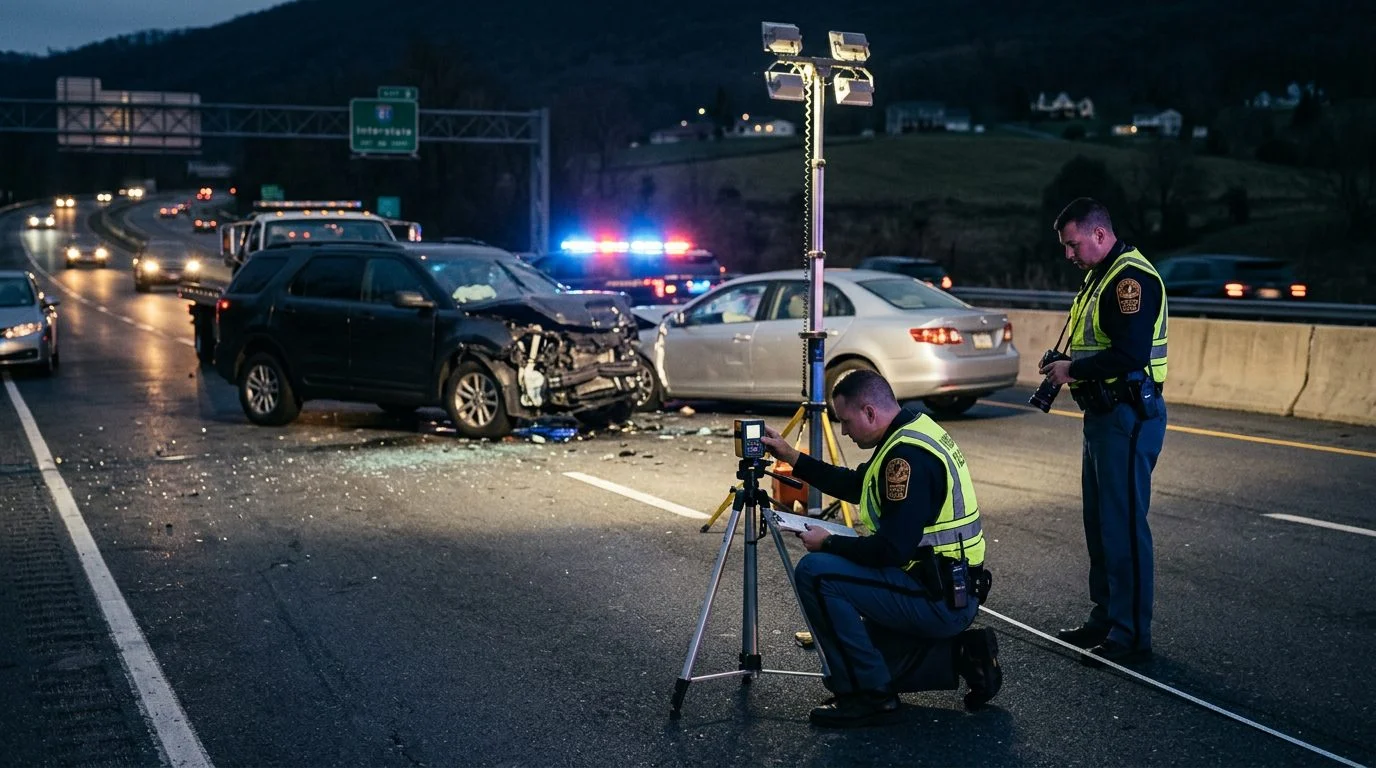
The diagram shows lane positions, points of impact and where vehicles came to rest. It may also show skid marks or debris. Compare these details with the narrative, because the two should fit together.
A citation on the report means the officer charged a driver with a violation at the scene. The outcome of any charge is decided separately, so a citation is not the final word on fault.
When a conclusion in the narrative conflicts with the diagram or the statements, treat that gap as a question to check, not as a settled answer.
Statements, Witnesses and Physical Evidence That Support the Report
Evidence outside the report often matters as much as the report itself. Photos of the scene and the vehicles can show damage, positions and debris that a written summary may not capture. Keep each photo with its time stamp and note where it was taken.
Ask whether any nearby business or traffic camera might have recorded the crash. Recordings may be kept for only a short time, so ask early. Dashcam video from either vehicle can also be useful.
Witness names and contact details on the report make it possible to get statements while memories are fresh. Reach out to witnesses soon, while they still recall what they saw.
Write down your own account of the crash soon after it happens. A report may summarize what each driver said, so the written version can differ from the exact words. Your notes, made while details are clear, help you keep the facts straight.
Reporting Duties and Deadlines to Keep in Mind
Virginia has rules for reporting a crash and rules for filing a claim, and the two are different. The reporting rule applies right after the crash. The filing deadline applies later.
Virginia requires a driver involved in a crash with injury or death to stop and report it to police immediately (Va. Code §§ 46.2-371, 46.2-894).
You can read those sections at § 46.2-371 and § 46.2-894. Section 46.2-894 also covers a report made as soon as reasonably possible when injuries keep a driver from reporting right away.
The two-year period is the deadline to file a lawsuit, not a deadline to report a crash (Va. Code § 8.01-243).
Virginia generally allows two years from the date of injury to file a personal injury lawsuit (Va. Code § 8.01-243(A)); the clock runs from the date of injury, not the date of discovery, with narrow exceptions. The statute is at Va. Code § 8.01-243.
Some claims carry shorter notice requirements. A negligence claim against a county, city or town is generally required to be filed in writing within six months after it accrues, and the written statement must include the time and place at which the injury is alleged to have occurred; the claim is not barred if the locality’s attorney, chief executive, or mayor, or any insurer or entity providing coverage or indemnification of the claim, had actual knowledge of the claim, including its nature and the time and place of the injury, within that period; if the claimant was under a disability when the cause of action accrued, the tolling provisions of § 8.01-229 apply (Va. Code § 15.2-209). Keep the dates of the crash and any notices you send.
Not sure what your next step is?
Talk it through with Correll Law Firm — we can walk you through how a situation like yours is usually handled and what your options are.
When Partial Fault Becomes an Issue
A police report can show that a driver shares some of the blame. When it does, the next question is how that possibility affects recovery.
Virginia follows contributory negligence: if you are found even partly at fault, you may be barred from recovering, with limited exceptions. Talk to a lawyer about your facts.
The report alone does not decide partial fault. The facts, the evidence and how a claim is presented all matter. Commercial crashes can add records to the picture. Federal rules require motor carriers to keep maintenance records for each vehicle they control, for one year and for six months after the vehicle leaves their control (49 C.F.R. § 396.3). For how fault questions arise in school bus crashes, see the school bus crash injury claims guide.
Checking a Report for Errors and Requesting a Copy
Start by checking the basic facts: names, addresses, plate numbers, dates, times, lane positions and injury entries. A single wrong digit in a plate number can point the report at the wrong vehicle.
Note each error with the section name, the wrong entry and the correct information. Keep the copy you received, unchanged, so you can show exactly what the report said when it was issued.
Corrections are usually raised with the agency that wrote the report. Ask the agency how it handles requests to amend a report, and write down who you spoke with and when.
To request a copy, contact the investigating agency directly. Have the crash date, the location and the names of the drivers ready. Ask what the agency needs to process the request.
Keep any written correction request with your other papers. A dated record of your request can help you show what you asked for and when.
Putting the Police Report in Context: Next Steps for Readers
Read the report in this order: first the basic facts, then the unit labels, the narrative, the diagram and the statements. Last, look at any part that raises a partial fault question.
The report is a starting point for understanding the crash. It is not the final word on who is legally responsible. No single document tells the whole story.
For an overview of how crashes involving commercial vehicles are handled, see the Virginia commercial vehicle accidents guide.
Keep the report, the photos, the witness list and your notes together, so the facts stay organized as time passes.
Does a police report decide who is at fault in Virginia?
No. The report is one piece of evidence. Legal responsibility is decided through the insurance claim or by a court.
What does Unit 1 mean on a crash report?
Unit 1 is a label for one vehicle in the report. By itself, it does not mean that driver caused the crash.
What does a citation on a crash report mean?
A citation shows the officer charged a driver with a violation at the scene. The outcome of that charge is decided separately.