
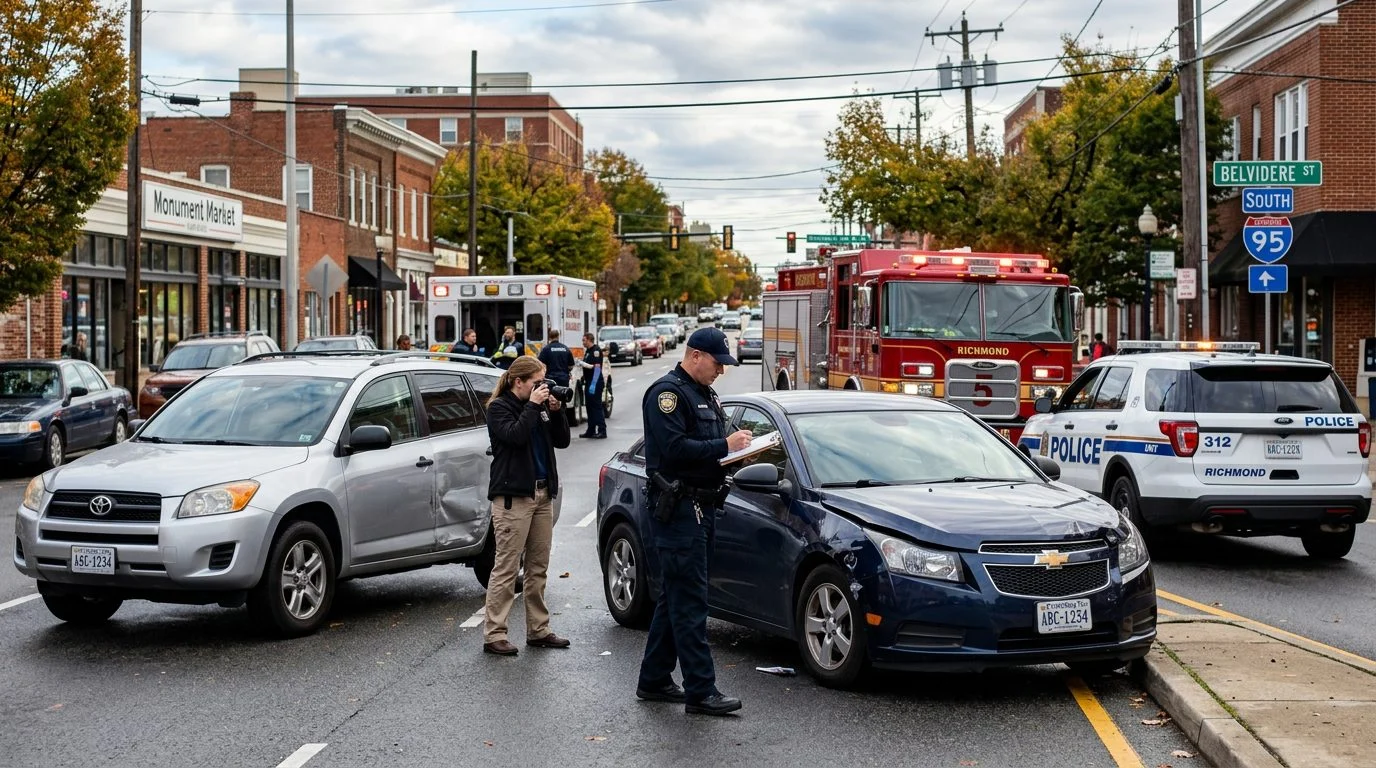
Car Accidents | Virginia
After a Crash in Virginia: How to Get Your Accident Report and Keep Your Own Record
A calm, step-by-step guide to the official report, the copies you may need, and the notes that help you remember what happened.
Published November 16, 2026
You were just in a crash, and now the paperwork feels like one more problem. This guide covers the main steps after a crash, from the scene to getting a copy.
What an Accident Report Is and Who Creates It
An accident report is a written record of a crash. Most often, it is the police crash report written by the responding officer or agency.
The report captures the basic facts. It lists the date, time and place, the vehicles and drivers involved, and any injuries or property damage. It is the official record of what the officer found and was told at the scene.
That is different from what drivers do with each other at the scene. Drivers often swap names, insurance details and phone numbers on their own. That exchange helps, but it is not the police report, and it does not include the officer’s observations.
An insurance claim is also a separate process. Insurers may ask for the police report later, but the report itself is not a claim. Think of it as the starting record. Your own notes, photos and witness details add to it.
If you were hurt in a crash, you don't have to sort out the paperwork alone, and the firm is willing to talk through what happened. Talk it through with Correll Law Firm — we can walk you through how a situation like yours is usually handled and what your options are.
Virginia’s Duty to Stop and Report a Crash
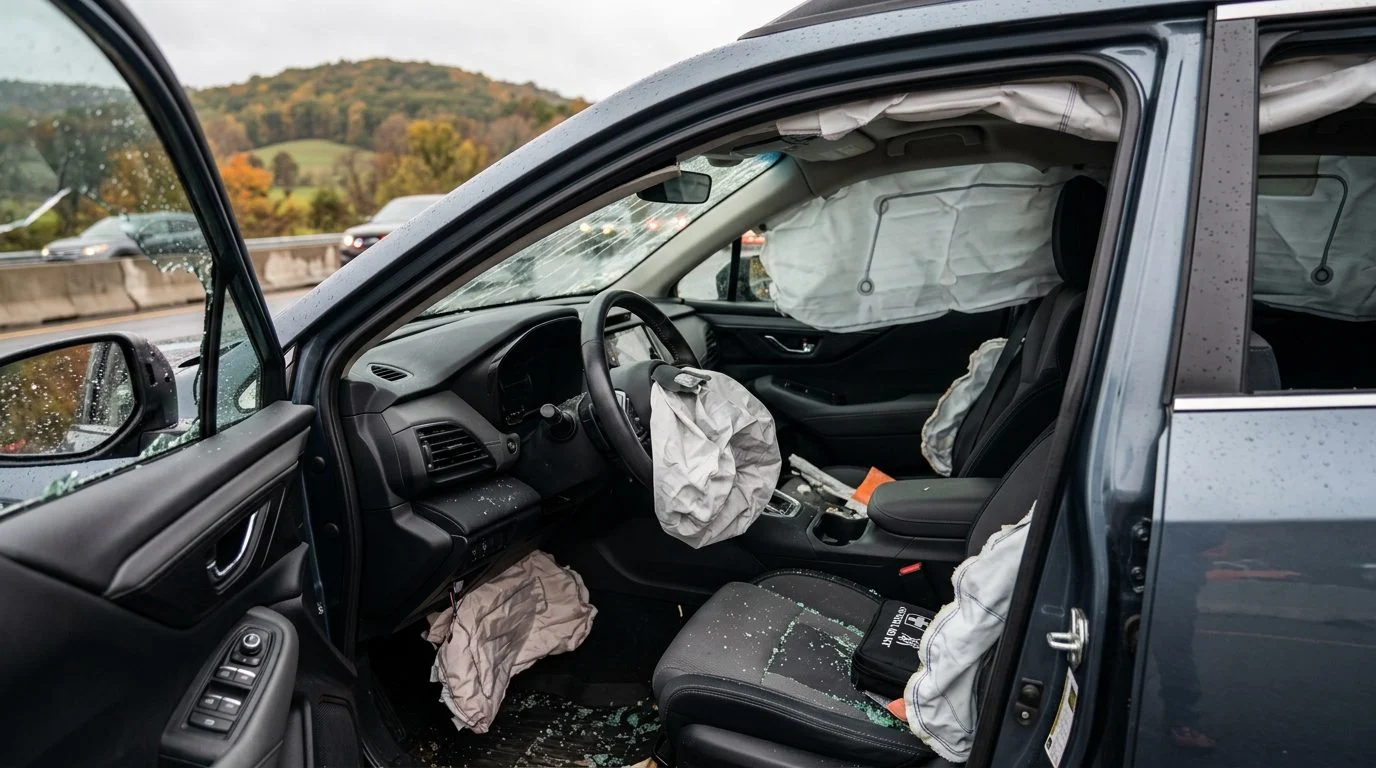
Virginia requires a driver involved in a crash with injury or death to stop and report it to police immediately (Va. Code §§ 46.2-371, 46.2-894). The duty comes from § 46.2-371 and § 46.2-894.
The driver must give reasonable help to anyone hurt. That includes taking the person to a doctor or hospital when treatment looks necessary or the injured person asks for it.
If injuries keep the driver from doing these things at the scene, the driver must report as soon as reasonably possible. The driver must also make a reasonable effort to find the person struck, the other driver or an occupant, or the owner of the damaged property, and give them their name, address, driver’s license number and vehicle registration number.
A willful failure to report is a Class 4 misdemeanor under § 46.2-371.
Steps to Take at the Scene
Check for injuries first, and call 911 if anyone is hurt. Safety comes before any paperwork.
If you can move your vehicle out of traffic safely, do so. Turn on your hazard lights, and keep people away from moving cars. Stay out of the lanes when it is not safe to be there.
Once the scene is safe, ask the responding officer for three things before you leave. Ask for the officer’s name, the badge number, and the agency’s report or incident number. The report number is the key to finding the report later. Write it down right away and save a photo of it, because paper notes get lost.
Collect the names and phone numbers of any witnesses before they leave. Witness details are easy to lose once people go their separate ways.
Get checked by a medical provider, even if you feel fine at the scene. Some injuries, especially to the head and spine, do not show symptoms right away. A prompt medical visit creates a record of your symptoms soon after the crash.
Information a Complete Accident Report Should Include
A complete report covers who was involved, which vehicles were used, where and when the crash happened, and what injuries and damage resulted. Record these details while they are fresh:
- Drivers and passengers: names, contact details, driver’s license numbers, and insurance information.
- Witnesses: names and phone numbers.
- Vehicles: year, make, model, color, license plate, and vehicle identification number when visible.
- Location and conditions: road name or intersection, the direction each vehicle traveled, lane, weather, and road conditions.
- Time: the date, the time, and whether it was day or night.
- Injuries and damage: any injuries seen or reported, and visible damage to each vehicle and to any property.
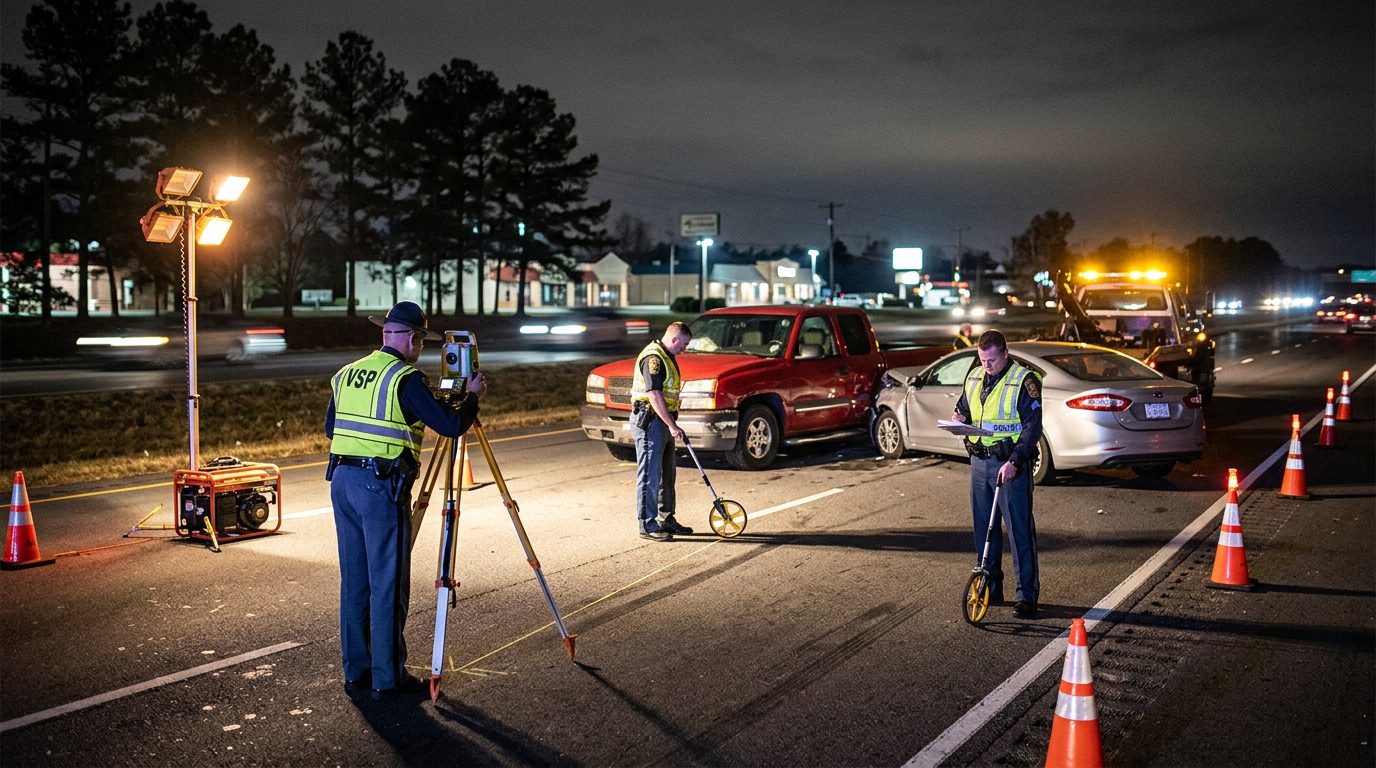
Take photographs when it is safe to do so. Capture vehicle positions, damage, skid marks, traffic signs and the road itself.
Then write a factual, dated account of what happened. Stick to what you saw and heard. Mark anything you are unsure about, because a guess written down today can be hard to correct later.
What Changes When a Commercial Vehicle Is Involved
A commercial vehicle crash often involves more than one company, so the company details matter as much as the driver’s. A truck may have a driver, a vehicle owner, and a motor carrier, which is the company operating the vehicle. Those roles do not always match the name painted on the door.
Federal rules require a self-propelled commercial motor vehicle to show the legal name or a single trade name of the motor carrier operating it. It must also show the carrier’s FMCSA identification number, preceded by the letters “USDOT” (49 C.F.R. § 390.21T). If another person’s name appears on the vehicle, the operating carrier’s name must be preceded by the words “operated by.”
Record what you can see. Note the company name, the USDOT number, and any other numbers on the cab or trailer. Note trailer or cargo identifiers when they are visible.
Police reports may not capture every carrier detail. Your own notes and photos become more important in these crashes. The firm handles commercial vehicle accident claims for people across the Shenandoah Valley, Richmond and Henrico County.
How to Request a Copy of a Virginia Police Crash Report
You can request a copy of a Virginia police crash report through the Virginia DMV. The Virginia DMV crash records page explains who may submit a request and the forms and payment required.
Have the report number ready before you start. The officer’s report or incident number, the crash date, and the location help the DMV find the right record. Check the request form for the exact details it asks for before you send it.
Reports can take time to become available, so plan to wait. When your copy arrives, read it against your notes. Look for wrong names, plate numbers, times or locations.
If you find a difference, write it down with the date and keep that note with the report. Your notes and the official report work best together when both are kept in one place.
Not sure what your next step is?
Talk it through with Correll Law Firm — we can walk you through how a situation like yours is usually handled and what your options are.
Reporting a Crash Is Not the Same as Filing a Lawsuit
Virginia generally allows two years from the date of injury to file a personal injury lawsuit (Va. Code § 8.01-243(A)); the clock runs from the date of injury, not the date of discovery, with narrow exceptions. Va. Code § 8.01-243 provides that, unless otherwise provided in that section or by other statute, every action for personal injuries, whatever the theory of recovery, shall be brought within two years after the cause of action accrues. The rule for when that clock starts is in § 8.01-230.
Some steps carry shorter clocks.
Reporting to police and filing a lawsuit are two different steps. The lawsuit deadline comes later and follows its own rules.
Common Mistakes to Avoid in an Accident Report
Four mistakes can weaken an accident record: guessing, changing evidence, signing without reading, and keeping records scattered.
Avoid guessing about speed, fault or injuries you have not checked. Say when something is unknown, rather than filling the gap with a best guess.
Do not delete or edit photos, texts or notes after the crash. Keep the original files as they were made.
Do not sign written statements or releases you have not read or do not understand. Ask questions about anything that is unclear before you sign.
Keep copies of every report, note and photograph in one place. Label each with the date it was made.
Frequently Asked Questions
How do I write an accident report?
Write a dated, factual account of what you saw and heard. Mark anything you are not sure of, and keep it apart from the official police report.
How do I submit an accident report to the DMV in Virginia?
You do not send your own account to the DMV. You request a copy of the police crash report, and the Virginia DMV crash records page explains the process.