
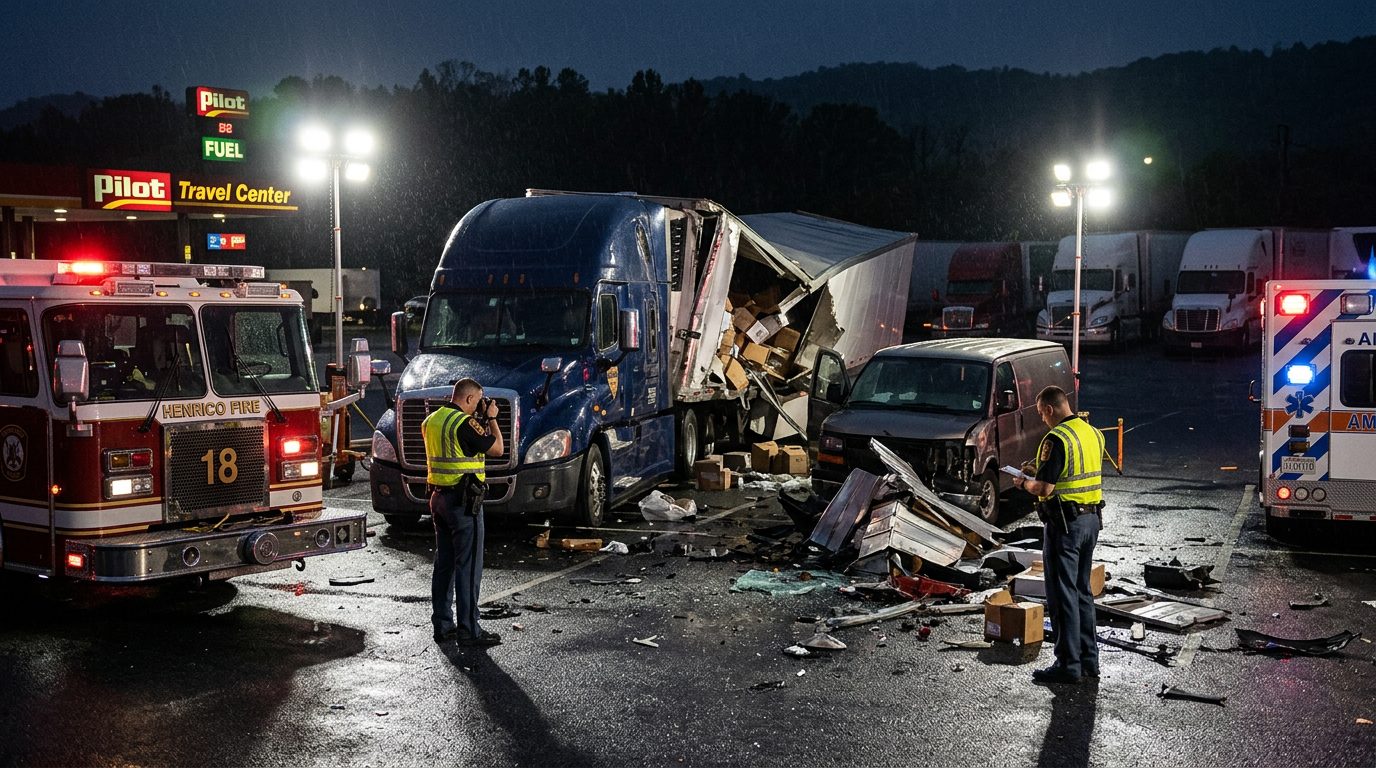
Truck Accidents | Winchester, Harrisonburg and Virginia
Hurt in a Tractor-Trailer Crash? Understand How the Claim Works
Plain-language guidance for injured drivers and families, from the Shenandoah Valley to Richmond and Henrico County.
Published November 19, 2026
A crash with a tractor-trailer can cause serious injuries and hard questions about what comes next. A tractor-trailer accident claim asks the people or companies responsible for the crash to compensate the injured person for the harm it caused.
This page explains how these claims work in Virginia. It covers who may be responsible, what evidence matters, how the process runs and which deadlines apply.
What a Tractor-Trailer Crash Claim Covers and Who It Is For
A tractor-trailer claim arises from a crash involving a large commercial truck, also called a semi truck or big rig. Its size and weight mean a crash with one can cause severe harm.
A claim may come from:
- a driver or passenger injured in a car or truck crash
- a pedestrian or cyclist struck by a truck
- family members of someone killed in a crash, through a wrongful death claim
Virginia requires a driver involved in a crash with injury or death to stop and report it to police immediately (Va. Code §§ 46.2-371, 46.2-894). The two-year period is the deadline to file a lawsuit, not to report a crash.
The firm has offices in Winchester and Harrisonburg. It represents people from the Shenandoah Valley, Richmond and Henrico County.
If a tractor-trailer crash has left you or your family facing serious injuries and losses, the firm can talk with you about whether you may have a claim. Talk it through with Correll Law Firm — we can walk you through how a situation like yours is usually handled and what your options are.
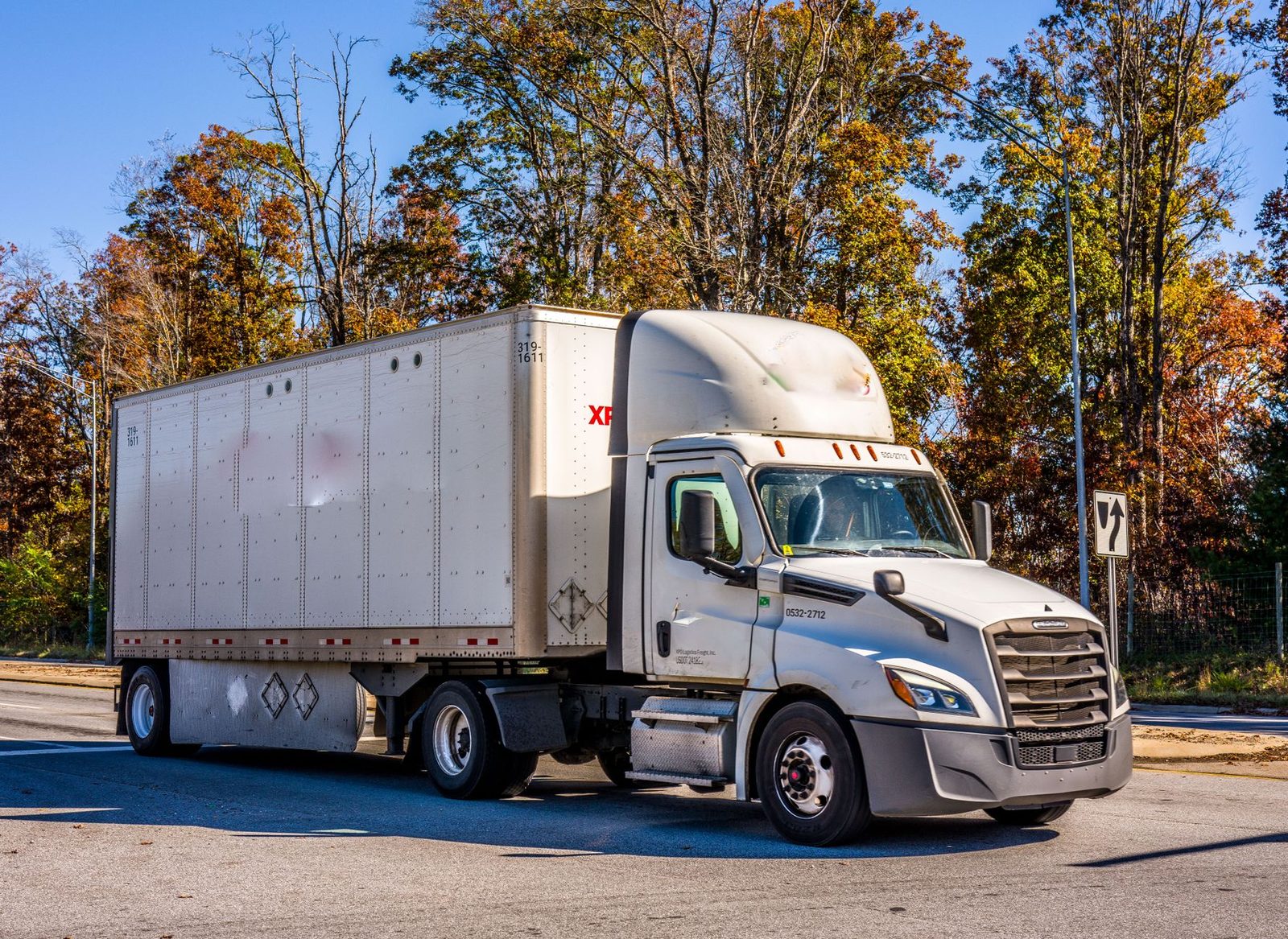
Who Can Be Responsible in a Semi Truck Crash
More than one party can be responsible in a semi truck crash. Which parties are responsible depends on the facts of the crash.
Possible parties include:
- the truck driver
- the trucking company that employed or contracted the driver
- the owner of the truck or trailer
A crash involving a company truck raises questions about the employer’s role that a crash with a private driver usually does not. Early on, the firm looks at who employed, dispatched and maintained the truck, because those relationships shape who may be named in a claim.
Evidence That Matters in Truck Crash Cases
The most useful evidence shows how the crash happened and how the truck was driven, loaded and kept up.
- Police crash report, scene photographs and witness names, gathered while the scene is still fresh.
- Electronic logging device (ELD) data. Federal rules require motor carriers operating commercial motor vehicles to use ELDs to record each driver’s duty status, except that drivers may record duty status manually in certain vehicles, including those manufactured before model year 2000 and, in a driveaway-towaway operation in which the vehicle being transported is a motor home or a recreation vehicle trailer (49 C.F.R. § 395.8). Those records can show how long a driver had been working.
- Maintenance and repair records, plus any dash camera or onboard event data.
- Driver qualification files. A carrier must keep each driver’s file while the driver works there and for three years after, except that certain listed records may be removed three years after they were executed (49 C.F.R. § 391.51).
Some records are kept only for set periods, so early requests matter. Keep your own records too: photographs, medical records, a written account of the crash and a log of missed work.
Injuries Tractor-Trailer Crashes Often Cause
Tractor-trailer crashes can cause catastrophic injuries, including traumatic brain injury and spinal cord injury. Their force can also break bones and crush limbs.
Some injuries show symptoms only later. An early medical evaluation helps connect the injury to the crash. Serious injuries often need long-term care, rehabilitation and equipment. Complete medical records help document that need.
A brain or spinal injury may affect work and daily life for a long time. A claim looks at future needs as well as past treatment. A Virginia wrongful death action is filed by the decedent’s personal representative within two years of the death (Va. Code §§ 8.01-50(C), 8.01-244(B)), on behalf of the family members the statute protects.
How the Process Works, Step by Step
A typical truck crash claim moves through five stages. The timing of each stage varies.
- Initial review. The firm reviews the crash, the injuries and any police report, so the injured person understands what the claim involves.
- Preservation. Letters go to the trucking company and insurers, asking them to keep logs, maintenance files and camera data.
- Documentation. Medical care, lost income and other losses are tracked over time.
- Claim presentation. A demand goes to the responsible insurers, followed by negotiation.
- Lawsuit, if needed. If a fair resolution is not reached, a lawsuit may be filed in the proper Virginia court, followed by discovery, depositions and, if needed, trial.
Each stage can take longer when medical care or records are still in progress.
Virginia Deadlines, Fault Rules and Damages
Virginia’s deadlines and fault rules shape every truck crash claim, so they are worth understanding early.
Virginia generally allows two years from the date of injury to file a personal injury lawsuit (Va. Code § 8.01-243(A)); the clock runs from the date of injury, not the date of discovery, with narrow exceptions.
Va. Code § 8.01-50 actions must be brought by the personal representative within the time limits specified in § 8.01-244, which sets two years after the death of the injured person for every action under § 8.01-50 (Va. Code § 8.01-244).
Virginia follows contributory negligence: if you are found even partly at fault, you may be barred from recovering, with limited exceptions. Talk to a lawyer about your facts.
Virginia wrongful death damages cover the family’s sorrow, mental anguish and loss of the decedent’s companionship, guidance and care; lost income and services; medical expenses from the injury; funeral expenses; and, for willful or wanton conduct, punitive damages (Va. Code § 8.01-52).
Virginia allows punitive damages for actual malice, or for willful or wanton conduct or recklessness showing a conscious disregard for the safety of others, capped at $350,000 (Va. Code § 8.01-38.1).
Not sure what your next step is?
Talk it through with Correll Law Firm — we can walk you through how a situation like yours is usually handled and what your options are.
Why People Bring Truck Crash Claims to the Firm
The firm handles car accidents, truck accidents, commercial vehicle accidents, catastrophic injuries, traumatic brain injury, spinal cord injury and wrongful death claims.
That mix matters in truck cases. One crash can involve a vehicle claim, a serious brain or spinal injury and, in the worst cases, a later wrongful death claim.
The firm handles investigation, records requests and communication with insurers. A truck claim often involves several insurers, so this work can take time. That lets the injured person focus on recovery and family. A family facing a fatal crash often needs help with both the claim and the paperwork that follows.
Common Questions About Tractor-Trailer Crash Claims
Here are short answers to the questions people ask most often about these claims.
What should someone avoid after a truck crash?
Avoid posting about the crash on social media. Keep copies of every record, and write down what you remember while it is fresh.
Is it better to settle or sue after a company truck crash?
The choice depends on the facts, the injuries, the evidence and the parties involved. The firm reviews those facts with the injured person before any decision is made.
How long can a personal injury case take?
Timelines vary with the injuries, the records, the number of parties and whether a lawsuit is filed. No single length applies to every case.