
Truck Accidents | Winchester, Harrisonburg and the Shenandoah Valley
What Is Considered a Commercial Vehicle in Virginia?
A plain-language guide to how weight, use and cargo can shape the answer after a crash with a delivery van, work truck or big rig.
Where the firm works
Virginia
Serving the Shenandoah Valley, Richmond and Henrico County
Published November 14, 2026
A crash with a delivery van, work truck or big rig often raises one question first: was that vehicle a commercial vehicle? In short, federal trucking rules sort vehicles by weight, by how they are used, and by whether they carry property or passengers in interstate commerce. This page explains those tests, quotes the federal wording, and shows why the label matters after a crash.
How federal weight, use and interstate tests sort vehicles
Commercial vehicle status depends on the facts. A vehicle that meets one of those tests can be a commercial motor vehicle, even if it looks like an ordinary pickup or van.
The label matters because different rules attach to different categories. Commercial driver’s license standards reach some operators. Federal safety rules reach some carriers.
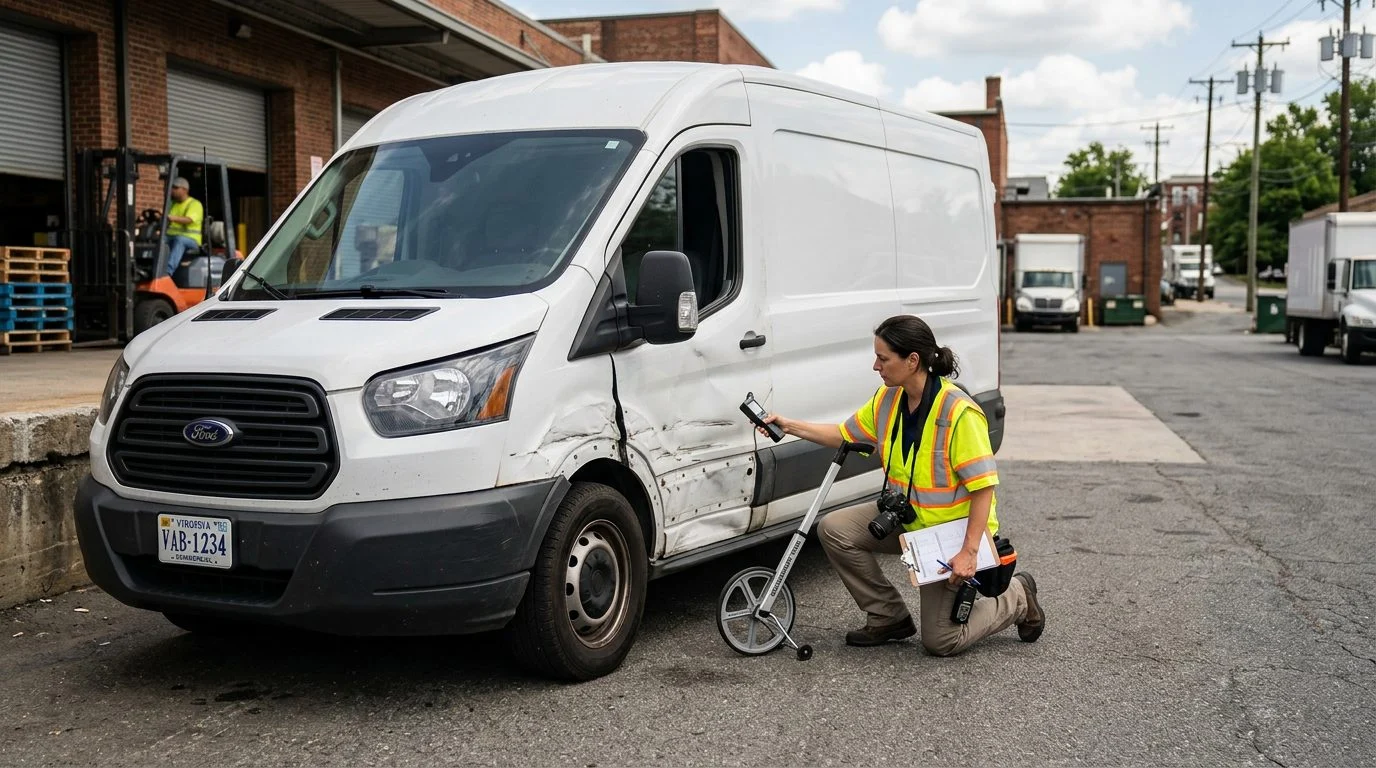
Hypothetical: a box truck used for deliveries may face rules that a family SUV driven to work may not. The firm’s wider guide to commercial vehicle and truck accident claims covers the claim side of these questions.
Not sure what your next step is?
Talk it through with Correll Law Firm — we can walk you through how a situation like yours is usually handled and what your options are.

What makes a car a commercial vehicle?
Weight is one key measure. Under 49 CFR § 383.5, gross combination weight rating (GCWR) is “the greater of” two values. One is the figure the manufacturer shows on the certification label. The other is the sum of the weight ratings for the power unit and any towed units.
That measure has a limit. The GCWR of a power unit that is not towing another vehicle is not used to define a commercial motor vehicle. A car that tows nothing is judged on other facts.
Hypothetical: a pickup pulling a loaded trailer raises the weight question. The same pickup driven alone to a job site does not raise it under this measure.
What is the definition of a motor vehicle under federal law?
The definition below is federal. It is the wording this page can quote directly. Under 49 U.S.C. § 13102, a motor vehicle is a “vehicle, machine, tractor, trailer, or semitrailer propelled or drawn by mechanical power and used on a highway in transportation.”
The same section leaves out a “vehicle, locomotive, or car operated only on a rail.” It also leaves out a trolley bus operated by electric power from a fixed overhead wire and providing local passenger transportation similar to street-railway service.
Virginia’s own motor vehicle wording sits in state law and is separate from this federal text. For road questions, federal rules add one more term. Under 49 CFR § 390.5T, a highway is “any road, street, or way, whether on public or private property, open to public travel.” That can include private roads and lots that the public uses, which matters for where a crash happened. “Open to public travel” means that the road section is available, except during scheduled periods, extreme weather or emergency conditions, passable by four-wheel standard passenger cars, and open to the general public for use without restrictive gates, prohibitive signs, or regulation other than restrictions based on size, weight, or class of registration.”
What is considered a motor vehicle?
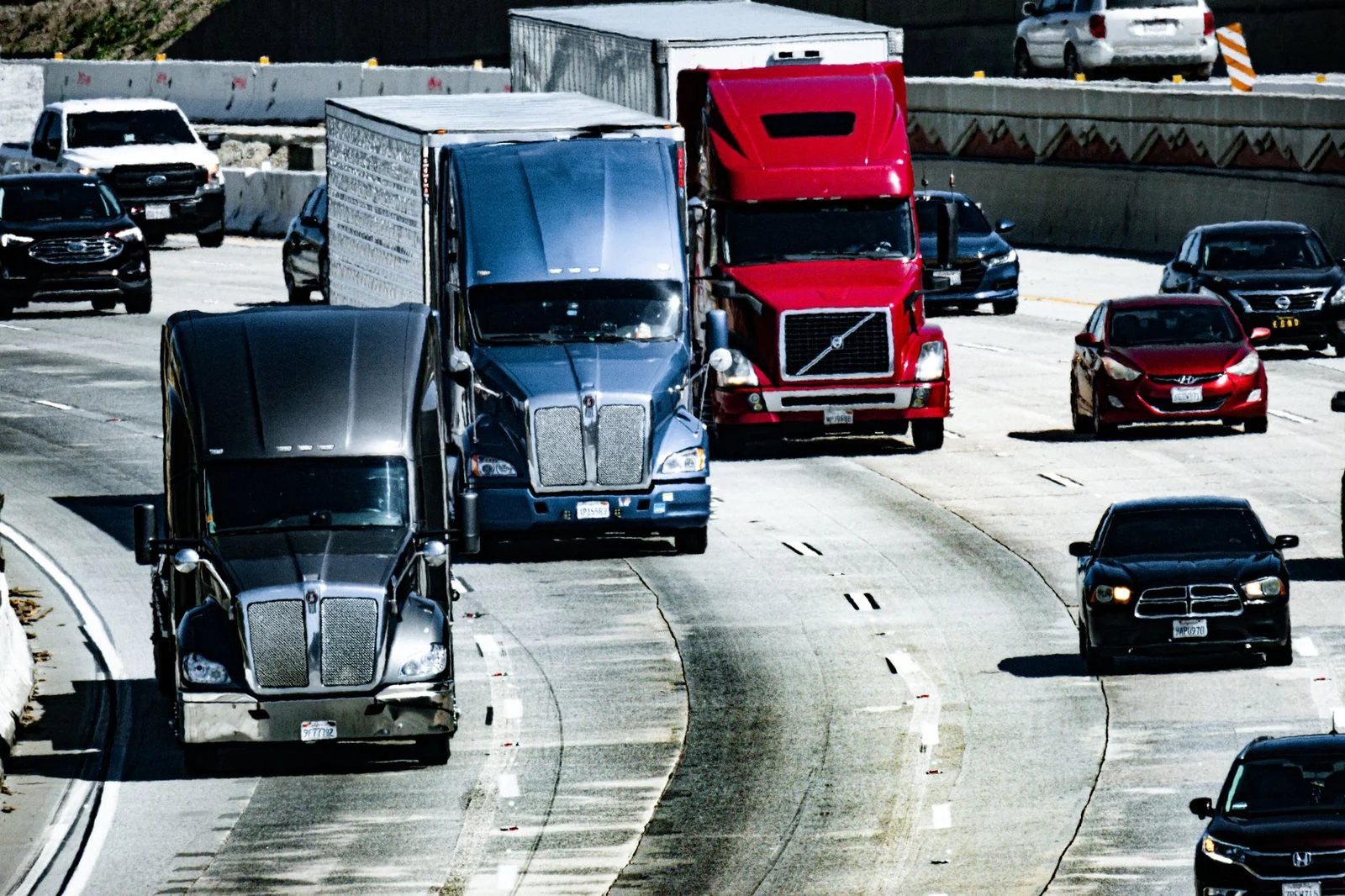
Under the federal wording, cars, trucks, buses, motorcycles, tractors and trailers can all be motor vehicles. The test is a vehicle that is propelled or drawn by mechanical power and used on a highway.
Trailers count too. The definition names trailers and semitrailers, so a load hauled behind a pickup can fall within it.
Federal and state rules that can apply to commercial vehicles
Federal safety rules apply to commercial vehicles that carry property or passengers in interstate commerce. Under 49 CFR § 390.3T, those rules reach the employers, employees and vehicles involved.
Hours-of-service rules are another category. Under 49 CFR § 395.1, Part 395 applies to all motor carriers and drivers, except for listed exceptions. Those rules cover maximum driving and on-duty time.
Maintenance rules matter too. Under 49 CFR § 396.3, motor carriers must systematically inspect, repair and maintain the vehicles they control. Except for a private motor carrier of passengers (nonbusiness), they keep the required records for one year where the vehicle is housed or maintained, and for six months after a vehicle leaves their control.
These equipment, weight and hours rules are separate from the definition.
Why the classification matters after a crash
The classification can change which records and rules matter in a crash claim. Virginia law also sets duties at the scene and a deadline for filing suit.
Virginia requires a driver involved in a crash with injury or death to stop and report it to police immediately (Va. Code §§ 46.2-371, 46.2-894).
The stop-and-assist duty is in Va. Code § 46.2-894. After an accident in which a person is killed or injured, or in which an attended vehicle or other attended property is damaged, the driver must immediately stop as close to the scene as possible without obstructing traffic (Va. Code § 46.2-894). The driver must also render reasonable assistance to anyone hurt, including taking that person to a physician or hospital when medical treatment is apparently necessary or requested.
Hypothetical: a delivery van strikes a pedestrian on a county road. The driver stops, reports to police and gives the required information. Those steps create an official record of the crash from the start.
Virginia generally allows two years from the date of injury to file a personal injury lawsuit (Va. Code § 8.01-243(A)); the clock runs from the date of injury, not the date of discovery, with narrow exceptions.
It is not a deadline to report a crash.
The firm’s offices are in Winchester and Harrisonburg. It handles commercial vehicle and truck crash claims for people across the Shenandoah Valley, and for people in Richmond and Henrico County.
Frequently asked questions
Is a pickup truck a commercial vehicle in Virginia?
It can be. Its weight rating, how it is used and whether it carries property or passengers in commerce all matter.
Does the commercial label change the stop-and-report duty?