
Truck Accidents | Virginia
Virginia Truck Accident Definition and Crash Types: A Plain-Language Guide
What the term covers, which vehicles fall under it, and the crash patterns that come up most often on Virginia roads.
Published November 10, 2026
After a crash with a big truck, many people want to know what the term “truck accident” actually covers. In plain terms, it is a crash that involves a large commercial truck, such as a tractor-trailer, box truck or dump truck.
A plain-language definition of a truck accident
A truck accident is any crash that involves a large commercial truck. Everyday speech uses the phrase broadly, so anyone hit by a large truck may call it a truck accident. Legal and insurance settings use narrower terms, so the same crash may be labeled differently in each one.
The word “truck” alone does not settle the question. Vehicle size, weight and business use are the points that separate a large commercial crash from an ordinary car crash. A “commercial vehicle accident” and a “large-truck collision” overlap heavily with the term truck accident. The label matters less than the facts.
The firm represents people hurt in car and truck crashes across the Shenandoah Valley, Richmond and Henrico County.
If a truck crash has left you or a family member hurt, you do not have to face the questions alone. The firm can talk through what happened and what it may mean for you. Talk it through with Correll Law Firm — we can walk you through how a situation like yours is usually handled and what your options are.

Which vehicles count as trucks
Most people picture a tractor-trailer, often called an 18-wheeler. Several other vehicle types also fall under the truck label. Common examples include straight trucks, box trucks, dump trucks, tanker trucks and flatbeds.
Under 49 C.F.R. § 390.5T, a motor vehicle is a vehicle, machine, tractor, trailer, or semitrailer propelled or drawn by mechanical power and used upon the highways in the transportation of passengers or property. 49 CFR 390.5T sets out that definition. The same definition excludes a vehicle, locomotive, or car operated exclusively on a rail or rails, and a trolley bus operated by electric power derived from a fixed overhead wire, furnishing local passenger transportation similar to street-railway service.
Two parts do the work. A trailer parked in a yard is a different situation from one hauling freight on a highway.
Some work vehicles, such as refuse trucks, can also fall into the commercial category. The garbage truck accident injuries page covers those vehicles in more detail.
How a truck accident differs from a passenger car crash
A truck accident usually involves far more weight, length and stopping distance than a car crash. A loaded truck needs more room to stop. It can carry much more force into a collision, and that shapes both the injuries and the damage.
More parties may be involved. Depending on the facts, that can include the driver, the trucking company, a leasing company, a cargo loader or a maintenance contractor. Each one may have played a role in what happened.
Federal law also sets rules for motor carriers. 49 U.S.C. § 31502 allows federal rules on qualifications, maximum hours of service and equipment standards, when needed to promote safety of operation. A crash can raise questions about whether those rules were followed.
For the wider picture, read the pillar guide, Commercial Vehicle Accidents in Virginia.
Common types of truck crashes
The type of crash describes how the collision unfolded. That helps explain what happened, though it does not settle who was at fault.
- Jackknife: The trailer swings out of line with the cab. This often follows hard braking or sliding on slick or uneven pavement.
- Underride: A smaller vehicle slides beneath the rear or side of a trailer.
- Rollover: The truck tips onto its side or roof after its center of gravity is disrupted.
- Head-on: The front of the truck meets the front of another vehicle.
- Sideswipe or lane change: The truck and another vehicle scrape or strike each other as one changes lanes.
- Rear-end: One vehicle strikes the back of another.
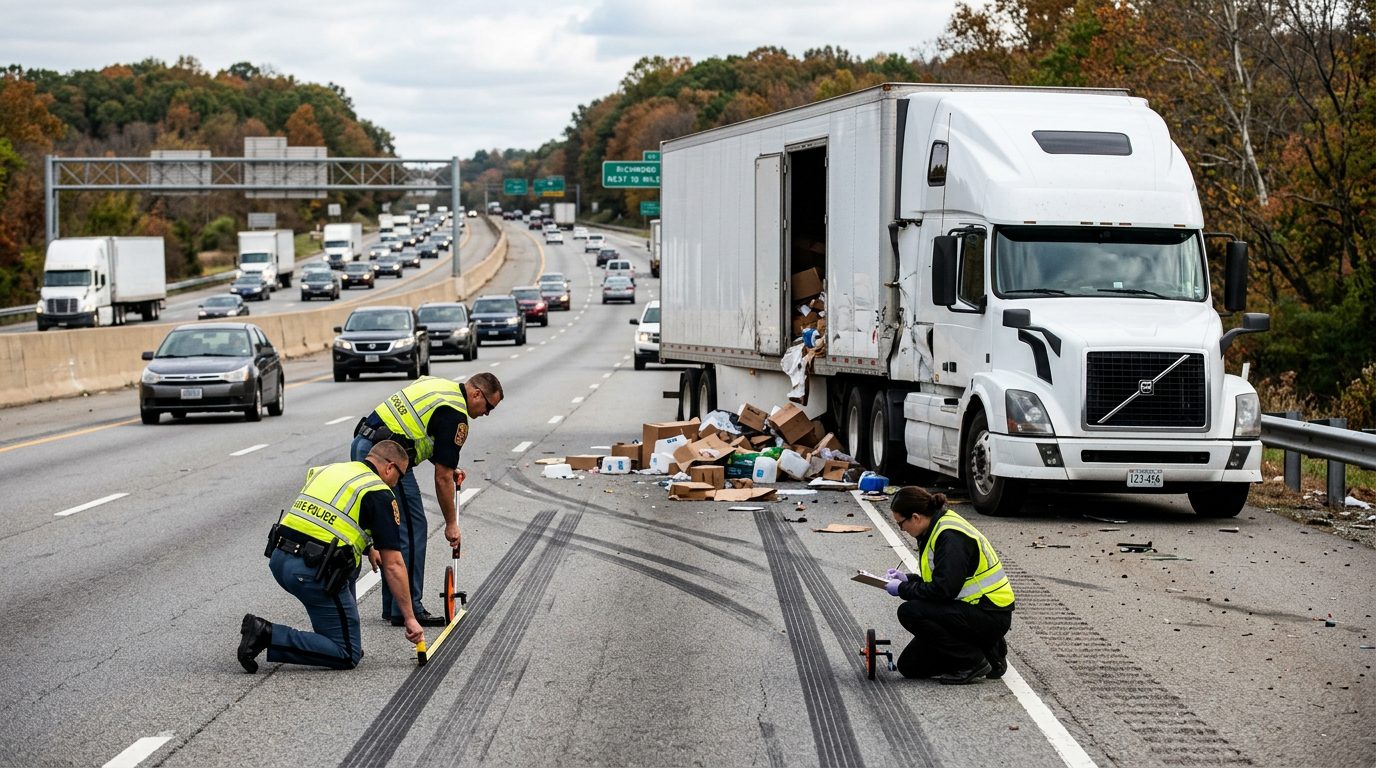
Each type leaves different marks on vehicles and roads. Investigators often read those marks to build a picture of the crash. For more on who may be responsible, see the page on whether you can sue a trucking company and driver in Virginia.
Why the definition matters after a crash
How a crash is classified affects which records may matter. Driver logs, maintenance files, inspection reports and electronic data from the truck can all become relevant. The trucking company crash evidence page covers these sources in more detail.
Virginia courts look closely at proximate cause.
Virginia requires a driver involved in a crash with injury or death to stop and report it to police immediately (Va. Code §§ 46.2-371, 46.2-894). Va. Code § 46.2-371 requires notice to a law-enforcement officer. Va. Code § 46.2-894 adds that the driver must stop near the scene and share identifying information.
Virginia generally allows two years from the date of injury to file a personal injury lawsuit (Va. Code § 8.01-243(A)); the clock runs from the date of injury, not the date of discovery, with narrow exceptions.
The facts of each crash decide who may be involved and which evidence matters. The answers are not the same in every case.
Injuries commonly associated with truck accidents
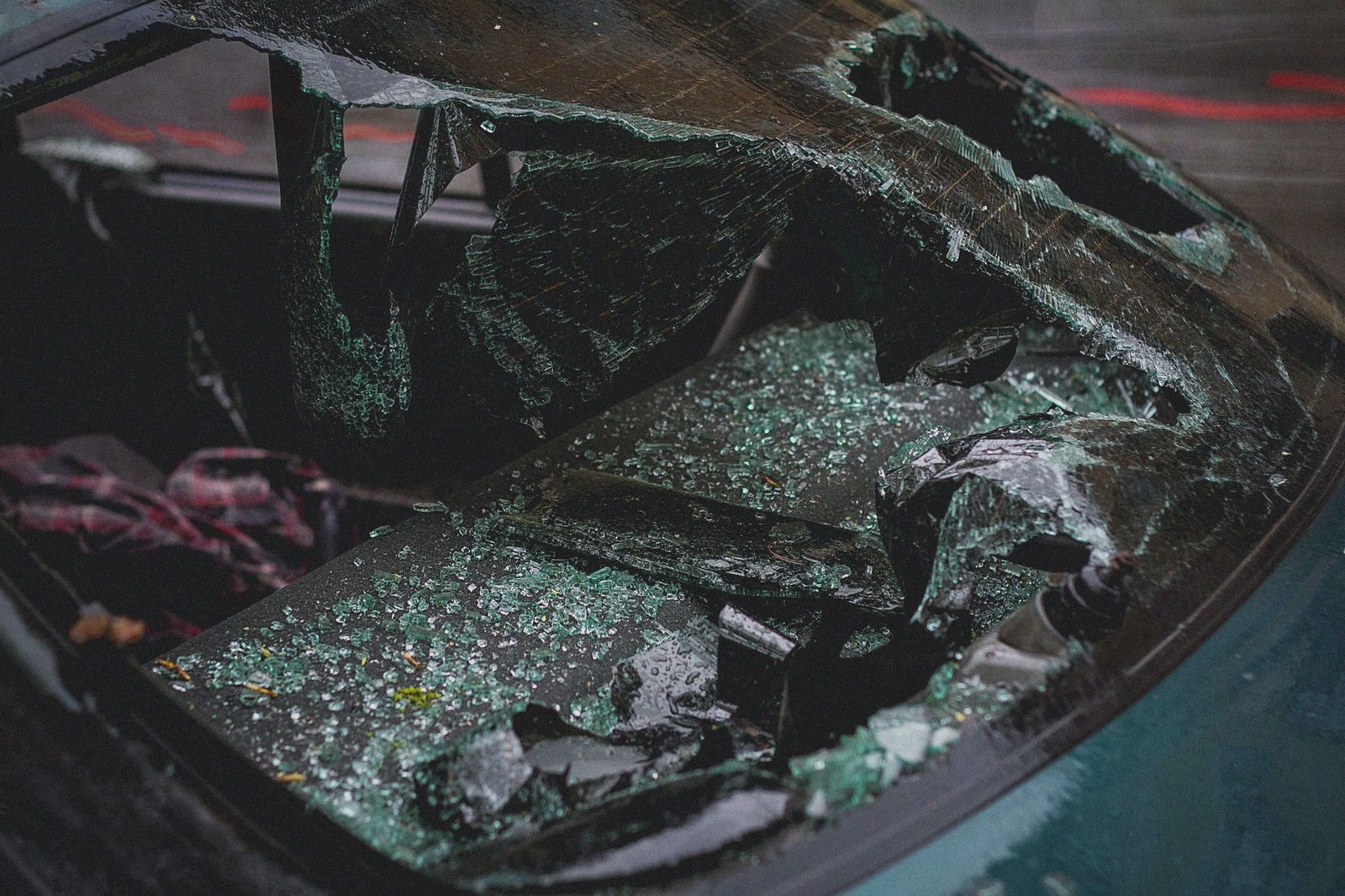
Large-truck crashes can cause serious injuries, including traumatic brain injury and spinal cord injury. These injuries can change a person’s daily life, and their effects may take time to show.
Physical injuries may include fractures, internal injuries and crush injuries. Mental injuries may include anxiety, sleep disturbance and post-traumatic stress. Each person’s recovery is different.
When a crash causes a death, the family may have questions about the law. A Virginia wrongful death action is filed by the decedent’s personal representative within two years of the death (Va. Code §§ 8.01-50(C), 8.01-244(B)), on behalf of the family members the statute protects. Under Va. Code § 8.01-50, when a death is caused by a wrongful act, neglect, or default, the person who would have been liable had death not ensued is liable to an action for damages, notwithstanding the death of the person injured, and the action is brought by the personal representative of the deceased person within the time limits specified in Va. Code § 8.01-244. The personal representative of the deceased person brings the case; for fetal death actions, the natural mother brings the action, but if she dies or is or becomes a person under a disability as defined in § 8.01-2, the administrator of her estate, her guardian, or her personal representative qualified to bring such action may initiate or maintain it. Va. Code § 8.01-53 sets out how any award is distributed, starting with the surviving spouse and children of the deceased.
Frequently asked questions
Is a box truck crash a truck accident?
Yes, in everyday use. A box truck is a large commercial truck, so a crash involving one is commonly called a truck accident.
Does a truck accident always involve a tractor-trailer?
No. Straight trucks, box trucks, dump trucks and tanker trucks can all be involved in truck accidents.