
Truck Accidents | Winchester, Harrisonburg and the Shenandoah Valley
A Call from a Trucking Adjuster Soon After a Crash? Here Is What It May Mean
An early call from an insurer can feel rushed and unsettling. Learn why it happens and what questions to keep in mind.
Published November 19, 2026
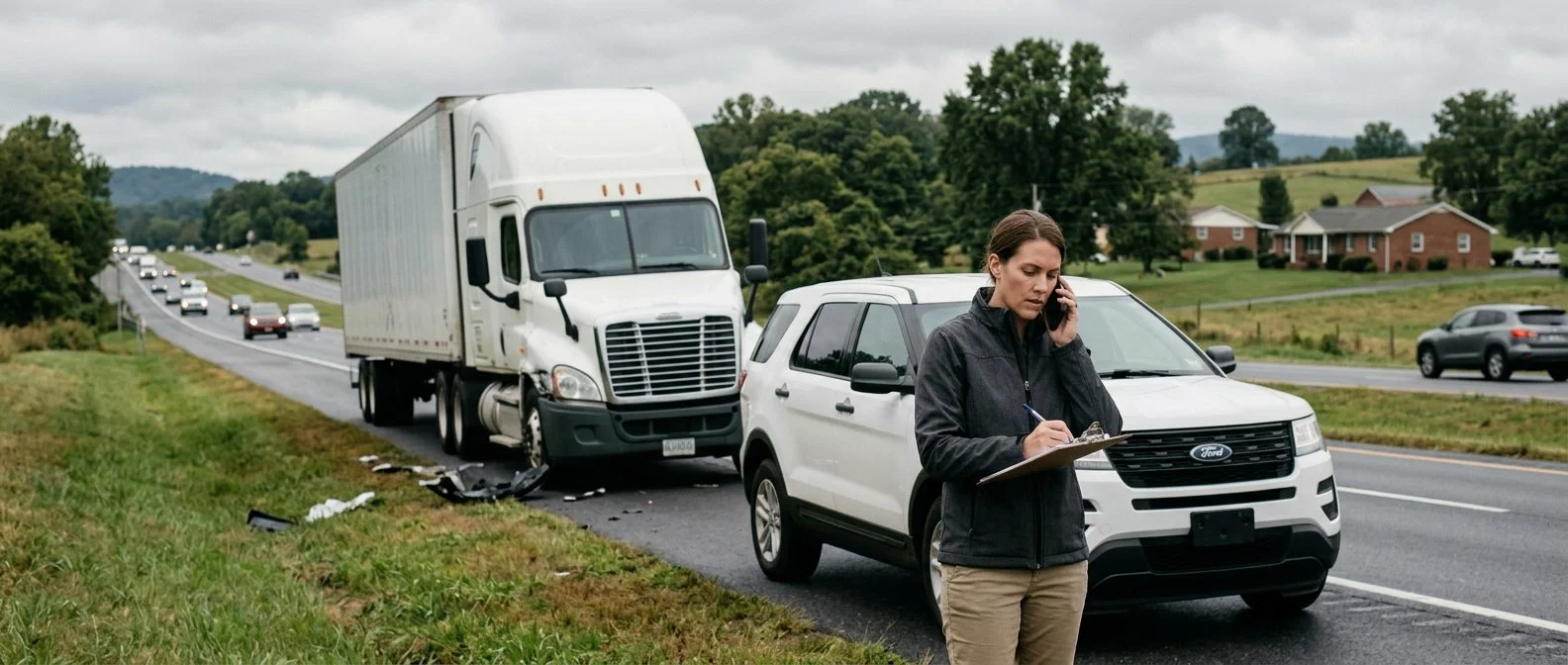
Soon after a truck crash, a phone may ring with an insurance adjuster on the line. It can feel fast, and it can raise worries that you did something wrong.
Early calls are common. They usually mean an insurer is opening a claim and gathering facts while they are still fresh. An early call does not decide who was at fault or what a claim is worth.
Why the Adjuster Calls So Soon After a Truck Crash
An adjuster calls early because an insurer needs to open and review a claim while the facts are still fresh. An adjuster works for an insurance company. Early contact is part of how a claim is opened and evaluated.
The adjuster will usually ask for basic facts. Those include when and where the crash happened, who was involved, and whether anyone was hurt.
In a commercial truck crash, more than one insurer may be involved. The truck company’s insurer may call. So may the driver’s own insurer, and your own insurer may reach out about your policy. The person calling may not be the insurer you have a policy with, so confirm who is calling before you share details.
An early call does not mean you did anything wrong. It also does not settle who was at fault. That question depends on the facts, and it often takes time.
If an adjuster has already called about your crash, you do not have to face those questions alone, and the firm is glad to talk through your situation. Talk it through with Correll Law Firm — we can walk you through how a situation like yours is usually handled and what your options are.

Evidence and Records That Move Quickly
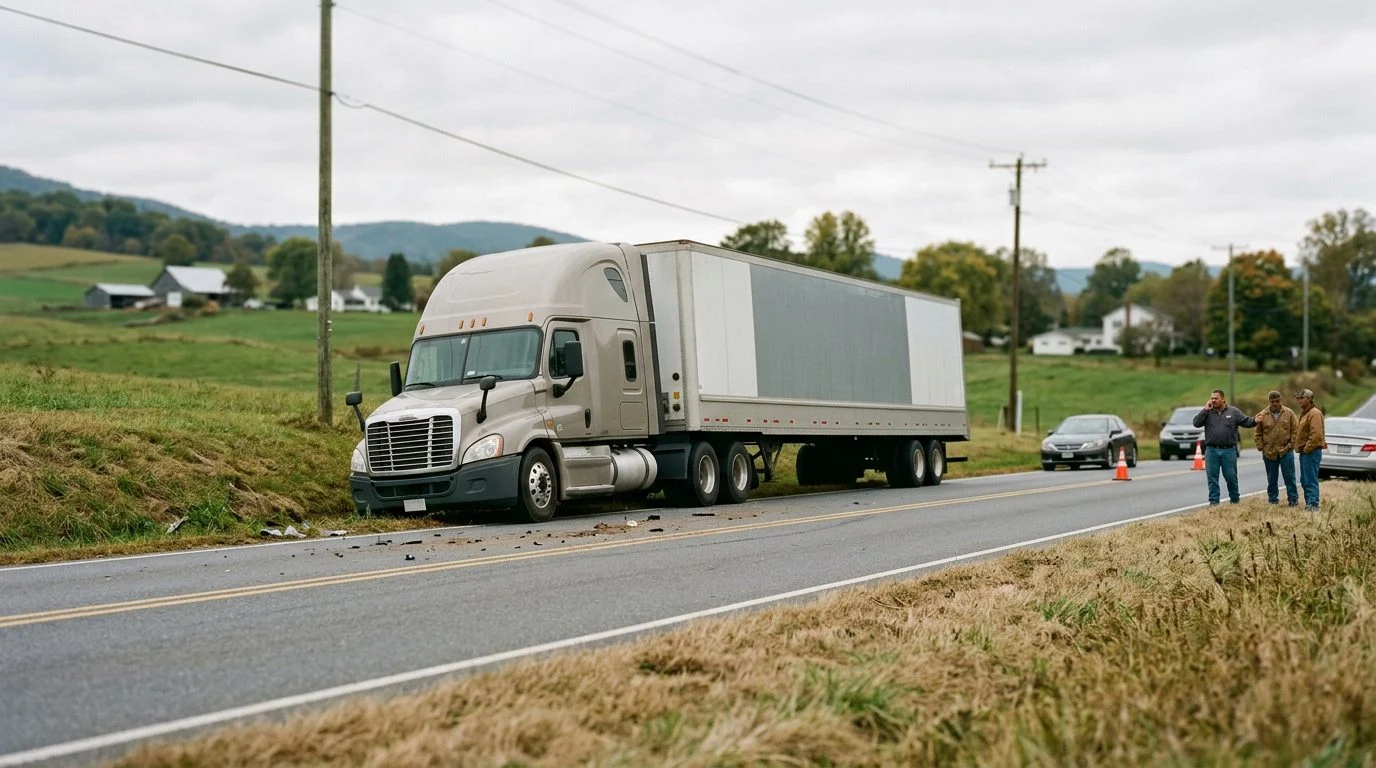
Scene evidence and trucking company records can change or disappear over time. Scene evidence changes fast. Vehicle positions, debris, skid marks and road conditions can be cleared once the roadway reopens. Photos, witness names and an officer’s notes can be the first record of what happened.
Braking and speed often become central questions. IIHS publishes large-truck crash data, including stopping distance for loaded tractor-trailers, so braking evidence can matter.
Trucking companies keep their own records. These include driver logs, inspection reports, maintenance files and dispatch information. Federal rules set minimum retention periods, and they differ by record.
Inspection reports must be kept for fourteen months from the inspection date (49 C.F.R. § 396.21). Records of duty status and supporting documents must be kept for at least six months from receipt (49 C.F.R. § 395.8). Under 49 C.F.R. § 391.51(c), a driver qualification file is retained for as long as the driver is employed by the motor carrier and for three years thereafter, but certain records, such as the note on the annual driving record review and the medical examiner’s certificate, may be removed three years after the date they were executed.
Those are minimums. For companies subject to 49 C.F.R. part 379, records may be destroyed at the discretion of management only after the minimum retention periods in appendix A to that part have passed, and that rule does not excuse longer retention periods set by other government bodies (49 C.F.R. § 379.3). That is why timing matters. For a practical list of what to keep, see the records to keep guide.
Recorded Statements and Early Questions
A recorded statement is a formal record that can be used later, so it deserves care. Early questions often cover how the crash happened, what you remember, where you feel pain, and whether you have seen a doctor. Some adjusters ask to record the call. Answers given on the phone can be compared with police reports and other records later.
You do not have to answer every question on the first call. You can ask for the caller’s name, company and claim number. You can also ask for time to gather information. If the caller pushes for an answer on the spot, you can say you will follow up.
You may wish to speak with a lawyer before agreeing to a recorded statement. Keep your answers short and factual. Say “I don’t know” or “I’m not sure” when that is the truth.
What Not to Tell the Insurance Company
Share facts you are sure of, and leave out guesses, opinions and early medical conclusions. Do not guess about speed, following distance or what the other driver was doing. Say what you saw, and say when you did not see something.
Avoid calling an injury minor, or saying you feel fine, before a medical evaluation is complete. Symptoms can appear later, even when a crash felt small at the time.
Fault matters too. Virginia follows contributory negligence: if you are found even partly at fault, you may be barred from recovering, with limited exceptions. Talk to a lawyer about your facts.
Be careful with social media as well. Posts about the crash, your activities or your injuries can be seen by an insurer. Keep a written log of every call. Note the date, time, caller’s name, company and what was said.
Telling a Legitimate Adjuster From a Scam Call
A call that mentions your crash does not prove the caller works for an insurer. Scam callers may already know a crash date or town, so those details do not confirm who is calling.
Before you share anything, ask for the caller’s full name, company and claim number. Check that claim number against your own policy papers or official letters you received by mail. Do not give Social Security, bank or card numbers on an unsolicited call.
If you are unsure, end the call. Reach the insurer through the phone number printed on your own policy or claim letter, not through a number the caller gives you. Pressure to act right now, or a request for money, is a reason to slow down.
Deadlines That Keep Running After the Calls
Crash reporting and lawsuit deadlines are separate rules, and each has its own timing. Virginia requires a driver involved in a crash with injury or death to stop and report it to police immediately (Va. Code §§ 46.2-371, 46.2-894). The duty to stop and help is spelled out in Va. Code § 46.2-894.
Virginia generally allows two years from the date of injury to file a personal injury lawsuit (Va. Code § 8.01-243(A)); the clock runs from the date of injury, not the date of discovery, with narrow exceptions. The two-year period is the deadline to file a lawsuit, not to report a crash (Va. Code § 8.01-243).
Some claims carry notice requirements that run out sooner. Under Va. Code § 15.2-209(A), a claim against a county, city or town for negligence is forever barred unless the claimant files a written statement of the nature of the claim, including the time and place of the alleged injury, within six months after the cause of action accrued. Failure to file that statement does not bar the claim if the locality’s attorney, chief executive or mayor, or any insurer or entity providing coverage or indemnification of the claim, had actual knowledge of the claim, including the nature of the claim and the time and place of the alleged injury, within the same six months. If the claimant was under a disability when the cause of action accrued, the tolling provisions of § 8.01-229 apply.
A Virginia wrongful death action is filed by the decedent’s personal representative within two years of the death (Va. Code §§ 8.01-50(C), 8.01-244(B)), on behalf of the family members the statute protects. The timing rules are in Va. Code § 8.01-244.
Missing a filing deadline can bar a claim, so write the key dates down.
Not sure what your next step is?
Talk it through with Correll Law Firm — we can walk you through how a situation like yours is usually handled and what your options are.
Why Early Offers May Not Reflect Later Injuries
An early offer may be made before anyone knows how an injury will develop. Some serious injuries, such as crush injuries, spinal cord injuries and traumatic brain injuries, can show symptoms and treatment needs weeks or months later. An offer made before the full medical picture is known may not account for that later care.
You can ask for time before responding to any offer. Keep medical records, bills and notes on symptoms together. For more on how crush injuries can affect a person over time, read the crush injury guide.
Questions about a commercial driver’s license after a crash are covered in a separate commercial driver’s license guide. For the broader picture, see the commercial vehicle accidents guide for Virginia.