
Spinal Cord Injury | Shenandoah Valley, Virginia
Where a Spinal Cord Injury Lawsuit Could Be Heard
Plain-language guidance from Correll Law Firm on Virginia courts, timing and the factors that shape a spinal cord injury case, for families in Winchester, Harrisonburg and across the Shenandoah Valley.
Published October 28, 2026
A spinal cord injury can change work, mobility and daily life in one moment. Many families in the Shenandoah Valley ask where a lawsuit would be heard and whether that choice matters. This page explains the courts, the deadlines and the rules that shape a case. It is general information, not advice about your own claim.
Which Virginia courts would hear a spinal cord injury lawsuit filed from the Shenandoah Valley, such as the Winchester or Harrisonburg circuit courts, and how do venue choices affect the case?
The right court depends on the facts.
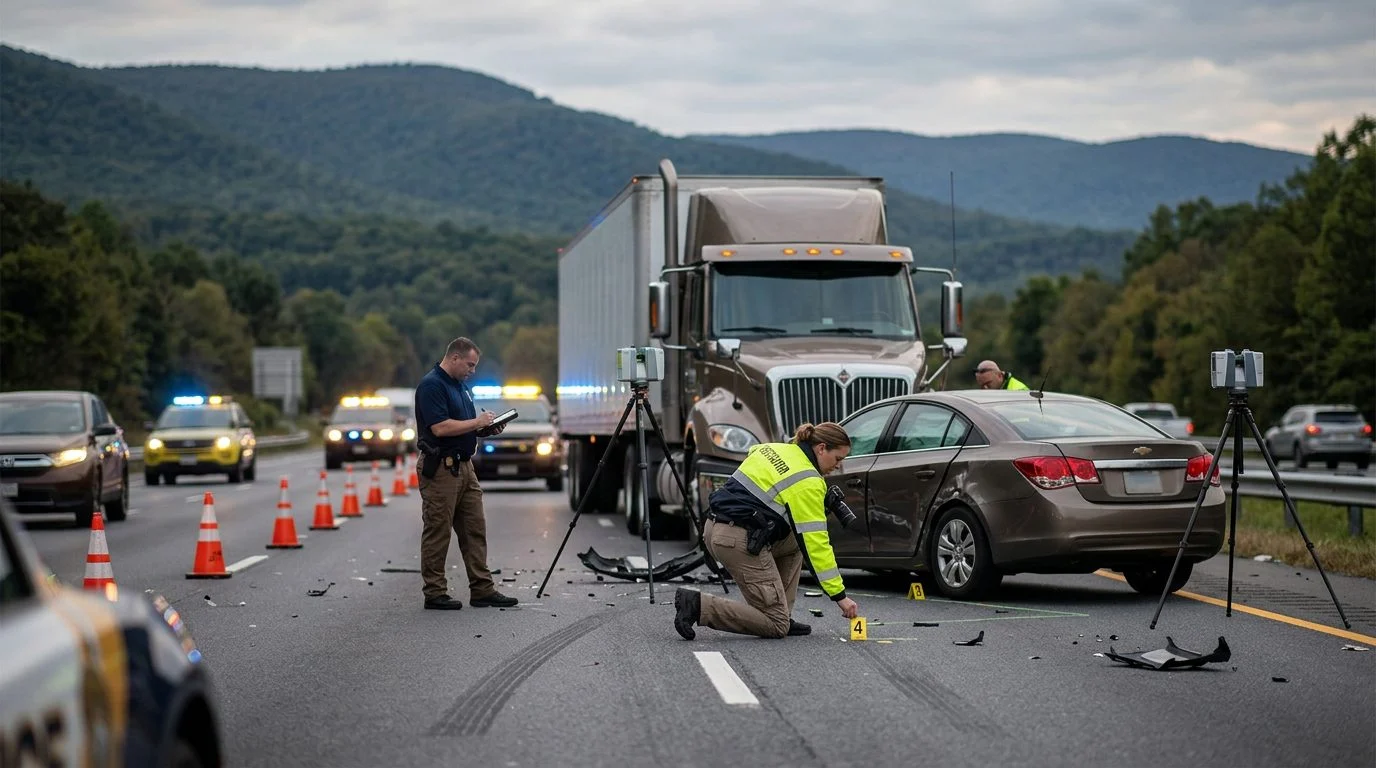
Venue is the place where a case is heard. It is not chosen on a whim. A crash on Interstate 81 may connect a claim to more than one county, so the details matter.
Venue also affects the practical side of a case. The injured person, witnesses and medical providers may need to travel to court. Each court keeps its own calendar. A lawyer can explain how these points apply to a specific crash.
Richmond and Henrico County residents face the same venue questions. Their claims are heard in courts tied to the place connected to the claim. For a broader look at these cases, read the spinal cord injury lawyer guide for the Shenandoah Valley.
Not sure what your next step is?
Talk it through with Correll Law Firm — we can walk you through how a situation like yours is usually handled and what your options are.

How Car and Truck Accidents Cause Spinal Cord Injuries
Most spinal cord injuries in crashes come from sudden force. That force can bend, twist or compress the neck or back. The spinal cord is a bundle of nerves inside the spine, so even a short, hard force can affect it.
Passenger car crashes often involve a sudden stop, a rollover or a hard side impact. The head and body can move fast in ways the spine does not expect. Debris can also strike the back or neck.
Commercial truck crashes often involve greater weight and more force at impact. They also more often involve more than one party, such as a driver, a trucking company or a cargo business. Identifying each party can take careful work.
Virginia requires a driver involved in a crash with injury or death to stop and report it to police immediately (Va. Code §§ 46.2-371, 46.2-894). The two-year period discussed below is the deadline to file a lawsuit (Va. Code § 8.01-243). It is not the deadline to report a crash.
Levels of Spinal Cord Injury and Their Effects
A spinal cord injury is described by where it happens on the spine and by how complete it is. Doctors use these labels to explain what a person may experience.
A cervical injury affects the neck. A thoracic injury affects the upper and middle back. A lumbar injury affects the lower back. In general, a higher injury on the spine can affect more of the body.
A complete spinal cord injury means no signals pass below the injury. An incomplete injury means some signals still pass. Each type can affect movement and feeling in different ways.
A medical provider assesses the injury, not a lawyer. The picture can change over time as swelling eases and treatment continues.
How Long Does a Virginia Spinal Cord Injury Lawsuit Have to Be Filed?
The filing deadline for most injury lawsuits runs from the date of the injury. The deadline is not usually measured from the date someone first learned of the harm.
Virginia generally allows two years from the date of injury to file a personal injury lawsuit (Va. Code § 8.01-243(A)); the clock runs from the date of injury, not the date of discovery, with narrow exceptions. Under Va. Code § 8.01-243, subsection A provides that, unless otherwise provided in this section or by other statute, every action for personal injuries, whatever the theory of recovery, shall be brought within two years after the cause of action accrues.
Some claims carry earlier deadlines. Claims against a county, city, or town for negligence require a written statement of the claim, including the time and place of the injury, filed with the locality’s attorney or its chief executive or mayor (Va. Code § 15.2-209), within six months after the claim accrues, subject to statutory exceptions that this page does not cover. Because that period can run out sooner, a person with a claim against a local government should act quickly.
Does Partial Fault Affect a Spinal Cord Injury Lawsuit in Virginia?
Partial fault can be a serious issue in a Virginia injury lawsuit. The outcome depends on the facts of the crash and the evidence.
Virginia follows contributory negligence: if you are found even partly at fault, you may be barred from recovering, with limited exceptions. Talk to a lawyer about your facts.
Evidence often shapes this question. Photos, crash reports, witness statements and vehicle data can all show how a crash happened. Early preservation of that evidence can matter.
Punitive Damages in Virginia Spinal Cord Injury Cases
Punitive damages are not part of every injury case. They are tied to specific kinds of conduct, not to the injury alone.
Virginia allows punitive damages for actual malice, or for willful or wanton conduct or recklessness showing a conscious disregard for the safety of others, capped at $350,000 (Va. Code § 8.01-38.1). The cap is set out in Va. Code § 8.01-38.1.
The jury must find that the conduct met this standard before punitive damages can be awarded.
Not sure what your next step is?
Talk it through with Correll Law Firm — we can walk you through how a situation like yours is usually handled and what your options are.

Wrongful Death Lawsuits in the Shenandoah Valley
When a spinal cord injury leads to death, a wrongful death action may be available in a Virginia court. The venue questions discussed above apply here too.
A Virginia wrongful death action is filed by the decedent’s personal representative within two years of the death (Va. Code §§ 8.01-50(C), 8.01-244(B)), on behalf of the family members the statute protects. The text of Va. Code § 8.01-244 sets out the two-year period.
Virginia wrongful death damages cover the family’s sorrow, mental anguish and loss of the decedent’s companionship, guidance and care; lost income and services; medical expenses from the injury; funeral expenses; and, for willful or wanton conduct, punitive damages (Va. Code § 8.01-52).
Family members do not file the action. Va. Code § 8.01-53 sets out who receives those damages and in what order.