
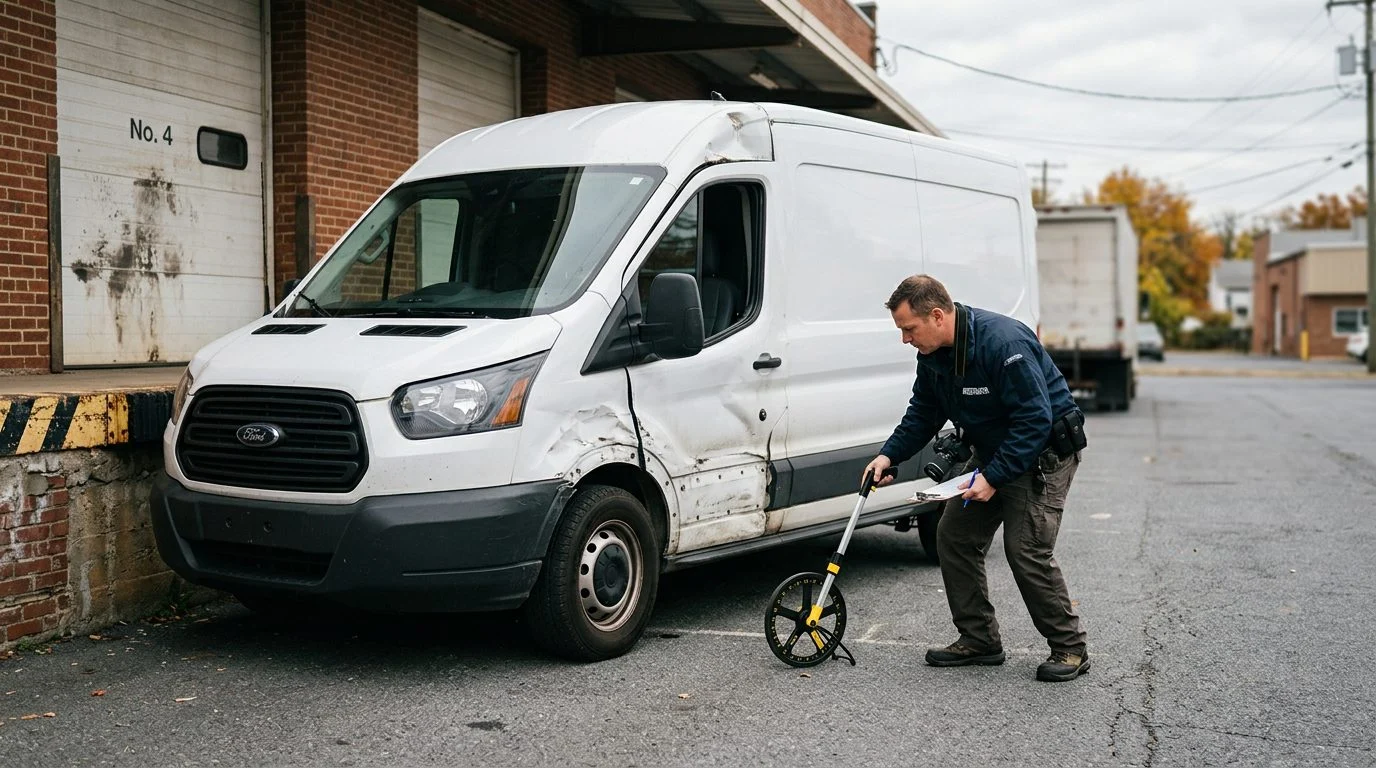
Commercial Vehicle Crashes | Winchester, Virginia
A Commercial Vehicle Crash in Winchester: Knowing Your Next Steps Can Help
Injuries from a collision with a large truck or commercial vehicle can change daily life quickly. Here is how to think through the first decisions.
Published November 12, 2026
After a commercial vehicle crash in Winchester, Virginia, families often face hard questions about what to do next. Virginia sets early rules you should know about, and this guide explains what to watch for, what to do first, and where the legal rules come from.
Why Commercial Vehicle Crashes on US-11 Can Be Severe
Commercial vehicles weigh far more than passenger cars, so a crash with one often does more damage to the people in the smaller vehicle. US-11 carries heavy traffic through and around Winchester, including tractor-trailers, tanker trucks and box trucks. That mix of size and speed changes how a crash unfolds and how much force reaches the people inside.
The occupants of a passenger car usually absorb more of that force than the truck’s occupants do. Injuries can come from the impact itself, from the vehicles moving after impact, and from debris.
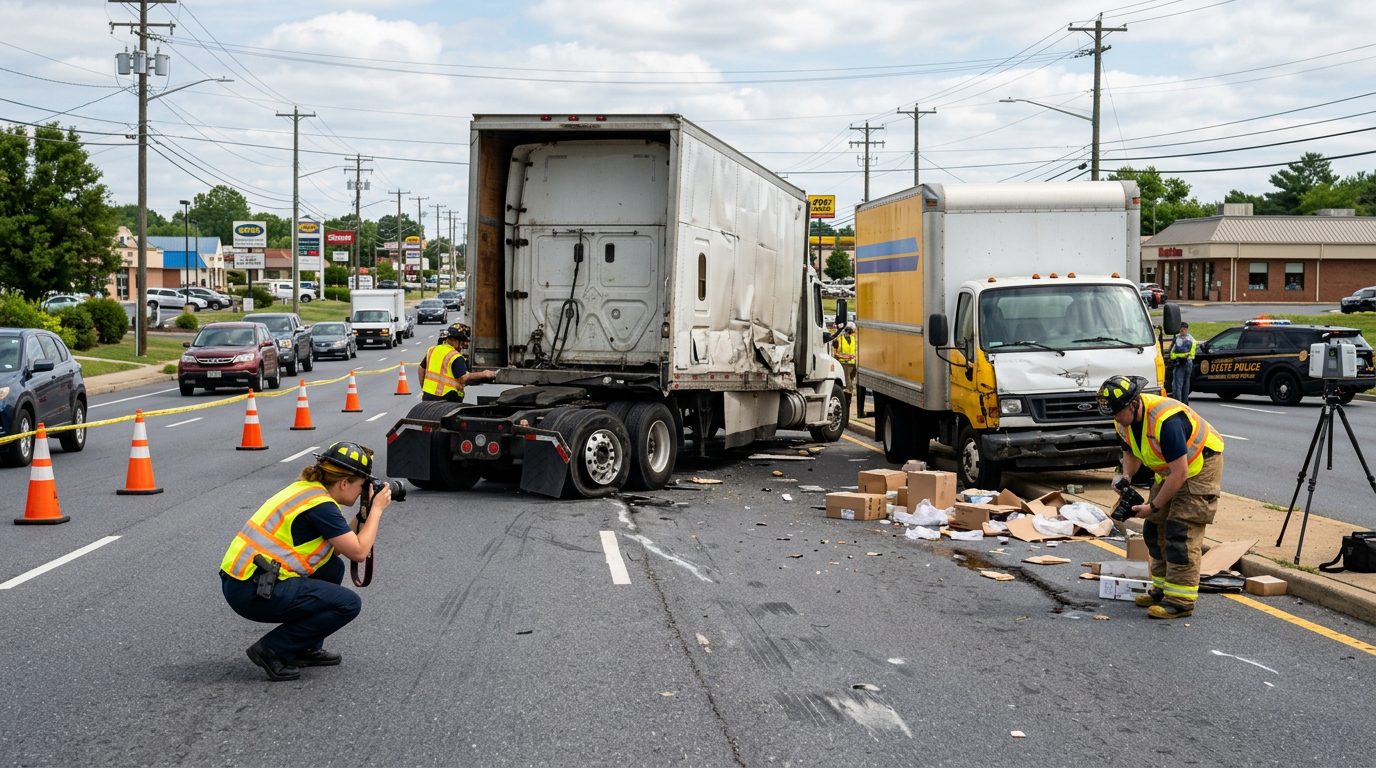
Some loads add risk. Fuel, compressed gases or medical oxygen can cause fire or release hazards at the scene. A crash can also involve several vehicles and block lanes for hours, which can slow emergency response and make the scene harder to document.
For the broader picture, read the commercial vehicle accidents guide.
Not sure what your next step is?
Talk it through with Correll Law Firm — we can walk you through how a situation like yours is usually handled and what your options are.

Injuries That Often Follow a Truck or Commercial Vehicle Crash
Many serious injuries from these crashes are not obvious at the scene. Some symptoms appear hours or days later.
A traumatic brain injury, which includes concussions, can cause headaches, memory trouble, dizziness and mood changes. Symptoms like these deserve a medical evaluation, even when they seem mild.
A spinal cord injury can follow a back or neck injury. It can affect movement or feeling in the arms or legs. Early evaluation matters, because the treatment plan depends on what scans and exams show.
Other common injuries include broken bones, internal injuries, crush injuries, burns and soft tissue injuries. Pain that grows over several days deserves attention, too. Follow-up visits matter for health, and written notes of symptoms show how an injury affects daily life.
Immediate Steps at the Scene and in the Hours After the Crash
Get medical help first, and call 911 if anyone is hurt. Move to a safe spot only if it is safe to do so.
Virginia requires a driver involved in a crash with injury or death to stop and report it to police immediately (Va. Code §§ 46.2-371, 46.2-894). The two-year period discussed later is the deadline to file a lawsuit, not the deadline to report a crash.
Document the scene as soon as you safely can:
- Photos of the vehicles, the road, lane markings, skid marks and visible injuries.
- Names and contact details of witnesses.
- The truck’s company name, unit number and any USDOT number on the vehicle.
- The police report number, and how to get a copy of the report.
Keep a daily journal of symptoms, missed work, medical visits and bills. Write facts, such as “I could not lift my grocery bags,” rather than opinions about who was at fault. Be careful what you post online about the crash.
Records and Evidence Commercial Carriers May Hold
A commercial carrier often keeps records that a passenger car driver does not. Federal rules require drivers to record their duty status for each 24-hour period (49 C.F.R. § 395.8). Carriers operating commercial motor vehicles must use an electronic logging device to record that status. These logs can show when a driver was on the road and when he or she rested.
Self-propelled commercial vehicles must display a USDOT identification number (49 C.F.R. § 390.21T), which helps identify the carrier.
After some crashes, federal rules require post-accident drug and alcohol testing of surviving drivers (49 C.F.R. § 382.303). Whether testing applies turns on the details of each crash. Dispatch and cargo paperwork can also show when and where a load was picked up and where it was headed.
Records can be time-sensitive. A written request to preserve evidence is one option a person may wish to discuss early. Driver employment, training and testing records may also matter in some cases.
Who May Bring a Claim After a Fatal Commercial Vehicle Crash
When a crash causes a death through the wrongful act, neglect, or default of any person or corporation, the action is brought by and in the name of the personal representative of the deceased person. Virginia law sets out who files it and when.
Under Va. Code § 8.01-244(B), every action under § 8.01-50 must be brought by the personal representative of the decedent within two years after the death of the injured person.
Because the personal representative files the action, a family may need to sort out who holds that role early.
Virginia wrongful death damages cover the family’s sorrow, mental anguish and loss of the decedent’s companionship, guidance and care; lost income and services; medical expenses from the injury; funeral expenses; and, for willful or wanton conduct, punitive damages (Va. Code § 8.01-52).
Family members do not file the action themselves.
Time Limits and Fault Rules Under Virginia Law
Most injury lawsuits in Virginia must be filed within a set period, and the clock is the first thing to know.
Virginia generally allows two years from the date of injury to file a personal injury lawsuit (Va. Code § 8.01-243(A)); the clock runs from the date of injury, not the date of discovery, with narrow exceptions.
Some claims carry notice requirements that run out sooner. Va. Code § 15.2-209 reads: “Failure to provide such statement shall not bar a claim against any county, city, or town, provided that the attorney, chief executive, or mayor of such locality, or any insurer or entity providing coverage or indemnification of the claim, had actual knowledge of the claim, which includes the nature of the claim and the time and place at which the injury is alleged to have occurred, within six months after such cause of action accrued.” Va. Code § 15.2-209 reads: “Every claim cognizable against any county, city, or town for negligence shall be forever barred unless the claimant or his agent, attorney, or representative has filed a written statement of the nature of the claim, which includes the time and place at which the injury is alleged to have occurred, within six months after such cause of action accrued.”
Partial fault can also matter. Virginia follows contributory negligence: if you are found even partly at fault, you may be barred from recovering, with limited exceptions. Talk to a lawyer about your facts.
Punitive damages follow a separate rule.
Not sure what your next step is?
Talk it through with Correll Law Firm — we can walk you through how a situation like yours is usually handled and what your options are.
Next Steps for Injured People and Families in the Winchester Area
The practical path starts with medical care, then records, then the deadlines. Follow the treatment plan your providers give you. Keep a written record of symptoms, missed work and bills.
Keep photos, witness details and the police report number in one place. A common mistake is waiting weeks to see a doctor, which can make it harder to link symptoms to the crash.
People may wish to speak with a lawyer about their facts. The firm has offices in Winchester and Harrisonburg. It serves people across the Shenandoah Valley, and in Richmond and Henrico County.
A commercial vehicle crash in Winchester can leave a family facing many decisions at once. Working through the steps above can help bring order to them.