
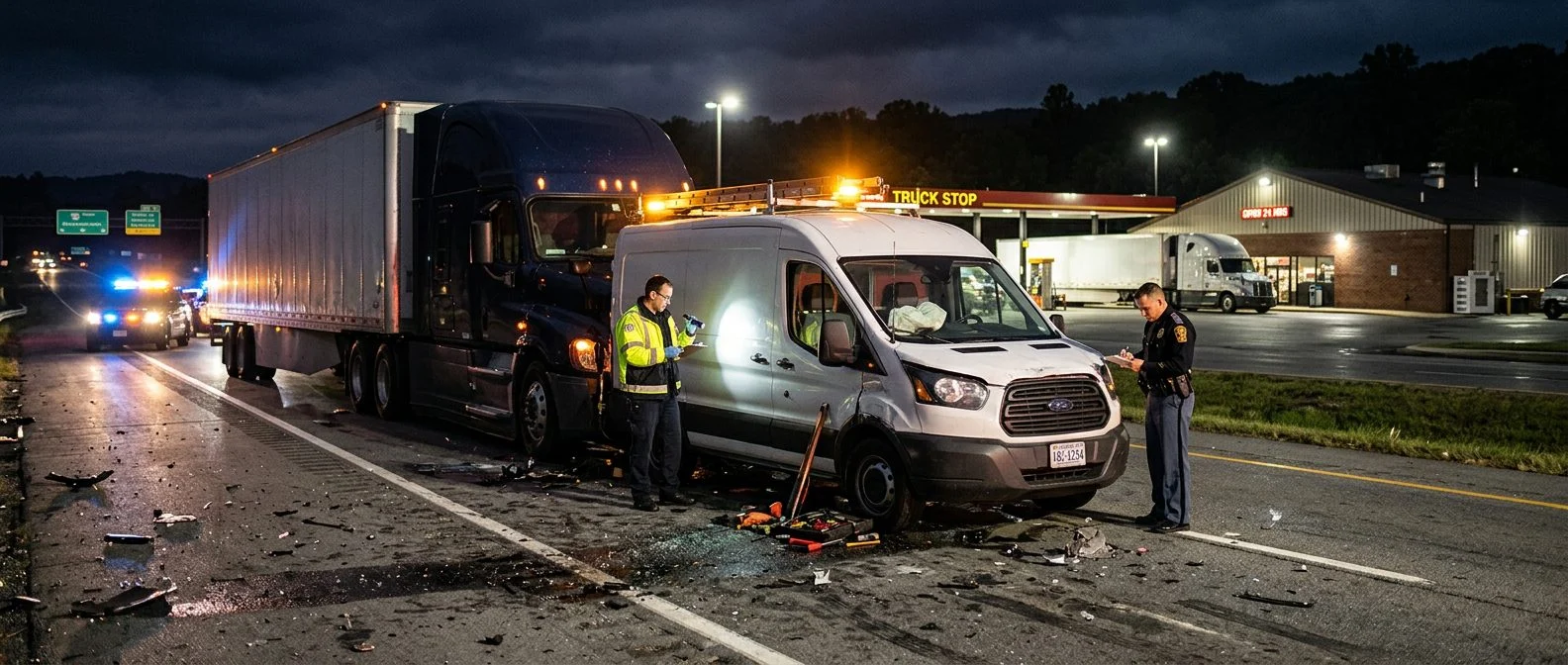
Car and commercial vehicle crashes | Winchester, Harrisonburg and the Shenandoah Valley
Hurt in a Work Van Crash? Start With Who Is Involved
A company van crash can pull in more people than a typical collision, from the driver and employer to insurers and vehicle owners. Knowing the parties is a practical first step.
Parties that may be involved
The driver at the wheel
The person operating the van at the time of the crash is often the first person whose conduct is examined.
The employer or vehicle owner
A business may own the van, assign it to a worker, or have its own records about the trip, the route and the schedule.
Other drivers and property owners
Other vehicles, and sometimes the owner of a parking lot or roadway condition, can play a part in how a crash happened.
Maintenance and equipment providers
Repair shops, parts makers and equipment suppliers may be part of the picture when a mechanical problem is involved.
Published November 14, 2026
If a work van hit you or someone in your family, you may have a work van crash claim in Virginia. A van used for a job, delivery or fleet trip can bring more than one party into the claim.
The driver is not always the only one who may be responsible. The employer, the vehicle owner and others can be relevant, depending on the facts of the crash and the trip.
What a Work Van Crash Claim Covers in Virginia
A work van crash claim seeks compensation for injuries or a death caused by a crash involving a van used for business, delivery, trade or fleet work.
Injured drivers, passengers, pedestrians and other road users may bring these claims. When a crash causes a death, the claim follows the wrongful death process described below.
Work use matters because it adds people and records to the picture. The van’s owner, the employer and the person driving may each be relevant. The purpose of the trip and the driver’s job assignment are fact questions.
Picture a delivery driver who stops at a shop between drops and rear-ends a sedan. Whether the driver was on a work errand, and who assigned the route, can shape which parties a claim names.
For the broader picture on these crashes, read the commercial vehicle accident guide.
If a work van crash left you or a family member hurt, the firm is ready to talk through who may be responsible and what your options are. Talk it through with Correll Law Firm — we can walk you through how a situation like yours is usually handled and what your options are.
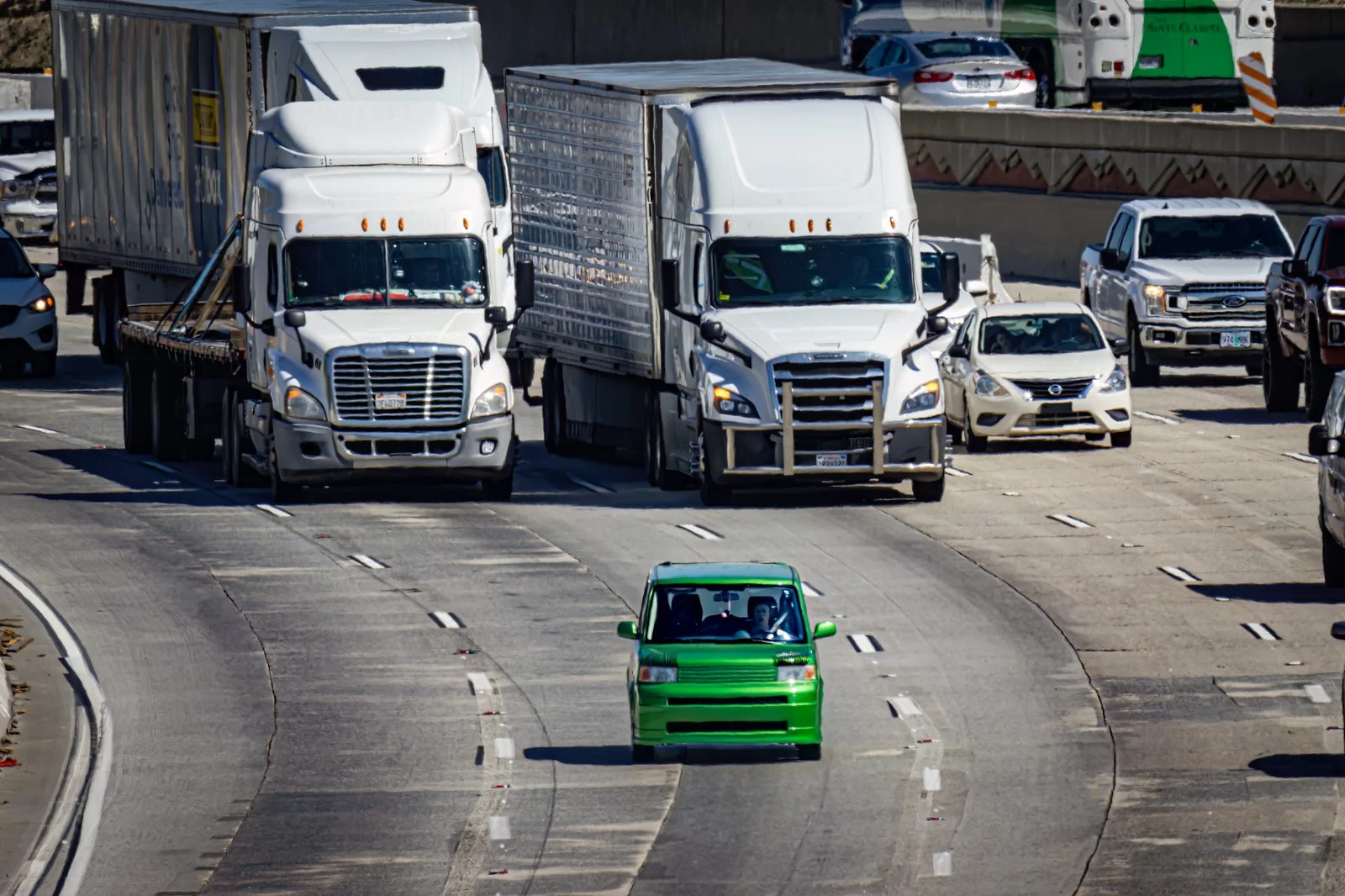
Who May Be Responsible When a Work Van Is Involved
Responsibility may fall on the driver, the employer or vehicle owner, another driver, or a repair shop whose work on the van is involved.
Parking lot crashes show why the facts decide the answer. Common questions include who was backing or turning, who was moving, what the lot looked like, and what witnesses, video and vehicle damage show.
Low-speed crashes can still cause real injuries. Company names, markings, registration numbers and who assigned the trip can all help identify the right parties.
Steps to Take After a Work Van Crash
Get medical care first, then protect the facts of the crash.
Virginia requires a driver involved in a crash with injury or death to stop and report it to police immediately (Va. Code §§ 46.2-371, 46.2-894). The full text is in § 46.2-371 and § 46.2-894.
- Medical care. Get checked even if symptoms seem mild. Some injuries, such as concussions, may not show up right away. Keep every record.
- The scene. Photograph the vehicles, plates, company names or logos, road or lot conditions, and any visible injuries.
- Witnesses. Write down names and how to reach them. The witness guide for commercial truck crashes explains what to note.
- Records. Save repair estimates, trip or delivery logs if you know of them, and notes on what the driver was doing for work.
- A journal. Track symptoms, missed work and daily limits. The records checklist lists more items to ask about.
What to Watch for With the Insurance Company
Anything you tell an insurer can become part of the claim file, so slow down before you answer.
- Do not guess about speed, fault or how the crash happened.
- Do not say you feel fine until your medical evaluation is complete.
- Be careful with recorded statements and written forms.
- Say when you do not know something.
- Keep posts about the crash, your injuries or your job off social media while a claim is open.
You may wish to speak with a lawyer before giving a recorded statement or signing a release.
Virginia Fault Rules, Deadlines and Wrongful Death
Virginia follows contributory negligence: if you are found even partly at fault, you may be barred from recovering, with limited exceptions. Talk to a lawyer about your facts.
Virginia generally allows two years from the date of injury to file a personal injury lawsuit (Va. Code § 8.01-243(A)); the clock runs from the date of injury, not the date of discovery, with narrow exceptions. Some claims carry notice requirements that run out sooner.
A Virginia wrongful death action is filed by the decedent’s personal representative within two years of the death (Va. Code §§ 8.01-50(C), 8.01-244(B)), on behalf of the family members the statute protects.
Virginia wrongful death damages cover the family’s sorrow, mental anguish and loss of the decedent’s companionship, guidance and care; lost income and services; medical expenses from the injury; funeral expenses; and, for willful or wanton conduct, punitive damages (Va. Code § 8.01-52). Read the statute at Va. Code § 8.01-52.
Virginia allows punitive damages for actual malice, or for willful or wanton conduct or recklessness showing a conscious disregard for the safety of others, capped at $350,000 (Va. Code § 8.01-38.1). The cap is set in Va. Code § 8.01-38.1.
How the Process Works With the Firm
A review starts with the crash facts, the medical records, and the vehicle and employer details.
The review usually covers:
- The crash report and any police record.
- Medical records and how the injury has progressed.
- The van’s owner, the employer, the insurers and any other drivers.
- Witness names, photos and repair records.
Timelines vary with the injuries, how insurers respond and whether a lawsuit is needed.
The firm’s offices are in Winchester and Harrisonburg. It serves people across the Shenandoah Valley and in Richmond and Henrico County.
The firm focuses on car accidents, truck accidents, commercial vehicle accidents, catastrophic injuries, traumatic brain injury, spinal cord injury and wrongful death. Where injuries are severe, the serious injury claims guide explains more.
Not sure what your next step is?
Talk it through with Correll Law Firm — we can walk you through how a situation like yours is usually handled and what your options are.

Frequently Asked Questions
Most questions come down to who was responsible and which deadlines apply.
Is a parking lot crash covered?
It can be. The answer turns on who was backing or turning and what the lot conditions were.
Is a company van crash different from a personal car crash?
Often, yes. More parties and records may be involved, so the crash report and employer details matter.
What if I was a passenger?
Passengers may bring a claim. The roles of the driver and the vehicle owner are reviewed.
What if a family member died in a van crash?
A personal representative files the wrongful death action for the family. Family members share in any recovery.
Should I speak with the insurer before a review?
You may wish to speak with a lawyer first, especially before giving a recorded statement.