
Virginia crash guidance
Minor Crash, Major Questions? Know Virginia's Reporting Rules
A plain-language guide to low-impact crashes, symptoms that appear later and the records worth keeping.
Published November 21, 2026
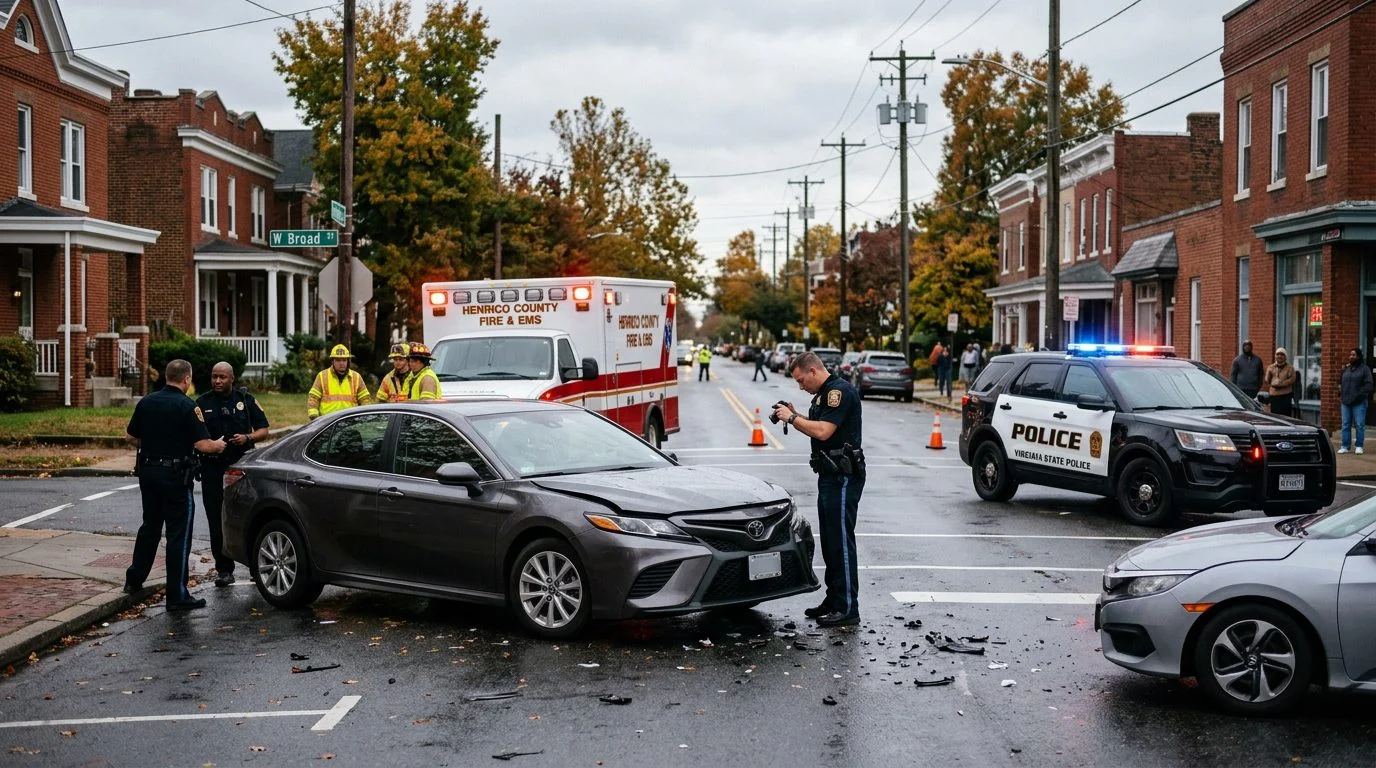
If a bump in a parking lot or a slow crash left you wondering whether you had to tell anyone, you’re not alone. A non-reportable accident is an informal name for a crash that people think is too small to report. In Virginia, the real question is whether the crash involved an injury, a death, or damage to an attended vehicle or property.
What people mean by a non-reportable accident
A non-reportable accident is usually a low-speed bump, a scrape in a store parking lot, or a crash where both drivers say they feel fine. The phrase describes how a crash felt, not a legal category.
Feeling that a crash was minor does not settle whether a legal duty applied. The facts decide that: who was hurt, whether an attended vehicle or property was damaged, and what happened at the scene. A driver who decides on the spot, before those facts are known, can guess wrong.
The statute uses the terms injured, killed and attended property damaged. Those are the words to check against your own crash. For the wider picture, including crashes involving larger vehicles, see the firm’s commercial vehicle accidents guide.
Not sure what your next step is?
Talk it through with Correll Law Firm — we can walk you through how a situation like yours is usually handled and what your options are.

When Virginia requires a driver to report a crash
Virginia requires a driver involved in a crash with injury or death to stop and report it to police immediately (Va. Code §§ 46.2-371, 46.2-894).
The main reporting rule is in Va. Code § 46.2-894. The driver must stop as close to the scene as possible without blocking traffic. The driver must then give his or her name, address, driver’s license number and vehicle registration number to State Police or the local law-enforcement agency, or to the person struck and injured (if that person can understand and retain the information), or to the driver or another occupant of the vehicle collided with, or to the custodian of other damaged property.
The driver must also give reasonable help to an injured person, including taking that person to a doctor or hospital when treatment is apparent or requested.
The same statute also covers a crash that damages an attended vehicle or other attended property, even when nobody is hurt. That is the part many people miss.
Va. Code § 46.2-371 requires immediate notice to a law-enforcement officer when someone is injured or killed. A willful failure to give that notice is a Class 4 misdemeanor.
The Virginia DMV crash reporting guidance also covers crash reporting duties.
Why a crash that seems minor can still involve injury
Some injuries are not obvious at the scene. Neck, back, head and spinal injuries can take hours or days to show symptoms. Shock and adrenaline can also mask pain for a while.
Some people feel stiff the next morning and only then connect the pain to the crash. A dated note of when symptoms started can help explain that timing later.
This matters for the reporting question. A driver who is unsure whether anyone was hurt should treat that question as open. Ask each person involved how they feel, and get a medical check if anyone reports pain.
Section 46.2-371 requires the driver to immediately give notice to a law-enforcement officer after an injury or death; a driver prevented by injuries from reporting right away has a different duty under § 46.2-894. Crashes involving large trucks raise the stakes, and the firm’s pages on truck crashes and spinal cord injuries cover those situations in more detail.
Parking lot and low-speed crashes: who is at fault?
Fault in a parking lot or low-speed crash turns on the facts, not on how big the damage looks.
Lot crashes often come down to a few details: which car was backing or pulling out, who had the right of way, where each car stopped, and whether the drivers could see each other. Photos taken right after the crash, and names of anyone who watched, can help show those details.
Virginia follows contributory negligence: if you are found even partly at fault, you may be barred from recovering, with limited exceptions. Talk to a lawyer about your facts.
If a commercial truck or van was involved, the firm’s page on suing a truck driver covers claims against a commercial driver.
Practical steps after a crash with no police report
If police never came to the scene, start documenting the crash yourself as soon as you can.
- Photograph both vehicles, the scene, visible damage and any road or lot markings.
- Write down the other driver’s name, license number, plate number and insurance details.
- Get names and contact details for any witnesses.
- Keep a dated record of symptoms, medical visits and repair estimates.
- Tell your own insurer about the crash promptly.
The reporting duty does not go away because police did not come. The reporting duty does not go away because police did not come.
Deadlines that run separately from the reporting duty
Reporting a crash and filing a lawsuit run on separate clocks. The duty to report is about telling police. It does not set the lawsuit deadline.
Virginia generally allows two years from the date of injury to file a personal injury lawsuit (Va. Code § 8.01-243(A)); the clock runs from the date of injury, not the date of discovery, with narrow exceptions. Subsection A of Va. Code § 8.01-243 provides that, unless otherwise provided in this section or by other statute, every action for personal injuries, whatever the theory of recovery, shall be brought within two years after the cause of action accrues.
Claims for negligence against a county, city or town carry an earlier deadline: a written statement of the nature of the claim, including the time and place the injury is alleged to have occurred, must be filed within six months after the cause of action accrued (Va. Code § 15.2-209). A missing statement does not bar the claim if the locality’s attorney, chief executive or mayor, or its insurer, had actual knowledge of the claim within that six-month period. If the claimant was under a disability when the cause of action accrued, the tolling provisions of § 8.01-229 apply to that section.
Do I have to report a minor car accident in Virginia?
It depends on the facts. The reporting duty applies when a crash involves an injury, a death, or damage to an attended vehicle or property.
Can a neck or back injury from a low-speed crash show up days later?
Yes, some neck and back injuries are not felt right away. A dated symptom record can help show when symptoms began.