
Virginia Crash Guidance | Shenandoah Valley and Richmond
Hurt in a Crash? Know What Virginia Expects You to Report
A plain-language guide for drivers, passengers and families after a crash on Virginia roads.
Published November 16, 2026
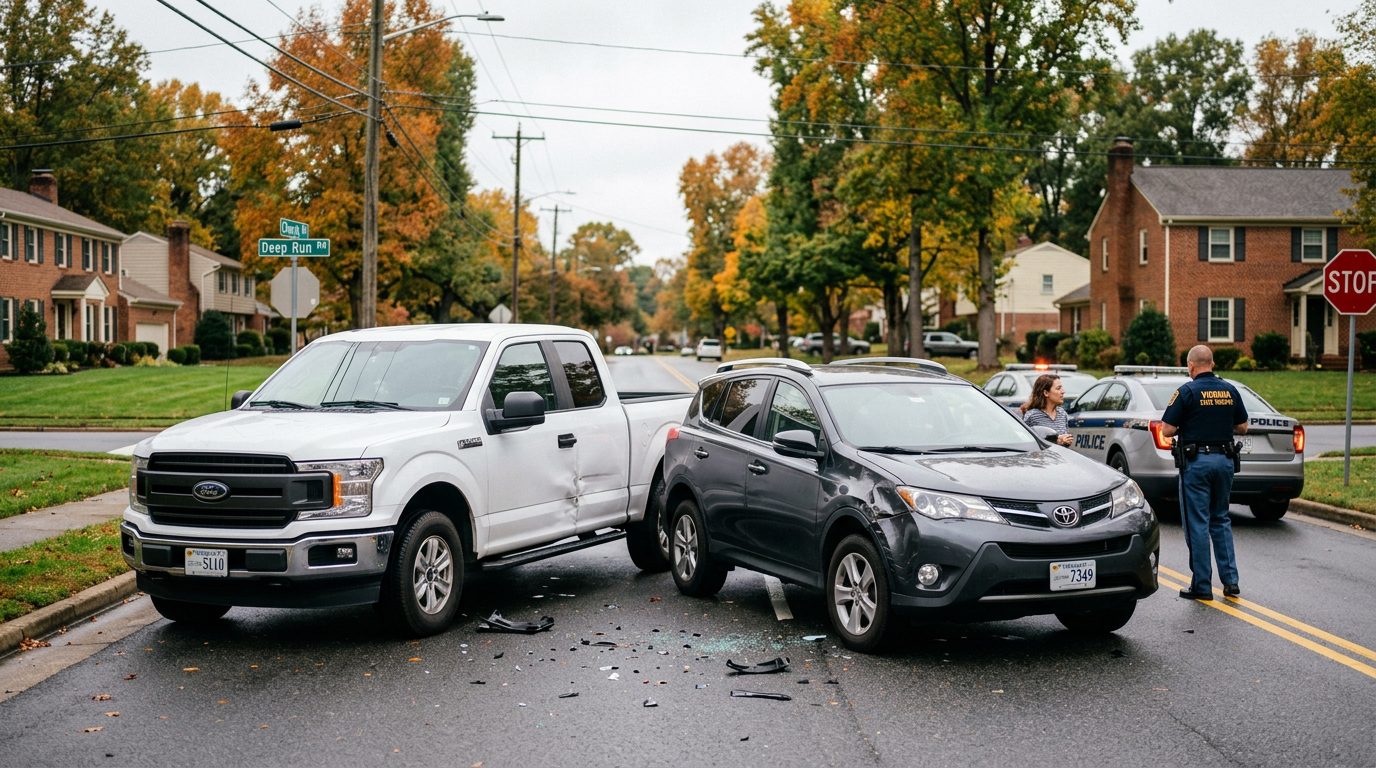
After a crash, many drivers freeze. They wonder whether they must stop, or whether reporting it is optional. In Virginia, a driver must stop and report a crash that injures or kills someone, and also a crash that damages an attended vehicle or other attended property (Va. Code § 46.2-894).
This guide explains what the duty requires, how commercial vehicle crashes fit in, and how reporting differs from the deadline to file a lawsuit.
What a reportable crash means under Virginia law
A reportable crash is one that Virginia law requires the driver to report to police right away. Virginia requires a driver involved in a crash with injury or death to stop and report it to police immediately (Va. Code §§ 46.2-371, 46.2-894).
The word “immediately” matters. The report belongs at the scene, not days later after everyone has gone home.
Many drivers assume a crash is minor and skip the report. The trigger described here is injury or death, so a crash with little vehicle damage can still qualify. For background, see the firm’s commercial vehicle accident guide.
Not sure what your next step is?
Talk it through with Correll Law Firm — we can walk you through how a situation like yours is usually handled and what your options are.
The duty to stop and report a crash
Under Va. Code § 46.2-894, the driver must immediately stop as close to the scene as possible without obstructing traffic.
The driver must then give their name, address, driver’s license number and vehicle registration number. That report goes to the State Police or a local law-enforcement agency. It can also go to the injured person, if that person can understand it, or to the other driver or the owner of damaged property. Writing these details down at the scene can help keep them straight.
The driver must also give reasonable help to an injured person. That includes taking the person to a physician, surgeon or hospital when treatment appears necessary or is requested.
If injuries prevent these steps, the driver must report as soon as reasonably possible. If injuries prevent the driver from complying, the driver must also make a reasonable effort to locate the people involved. The Virginia State Police report page says the Virginia DMV keeps official records of reportable crashes. Who may obtain a crash report is covered on the Virginia DMV request page.
Commercial truck and commercial vehicle crashes
A commercial truck driver involved in a crash with injury or death has the same Virginia duty to stop and report. The statute speaks of the driver of any vehicle, so the duty does not depend on the type of vehicle. Each driver involved in the crash has this duty, including a car driver and a truck driver in the same crash.
Identifying details about the truck can matter later. The firm’s guide on finding a truck’s DOT number after a crash covers that. Its page on what witnesses can do covers people who saw the crash.
The firm represents people seriously hurt in car and commercial truck crashes. Its offices are in Winchester and Harrisonburg.
Reporting a crash versus filing a lawsuit
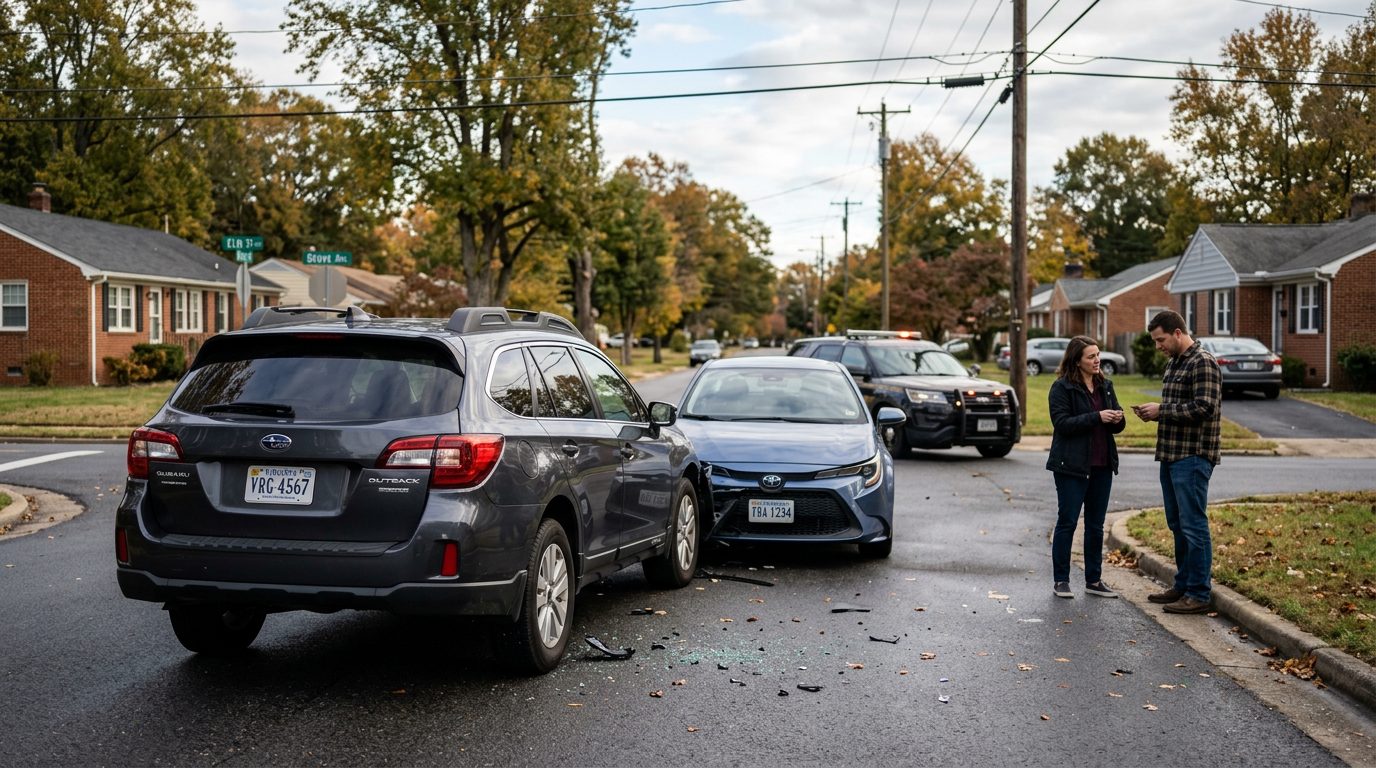
Reporting a crash and filing a lawsuit are separate steps, with separate timelines. The report goes to police right away. The lawsuit deadline comes later. People often mix these two up after a crash.
Virginia generally allows two years from the date of injury to file a personal injury lawsuit (Va. Code § 8.01-243(A)); the clock runs from the date of injury, not the date of discovery, with narrow exceptions. Under Va. Code § 8.01-243, subsection A, unless otherwise provided in this section or by other statute, every action for personal injuries, whatever the theory of recovery, shall be brought within two years after the cause of action accrues.
The two-year period is the deadline to file a lawsuit, not the deadline to report a crash (Va. Code § 8.01-243). Some claims carry notice requirements that run out sooner.
Families and passengers after a fatal crash
The reporting duty applies when a crash kills someone, as well as when it injures someone. Families then face a separate filing timeline.
A Virginia wrongful death action is filed by the decedent’s personal representative within two years of the death (Va. Code §§ 8.01-50(C), 8.01-244(B)), on behalf of the family members the statute protects. The deadline is in Va. Code § 8.01-244. Family members do not file the case themselves. They share in the recovery through the personal representative.
The reporting duty happens at the scene. The wrongful death timeline runs from the date of death, so the two move on different clocks.
Frequently asked questions
Does a crash with a minor injury need to be reported?
Yes. Under Virginia law, the duty turns on whether someone was injured or killed, not on how serious the injury is.
Is a truck crash reported differently in Virginia?
Federal rules may also apply to commercial vehicles.