
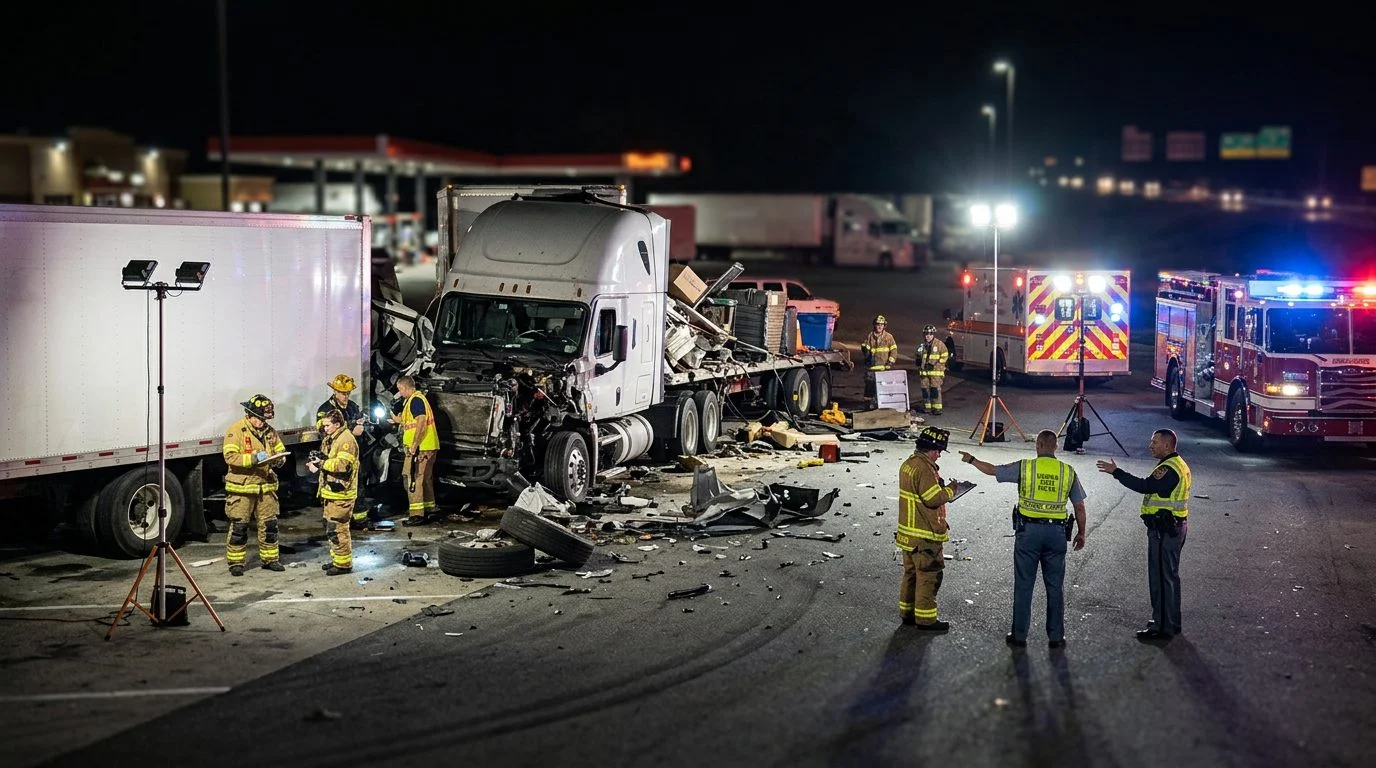
Truck Accidents | Winchester, Harrisonburg and the Shenandoah Valley to Richmond
Serious Injury Commercial Truck Crash Claims in Virginia
A crash with a commercial truck can involve more companies, more paperwork and more questions than a typical car crash. Here is how these claims are different and what injured people and families often need to know.
Published November 15, 2026
If a commercial truck crash left you badly hurt, and the harm is severe or may last a long time, your situation may involve a serious injury claim. It can seek money for medical care, lost income and the effect the injury has on daily life.
If you or someone you love was hurt this way, the first weeks can feel overwhelming. Virginia’s deadlines and fault rules shape every claim, so it helps to understand them early.
What a serious injury claim from a commercial truck crash is
It is a claim brought for a person whose injuries are severe, long-lasting, or both. In a death case, the claim is brought for the family, as explained below.
A crash with a commercial truck differs from a typical car crash in several ways. Trucks are larger, so the force in a crash can be greater. Many trucks are owned by companies, not the drivers. More parties and more records may be involved.
Virginia law also lets an injured person look to more than one party.
For broader background, read the firm’s guide on suing a trucking company after a Virginia crash.
If a commercial truck crash left you or someone you love seriously hurt, you may have a claim, and the firm is glad to talk through your situation. Talk it through with Correll Law Firm — we can walk you through how a situation like yours is usually handled and what your options are.

Serious injuries this kind of claim commonly involves
Truck crashes can cause brain injuries, spinal cord injuries and other catastrophic harm. Each one may take time to understand.
Traumatic brain injury
A traumatic brain injury can be hard to judge right after a crash. Headaches, memory trouble, dizziness or mood changes may show up days or weeks later. Notes from every visit help show how the injury changes over time.
Spinal cord injury
A spinal cord injury can affect movement, feeling and bodily functions, depending on where the spine is hurt. Some people need long-term care, equipment or changes to their home. Rehabilitation records and the views of treating doctors help show those needs.
Other catastrophic injuries
Amputations, severe fractures, internal injuries and burns can also leave lasting limits. Each one can change work and family life for a long time.
The full effect of a serious injury may take months to understand. Records from the scene, the emergency room, surgery, therapy and follow-up visits all become part of the picture.
What a claim can cover
A claim can seek compensation for the medical care, lost income and daily-life effects a serious injury causes. Each category needs its own proof.
- Medical care and rehabilitation: past bills and future treatment that treating doctors recommend.
- Lost income: wages missed during recovery and any reduced ability to earn later.
- Pain and suffering: physical pain, emotional distress and the loss of activities the person enjoyed.
- Family effects: help with daily tasks or child care the injured person can no longer provide.
Economic losses, such as bills and wages, can be added up from records. Non-economic losses, such as pain and loss of enjoyment, are harder to total. Future needs are shown through medical records and treating doctors’ opinions, not estimated from general figures.
When a truck crash leads to a death
A death claim is brought by the personal representative of the person who died, for the family. A Virginia wrongful death action is filed by the decedent’s personal representative within two years of the death (Va. Code §§ 8.01-50(C), 8.01-244(B)), on behalf of the family members the statute protects.
Virginia wrongful death damages cover the family’s sorrow, mental anguish and loss of the decedent’s companionship, guidance and care; lost income and services; medical expenses from the injury; funeral expenses; and, for willful or wanton conduct, punitive damages (Va. Code § 8.01-52).
Families in this position carry a heavy loss. Ask early who will serve as the personal representative.
Deadlines, crash reporting and the records to keep
Two different rules apply here: a duty to report the crash, and a deadline to file a lawsuit.
Virginia requires a driver involved in a crash with injury or death to stop and report it to police immediately (Va. Code § 46.2-371, 46.2-894).
Virginia generally allows two years from the date of injury to file a personal injury lawsuit (Va. Code § 8.01-243(A)); the clock runs from the date of injury, not the date of discovery, with narrow exceptions.
Some claims carry notice requirements that run out sooner.
Useful records include:
- The police report and its report number.
- Photos of the scene, the vehicles and your injuries.
- Medical records and bills from every provider.
- Wage records, employer letters and time missed from work.
- Witness names and contact details.
- A simple written log of symptoms and daily limits.
How fault rules and insurer contact affect a Virginia truck claim
Fault rules can decide whether a claim moves forward, so how fault is argued matters from the start.
Virginia follows contributory negligence: if you are found even partly at fault, you may be barred from recovering, with limited exceptions. Talk to a lawyer about your facts.
How fault is argued turns on each crash’s details.
Under Va. Code § 8.01-38.1, the trier of fact determines the total amount of any punitive damages award. Virginia allows punitive damages for actual malice, or for willful or wanton conduct or recklessness showing a conscious disregard for the safety of others, capped at $350,000 (Va. Code § 8.01-38.1).
Insurers may ask for a recorded statement soon after a crash. Think carefully before you agree, and share only what you know. Your medical picture may change over time.
Not sure what your next step is?
Talk it through with Correll Law Firm — we can walk you through how a situation like yours is usually handled and what your options are.
What to expect: the claim process step by step
A claim usually moves through five stages. Timing varies with the facts and the injuries.
- Initial review. The crash facts, the injuries and any filing or notice deadlines are reviewed.
- Evidence preservation. Requests go out for records that others hold. Federal rules require motor carriers to keep duty-status records for at least 6 months from receipt (49 C.F.R. § 395.8). Maintenance records are kept for 1 year where the vehicle is housed or maintained, and for 6 months after it leaves the carrier’s control (49 C.F.R. § 396.3). Because these periods are limited, early requests matter.
- Medical documentation. Treatment records build the picture over time.
- Insurer talks. Negotiation may resolve the claim without a lawsuit.
- Lawsuit, if needed. If the claim does not resolve, a lawsuit is filed within the deadline and the court process begins.
Questions readers ask before deciding
Short answers to the main questions come first, with more detail in the sections above.
What is a commercial vehicle accident?
A commercial vehicle accident is a crash involving a vehicle used in business, such as a company truck. These claims can involve more parties and more records than a typical car crash.
Is it better to settle or sue?
Some claims resolve through talks with insurers, and some need a lawsuit. The right path is different for each claim.
Do I have to report the crash myself?
Virginia’s reporting duty applies to the drivers involved. Note the investigating officer’s name and the report number.
What if I’m still getting medical treatment?
A claim can be reviewed while treatment continues. The filing deadline still runs from the date of injury, so early review helps.

Where the firm works and what it handles
Correll Law Firm’s Winchester and Harrisonburg locations serve clients across the region. The firm represents people from the Shenandoah Valley to Richmond and Henrico County.
Crashes on Interstate 81, a major route through the Shenandoah Valley, are one example of the crash locations these claims involve.
The firm handles car accidents, truck accidents, commercial vehicle accidents, catastrophic injuries, traumatic brain injury, spinal cord injury and wrongful death.